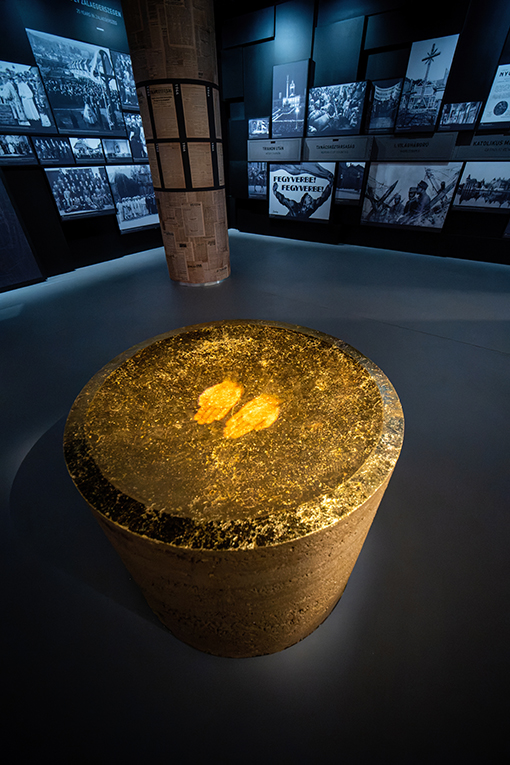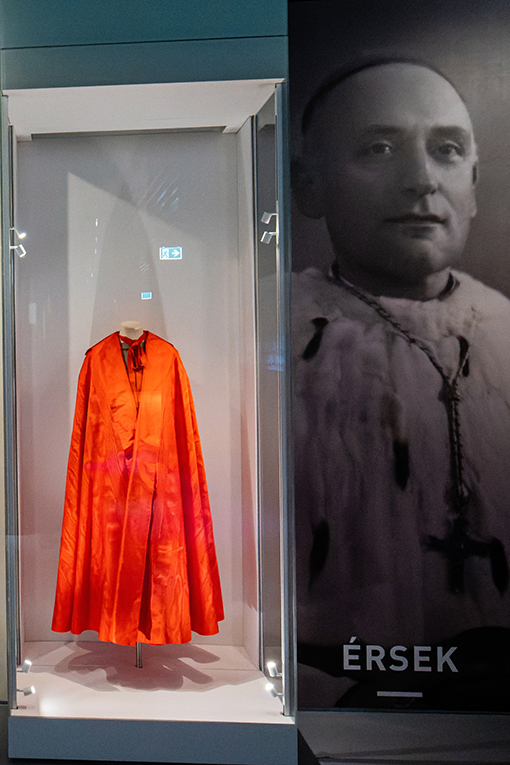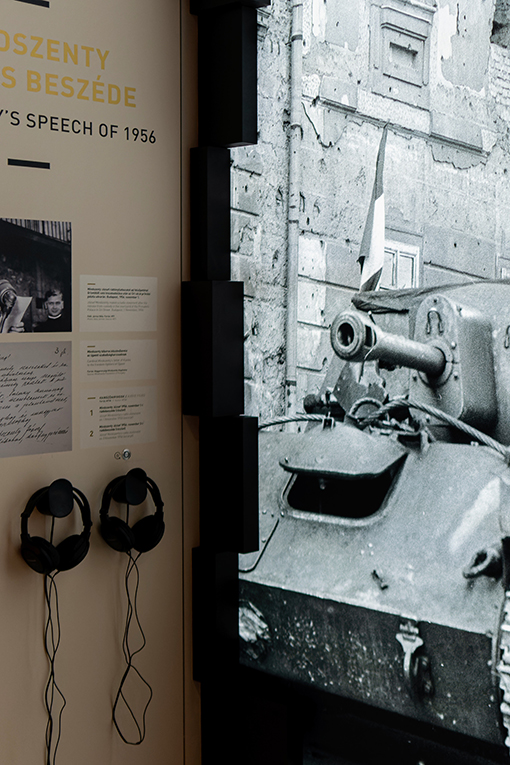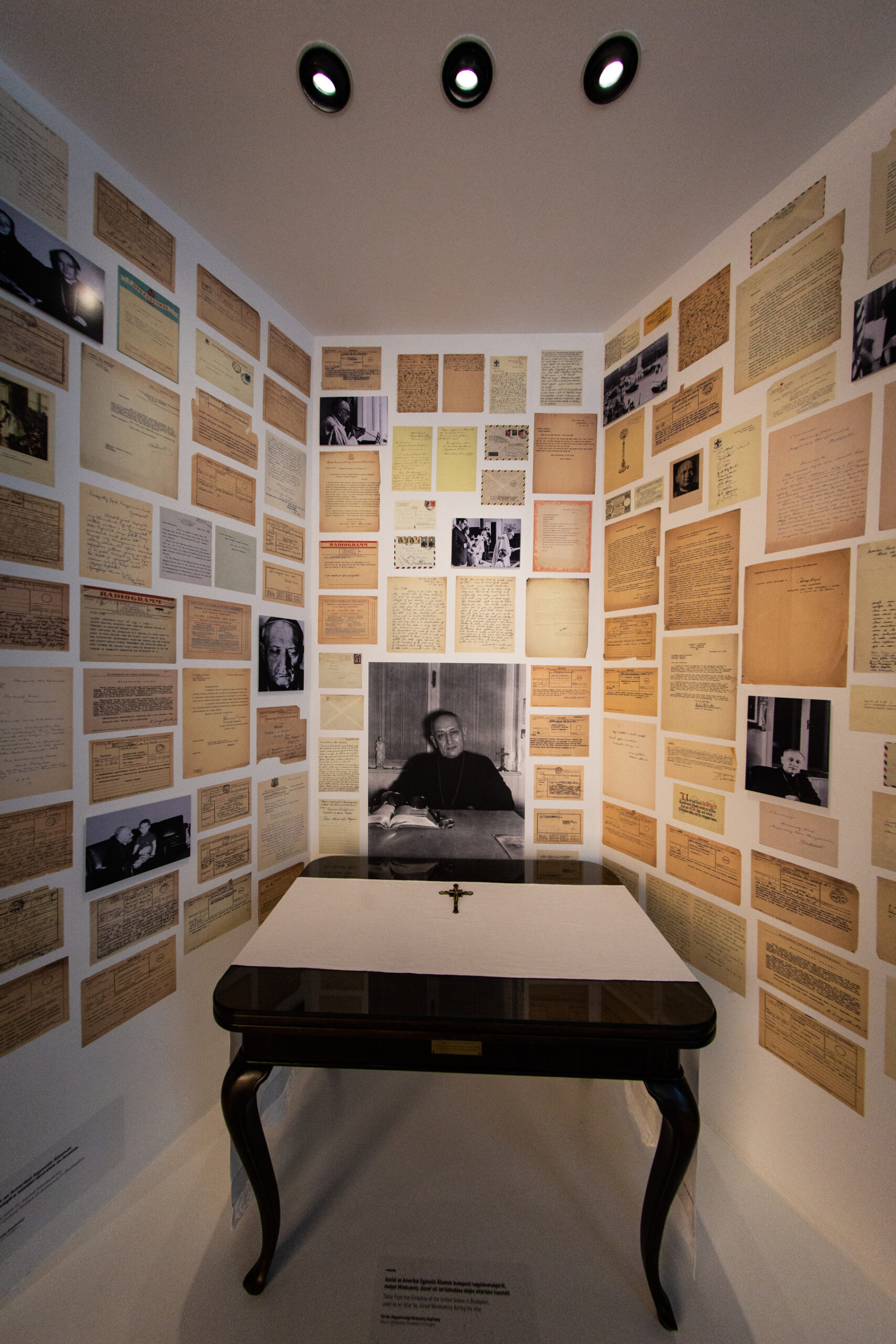
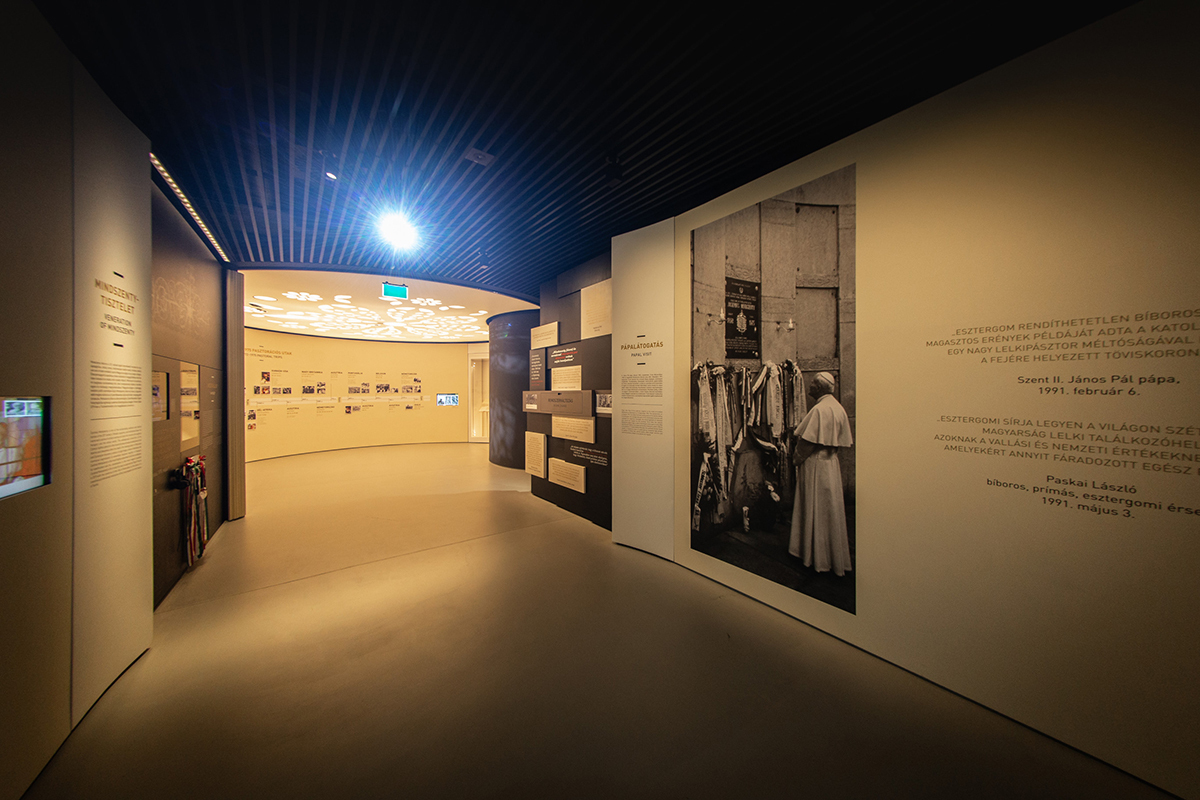
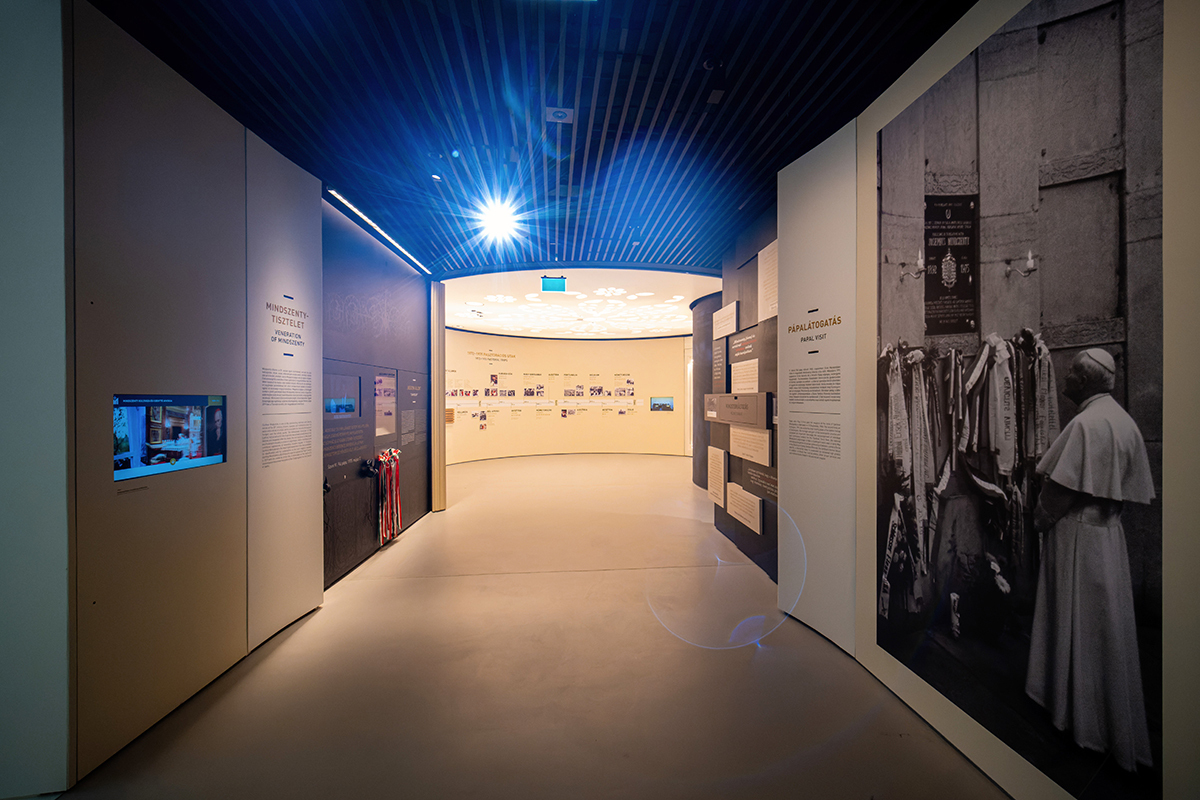
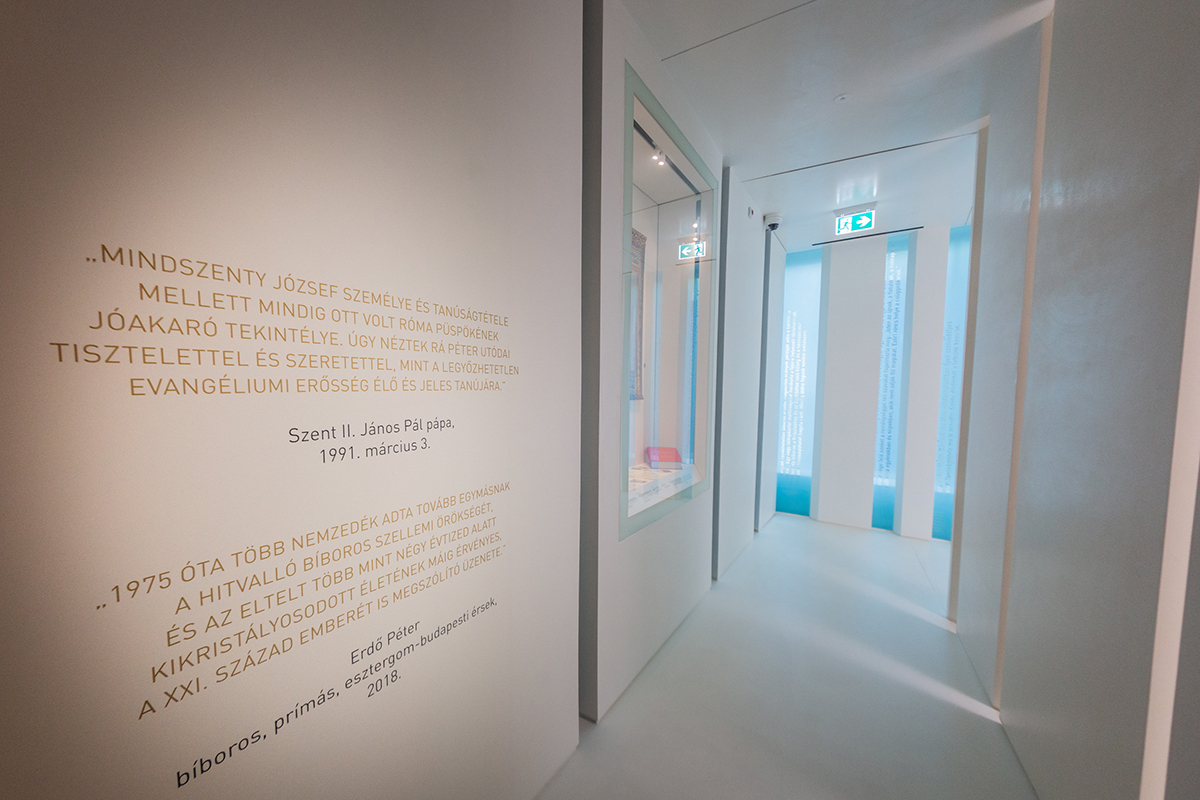
The closing section of the exhibition commemorates the public veneration that developed and steadily strengthened after Cardinal József Mindszenty’s death.
Shortly after his passing, Hungarian priests in the United States requested the initiation of his canonization process. In the room, visitors can find numerous written, audio, and visual documents about this, as well as about the circumstances of his reburial and how the canonization process, after more than 40 years, led to the recognition of his heroic virtue.
Homecoming
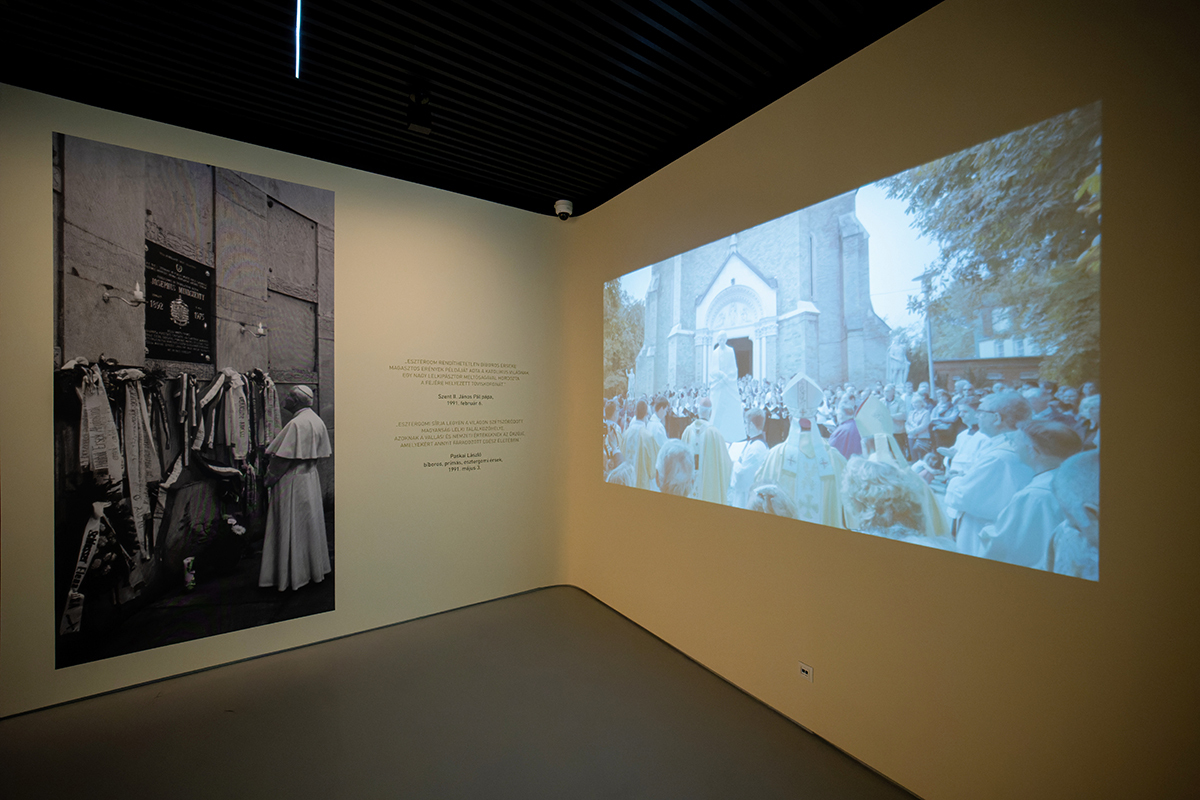
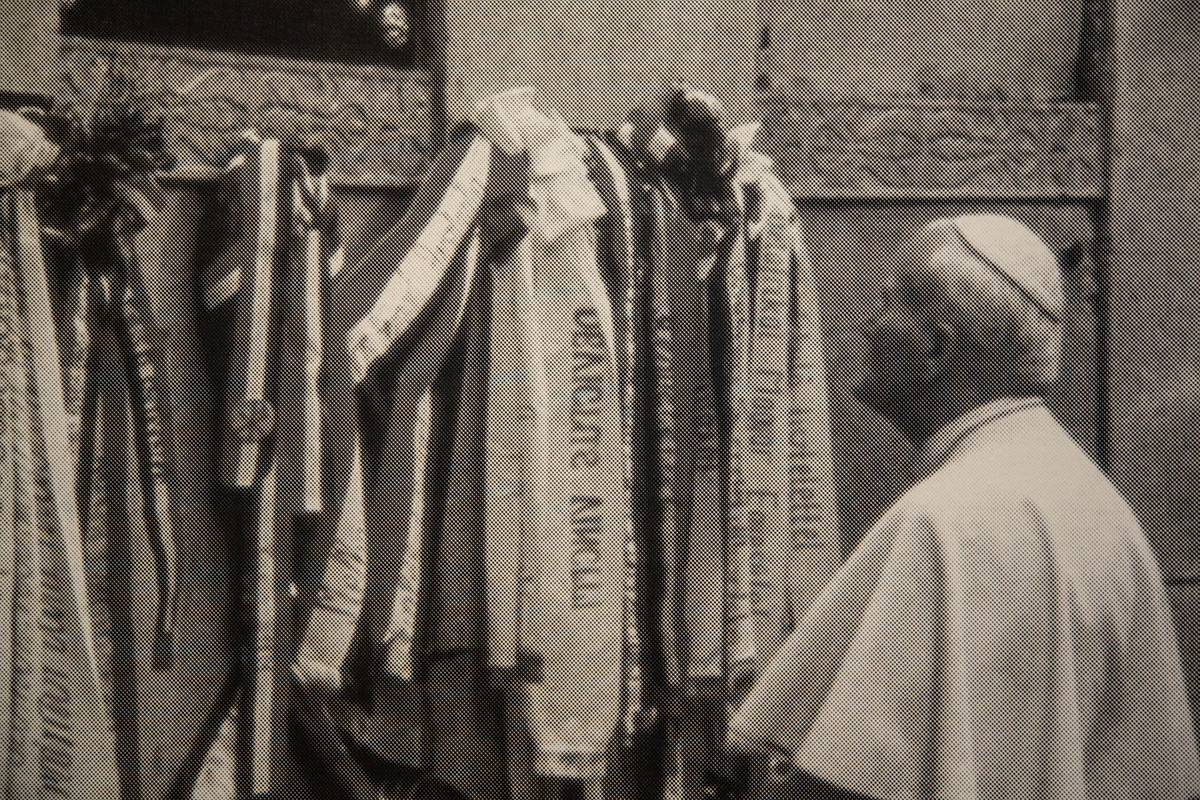
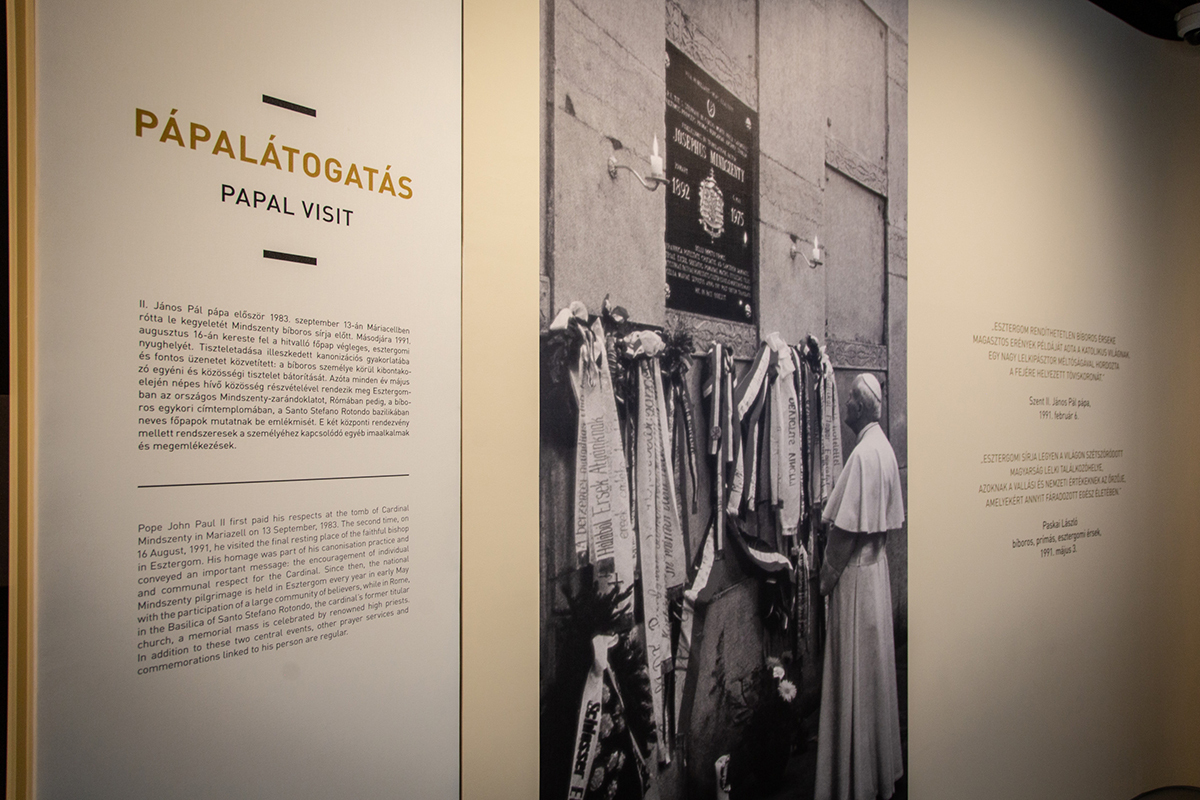
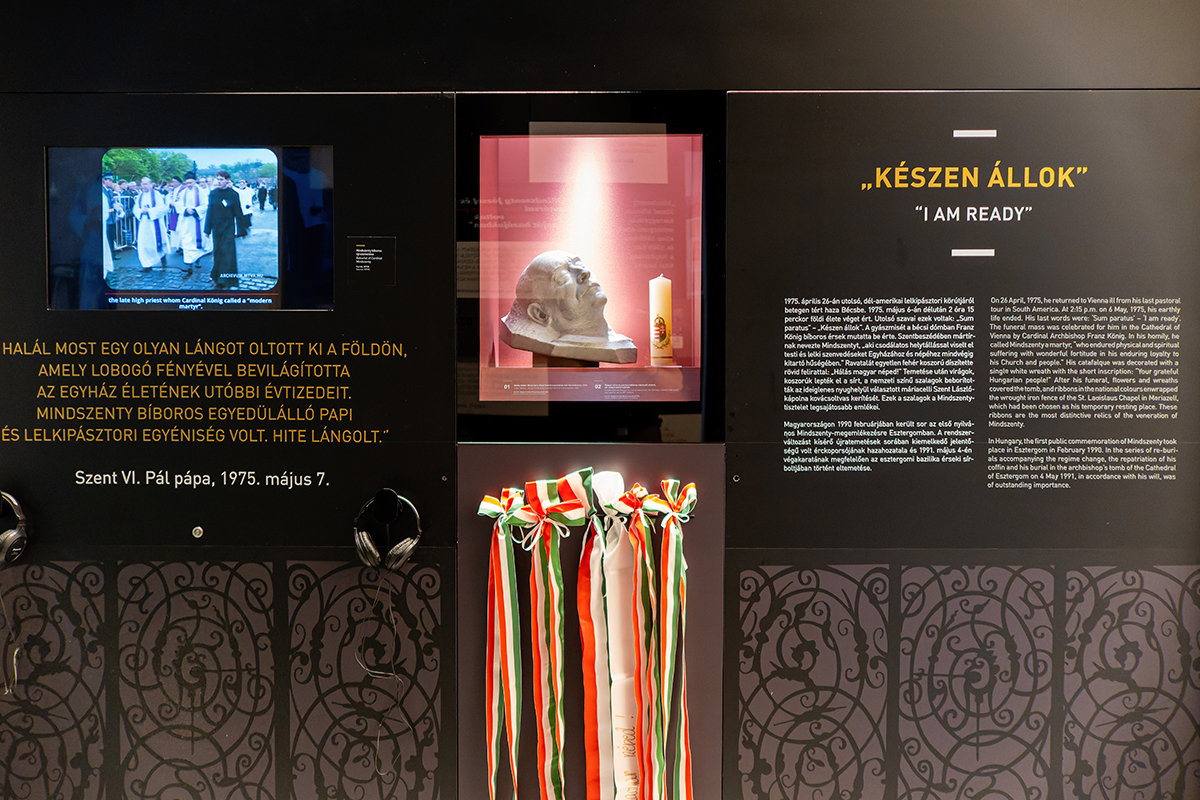
The cardinal’s earthly life ended on 6 May 1975 in the hospital of the Brothers of Mercy in Vienna. In accordance with his last will, he was temporarily buried in Mariazell, where his grave in the Chapel of Saint Ladislaus was continuously covered with flowers and wreaths. In Hungary, the first public Mindszenty commemoration took place in February 1990. Among the series of reburials accompanying the political transition, the return of his coffin and his reburial on 4 May 1991 in the archiepiscopal crypt of Esztergom Basilica, in accordance with his final wishes, was of outstanding significance.
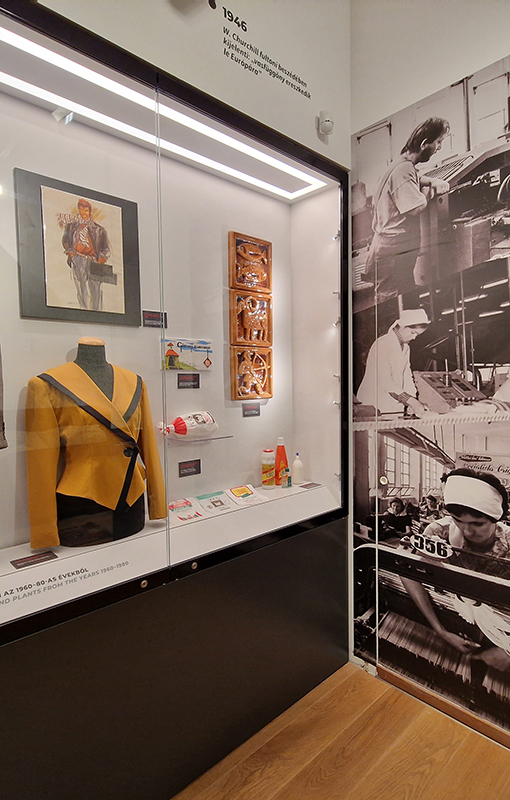
In the display case, visitors can see a marble replica of the death mask made in Vienna, alongside a Hungarian-crowned candle, as well as pilgrimage souvenirs, candles, and ribboned wreaths from the Mariazell burial chapel.
Interesting fact:
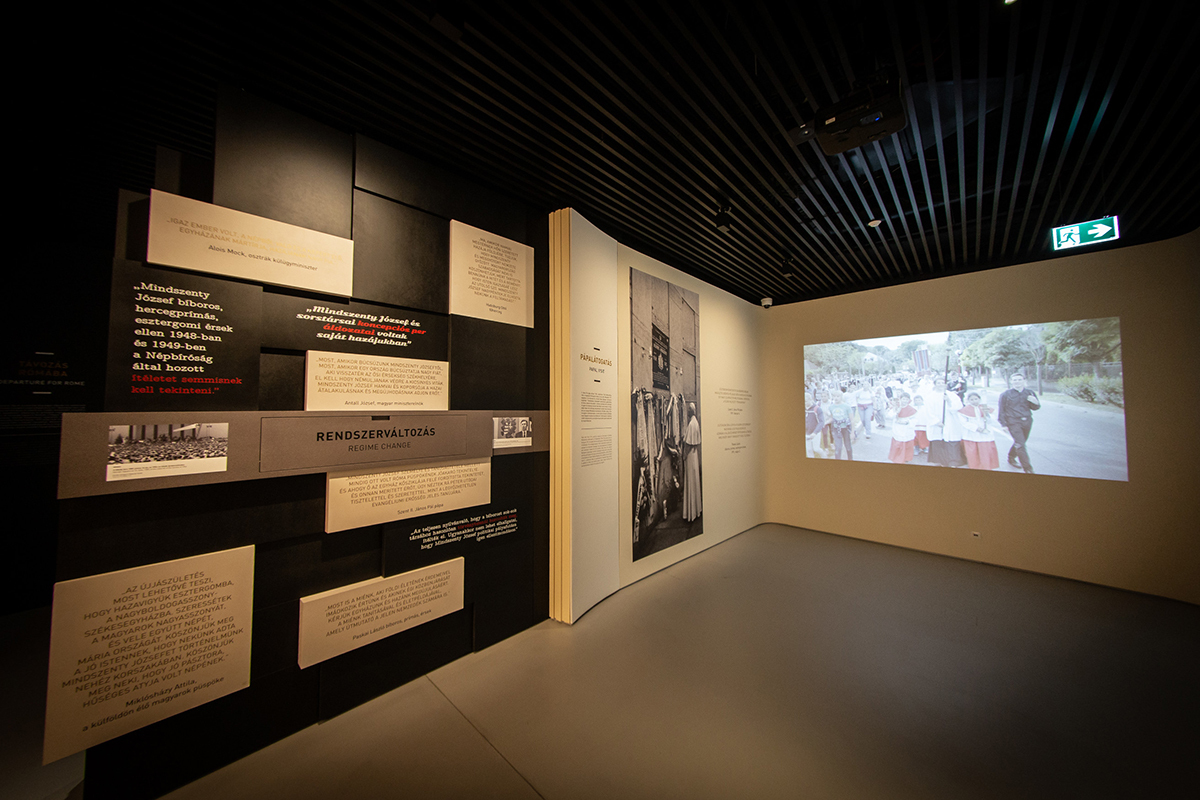
“The judgment issued in 1948 and 1949 by the People’s Court against József Mindszenty, Cardinal, Prince Primate and Archbishop of Esztergom, must be considered null and void.”
Népszabadság, 21 May 1990, based on certificate no. 16.5.714/1990/2 of the Metropolitan Court.
The full and official legal, political, and historical rehabilitation took place in 2012.
Tip: From the spiritual and intellectual legacy of the confessing Hungarian cardinal, the ceiling lighting on the ground floor of the Mindszentyneum presents another of his lifelong commitments:
“Since responsibility has surrounded me, I wish to keep nothing but love for all my Hungarian brothers!”
(From his letter to Ferenc Fendrik, 26 February 1947.) If you have time, try to find it!
Veneration of the Cardinal
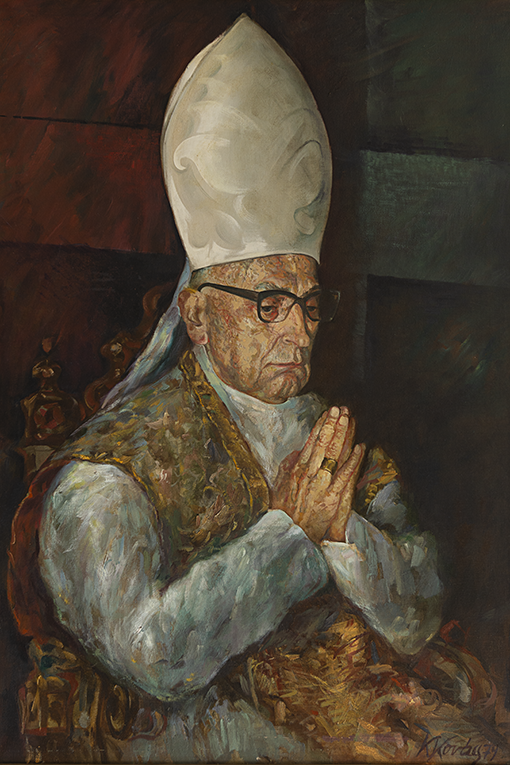
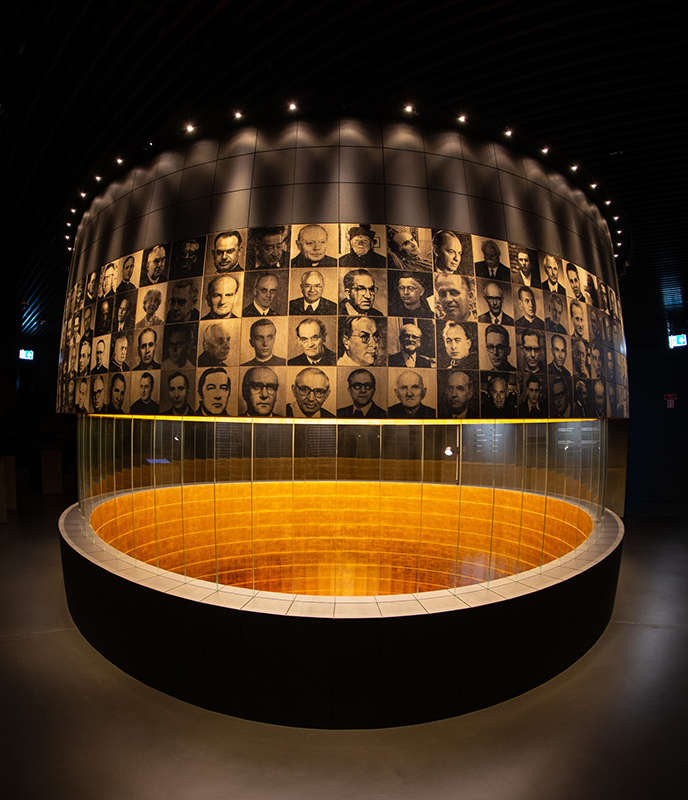
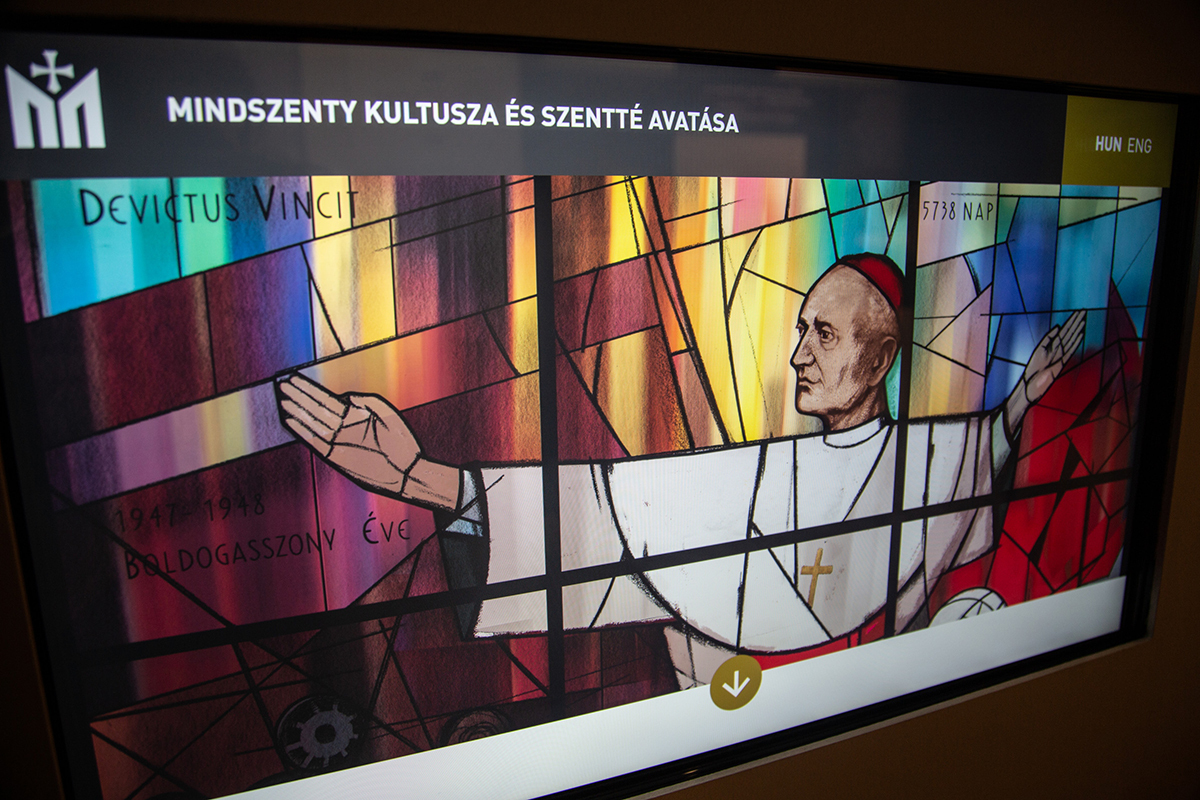
The video of the pilgrimage walk to Máriaremete (2017) and the final interactive displays present Cardinal Mindszenty as one of the outstanding ecclesiastical and national figures of the 20th century. Streets, squares, and institutions bear his name, and a series of artistic works preserve his memory in Hungary and around the world. The conviction of his sanctity had already formed among Catholic believers during his lifetime and deepened after his death.
In 2019, with the authority of Pope Francis, the Congregation for the Causes of Saints officially recognized the heroic virtue of the Venerable Cardinal József Mindszenty in a decree. The nearly thirty-year process involved Hungarian and Vatican experts, theologians, jurists, and historians, and today his faithful continue to pray for his eventual beatification.
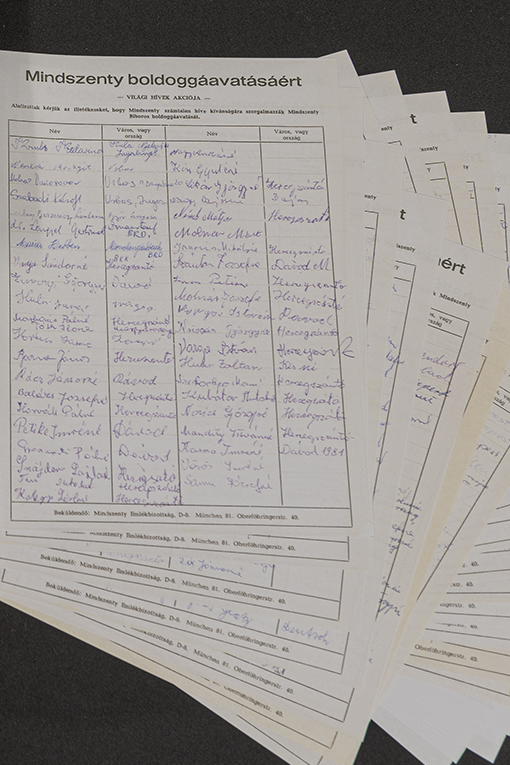
In the final display case, related objects and documents can be seen, and on the wall there is the papal frame in which the official portraits of new blesseds are usually placed.
Recommendation: The pilgrimage walk to Máriaremete is held every five years (next: 2027), organized by the Budapest-Városmajor parish and the Mindszenty Foundation of Hungary. In Esztergom, a national Mindszenty pilgrimage Mass is held every year on a Saturday close to 6 May.
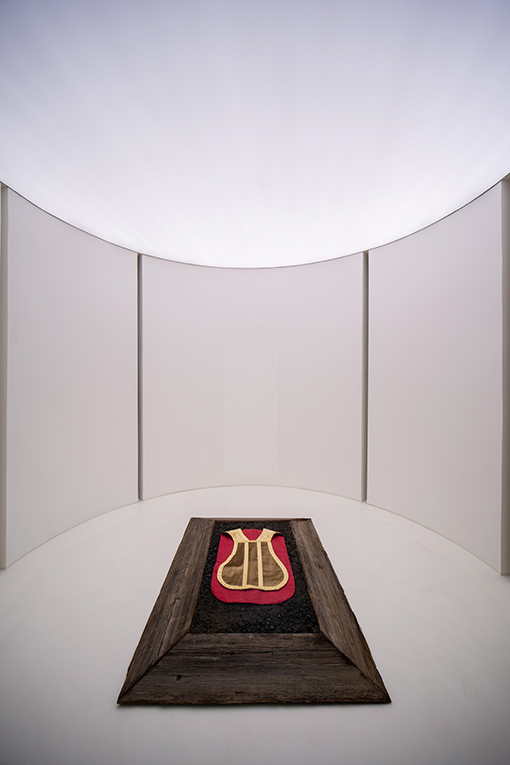
Sacred Space
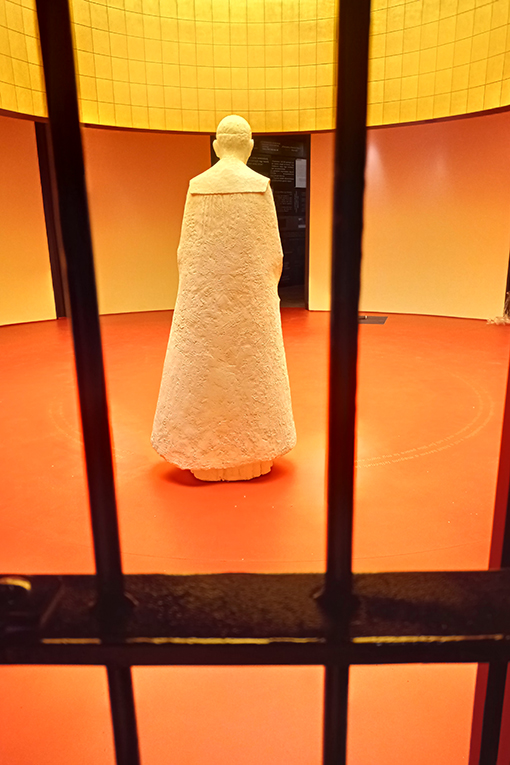
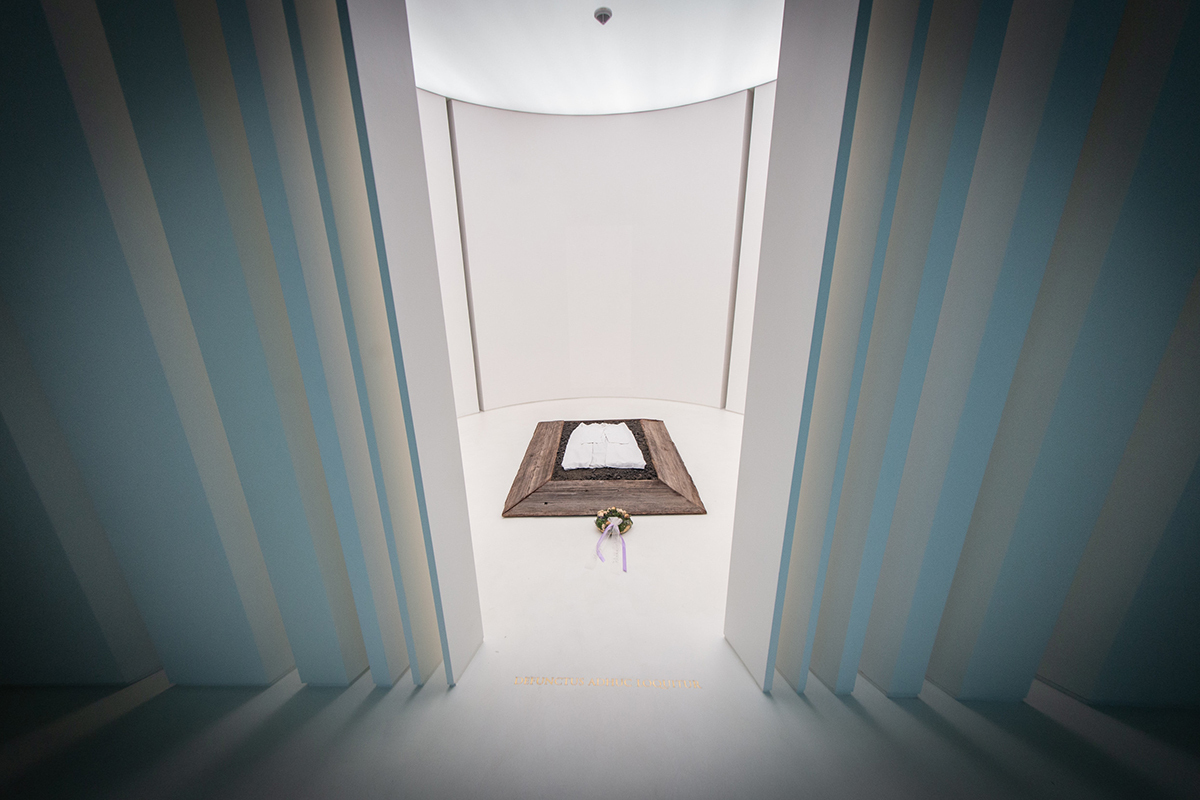
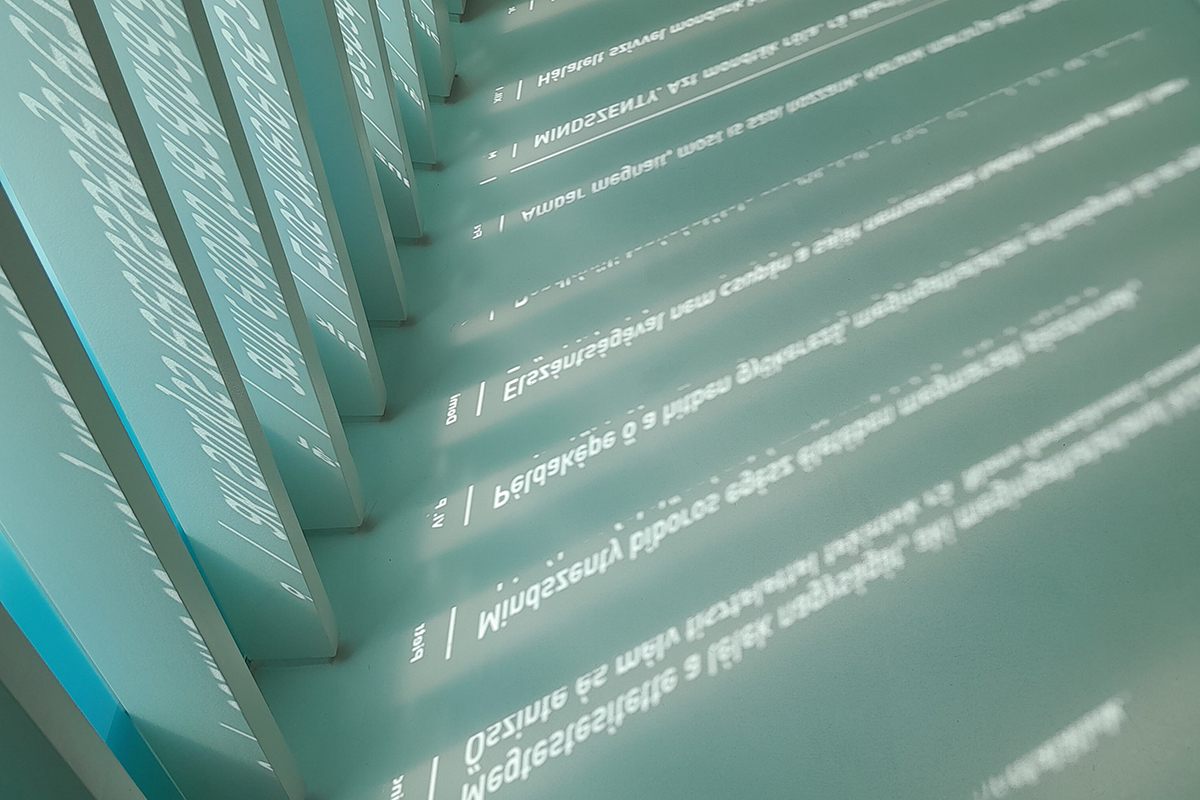
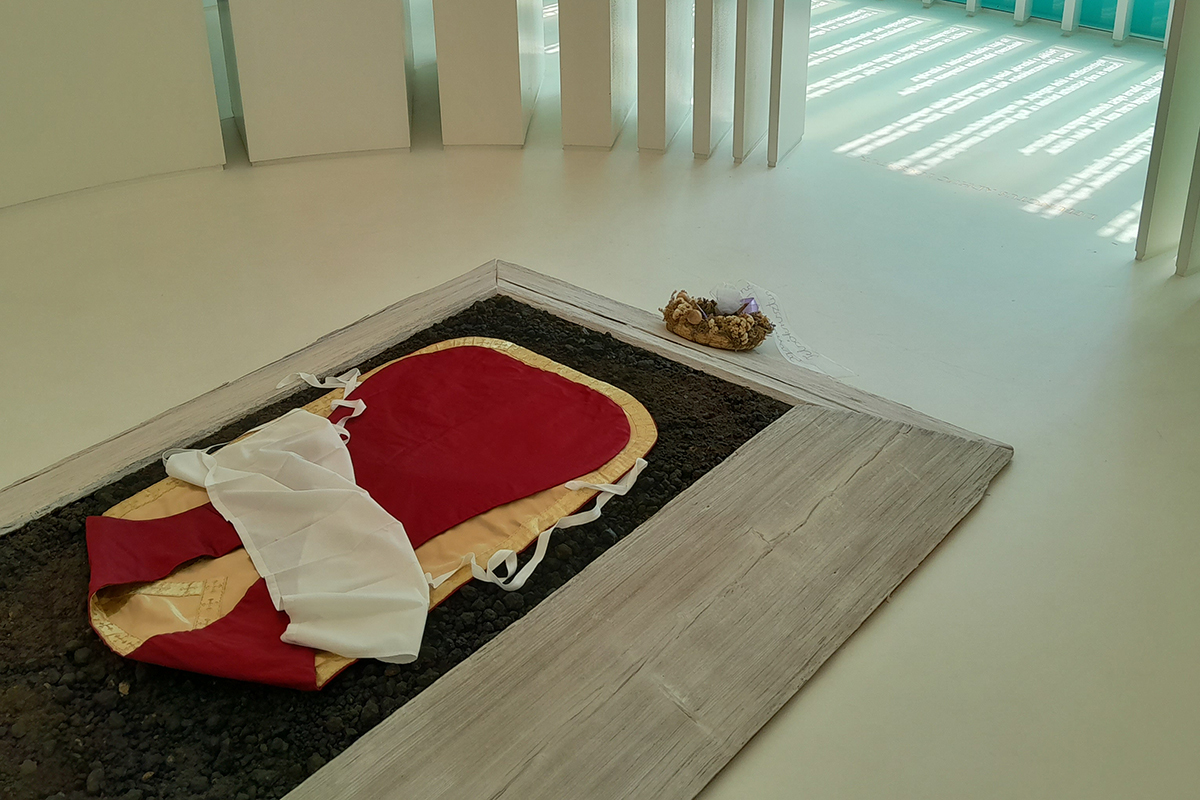
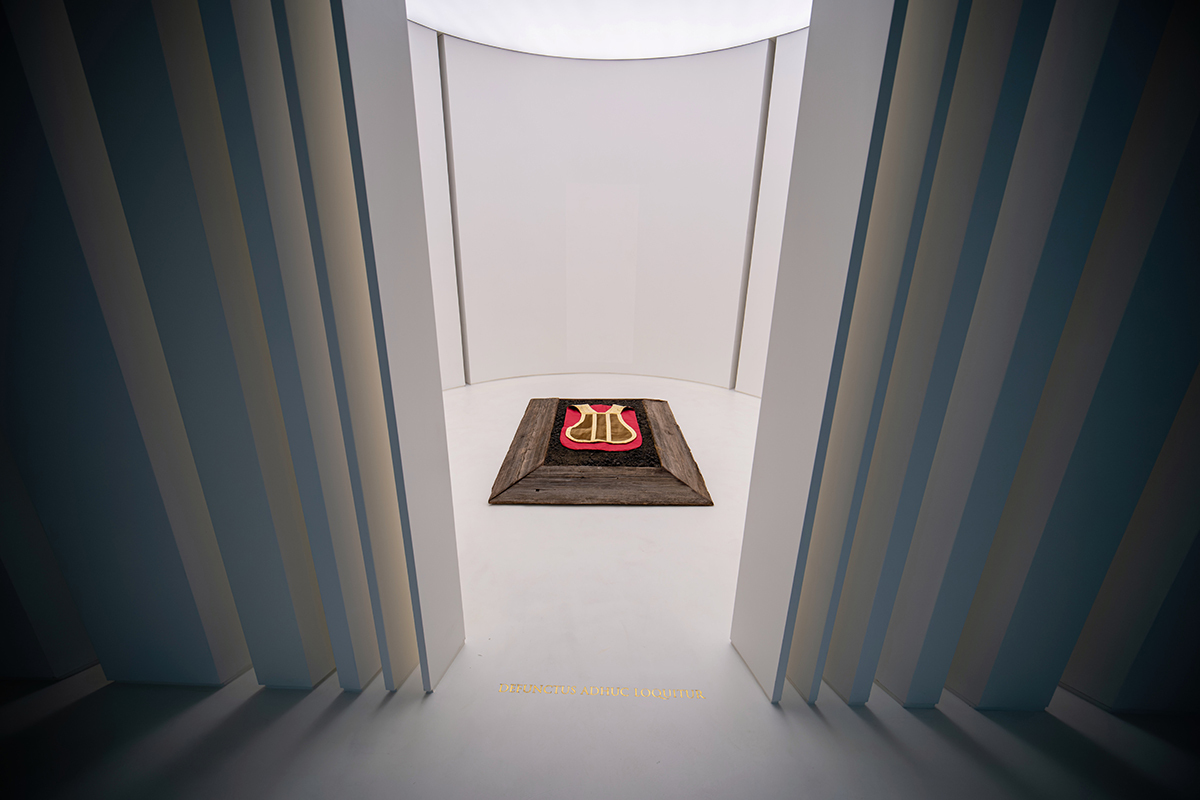
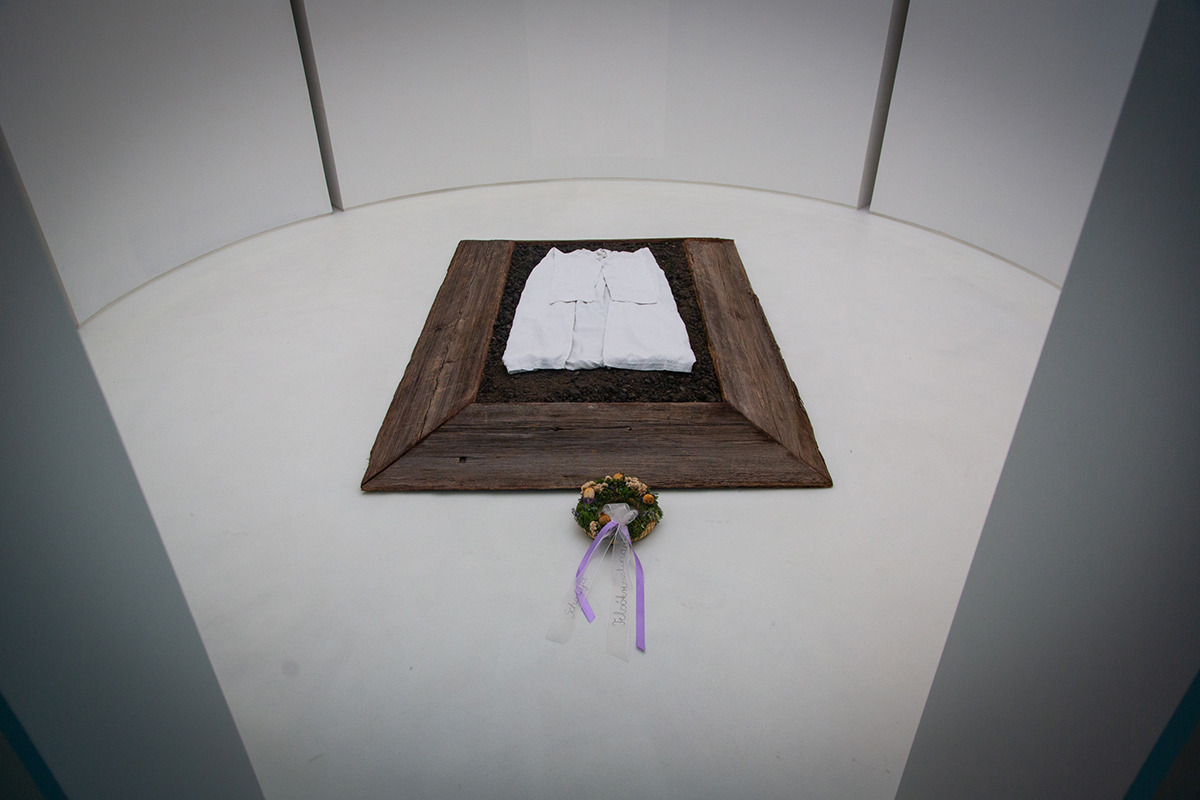
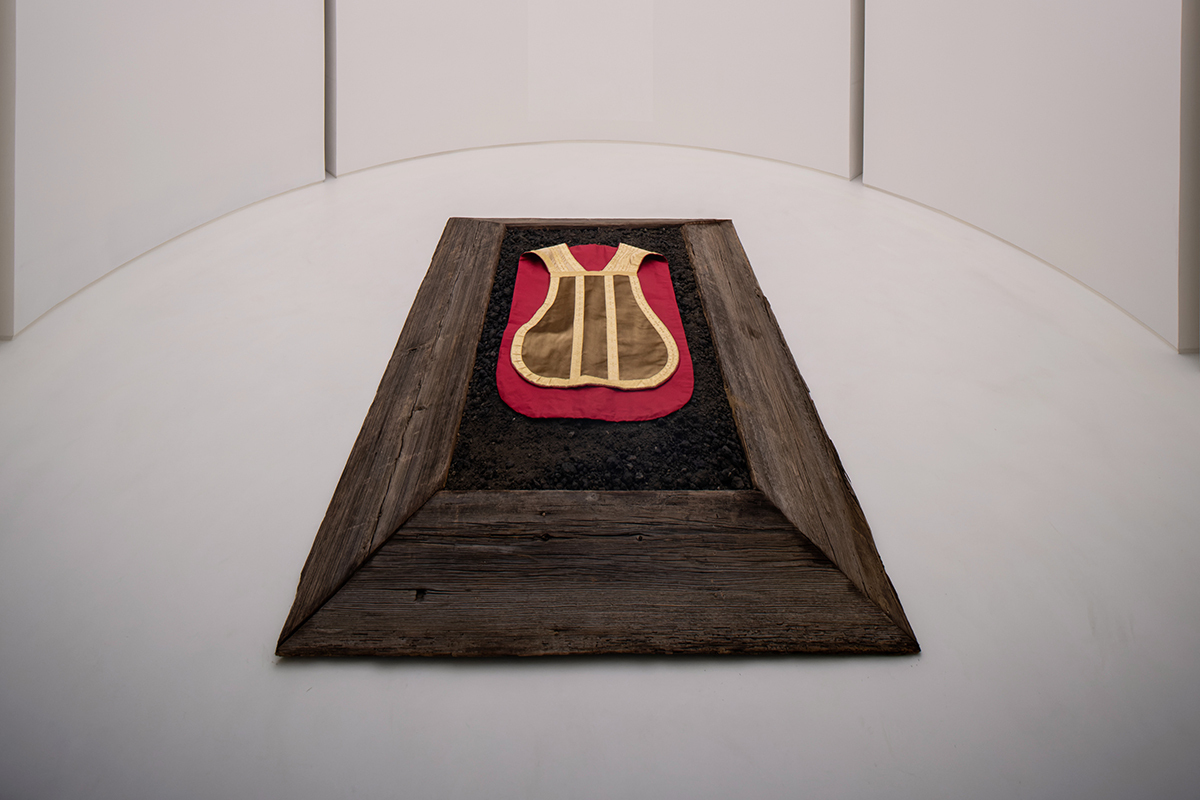
The final, artistically designed symbolic chapel of the exhibition invites silence and reflection. The Te Deum sung here is the expression of gratitude by present-day believers from Zalaegerszeg for the pastoral service of their former parish priest that continues to have an impact today.
Thought-provoking quotes
At the end of life, could we also say something similar?
“If I had to begin life again, I would begin it as I did. And if I clearly saw what the consequences would be, I would still do the same as I did.”
(From József Mindszenty’s sermon on 14 June 1974)
On the floor at the entrance of the chapel, a quotation from Cardinal Franz König of Vienna can also be read: *Defunctus adhuc loquitur* – “Though he is dead, he still speaks to us.”
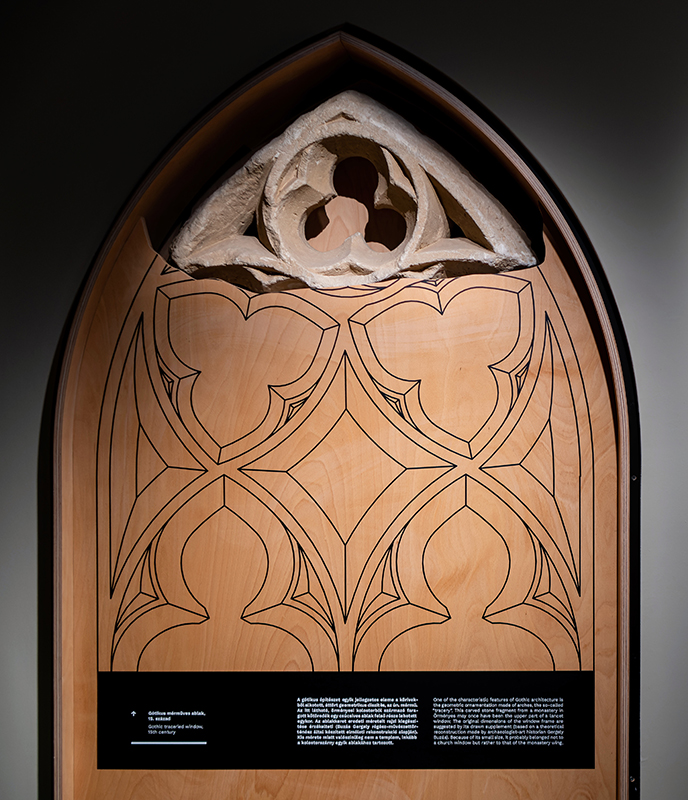
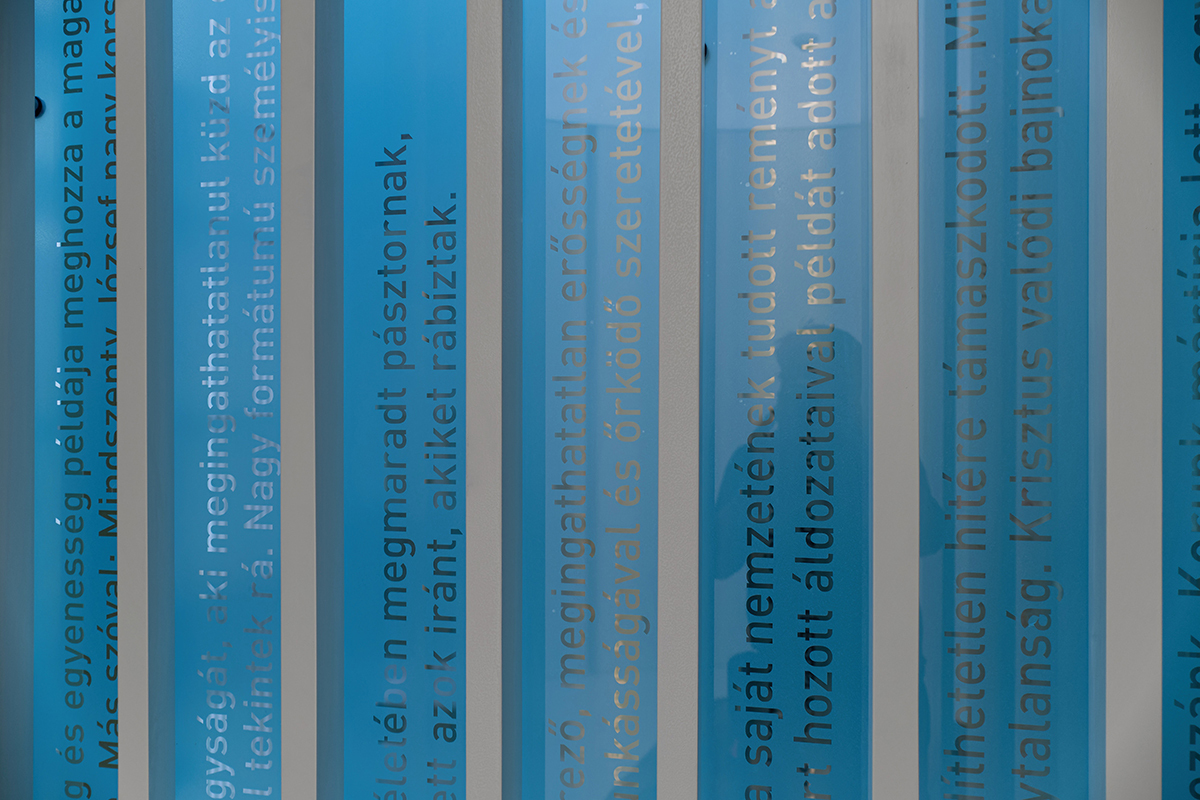
“Through the narrow sky-blue windows we can see the tree placed in front of the main entrance. This tree symbolizes the spiritual unity of all Hungarians and represents the tree of eternal life.”