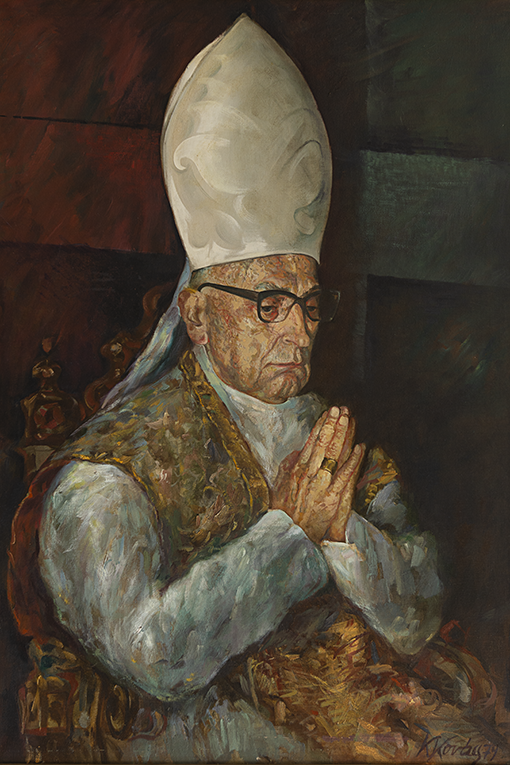
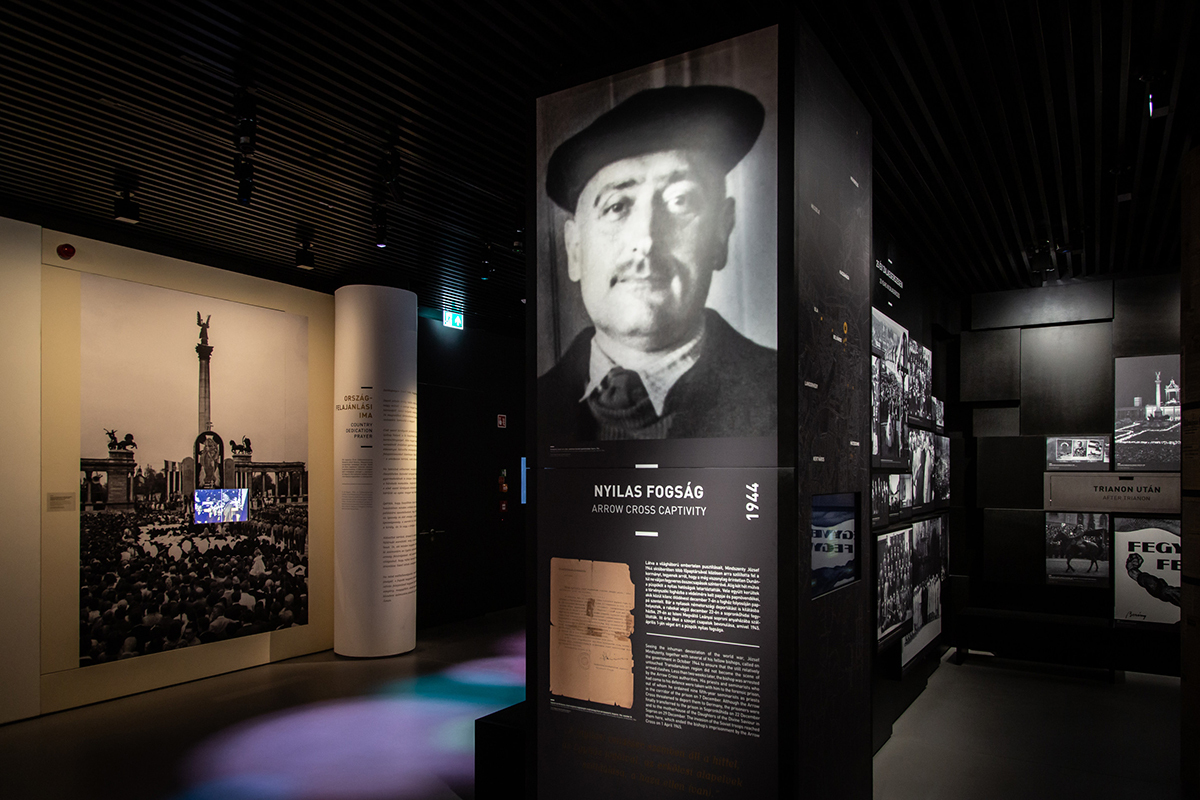

The next major section of the life-path exhibition presents the activity of József Mindszenty as a high-ranking prelate (Fidelissimus pastor), beginning with his appointment as Bishop of Veszprém and his imprisonment by the Arrow Cross in 1944, through his appointment as Archbishop of Esztergom and Cardinal, up to his work preceding his arrest in 1948.
In Hungary, Mindszenty had only the three years between 1946 and 1948 in which, as Archbishop of Esztergom, he could demonstrate his dedication to his country and faith, as well as his outstanding organizational skills, in the aftermath of World War II and despite the increasingly strict restrictions of the new political order. The results of this period, as well as the escalating defamation campaigns against him, are presented simultaneously through unique installations, interactive IT interfaces, and various archival as well as creatively edited contemporary footage.
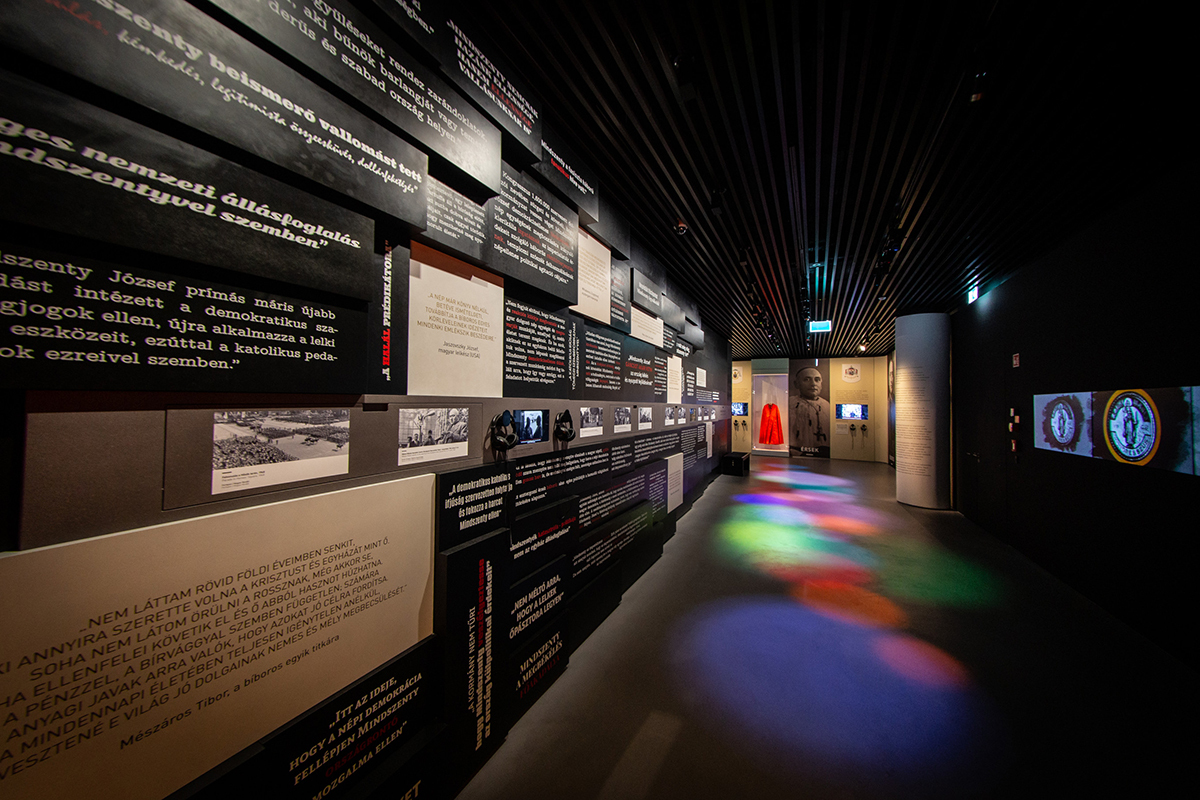
“Wall of Hatred” versus “Wall of Blessing”
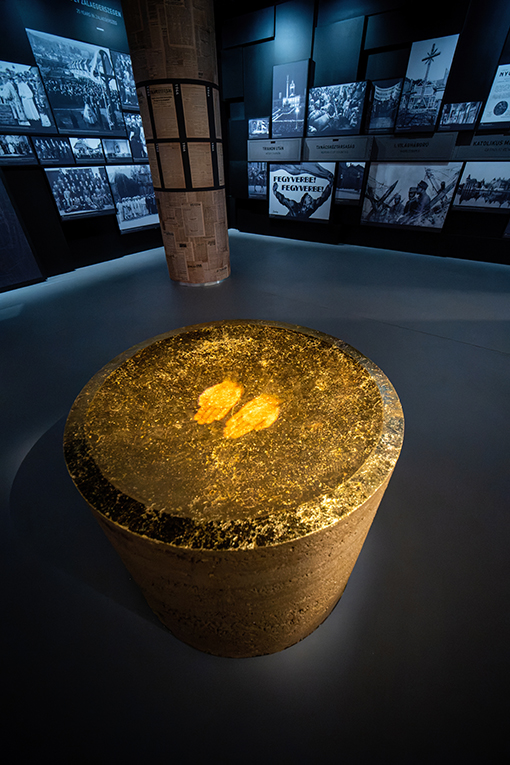
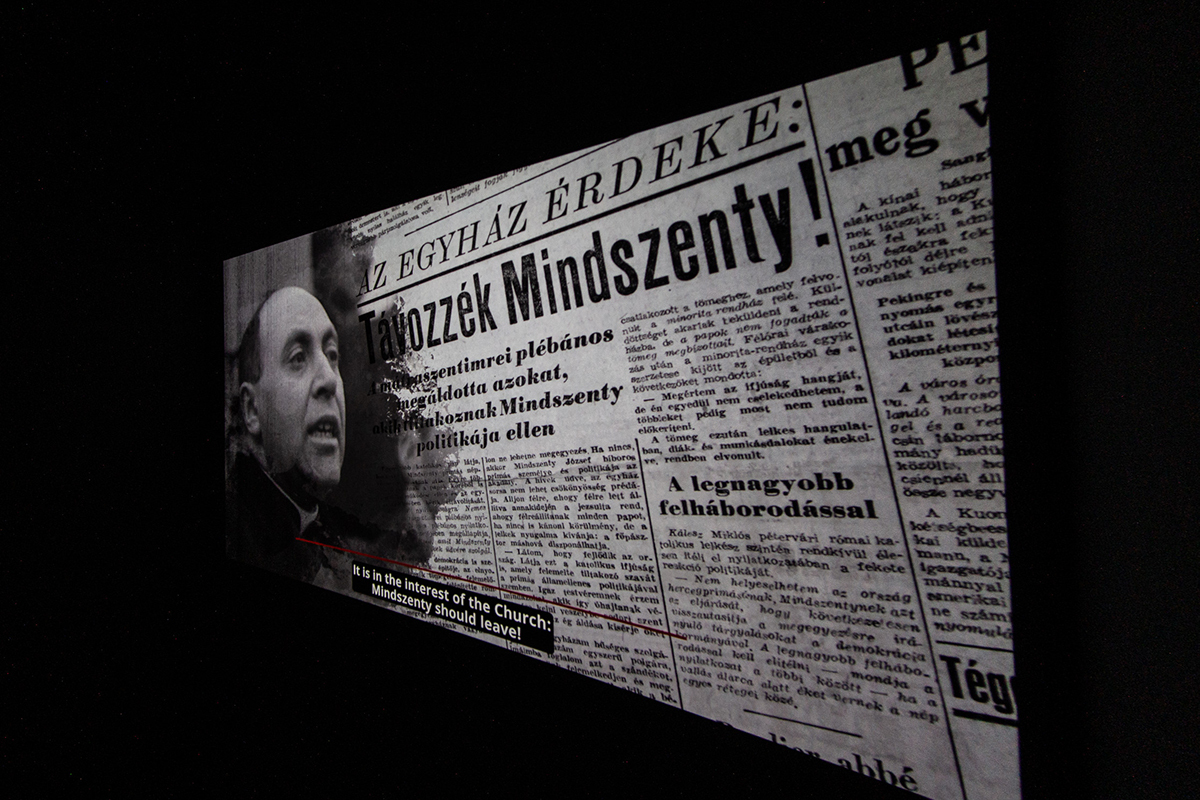
The Wall of Hatred
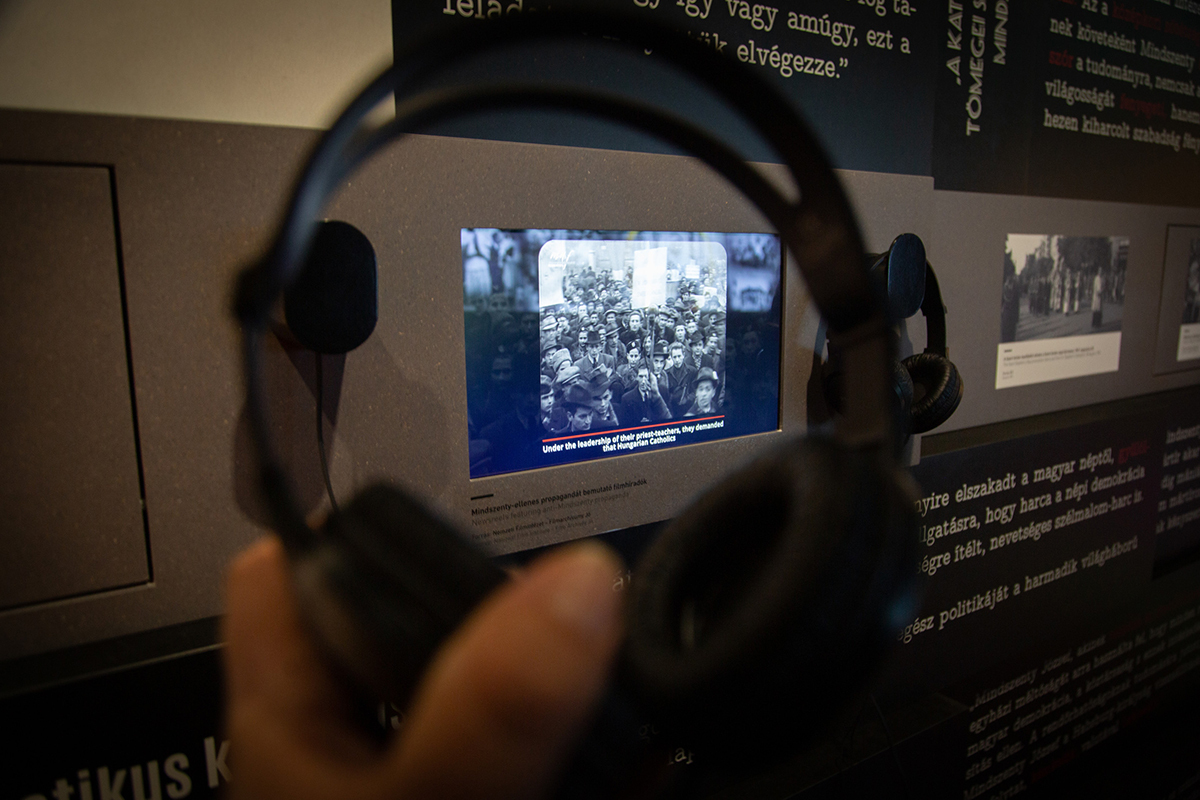
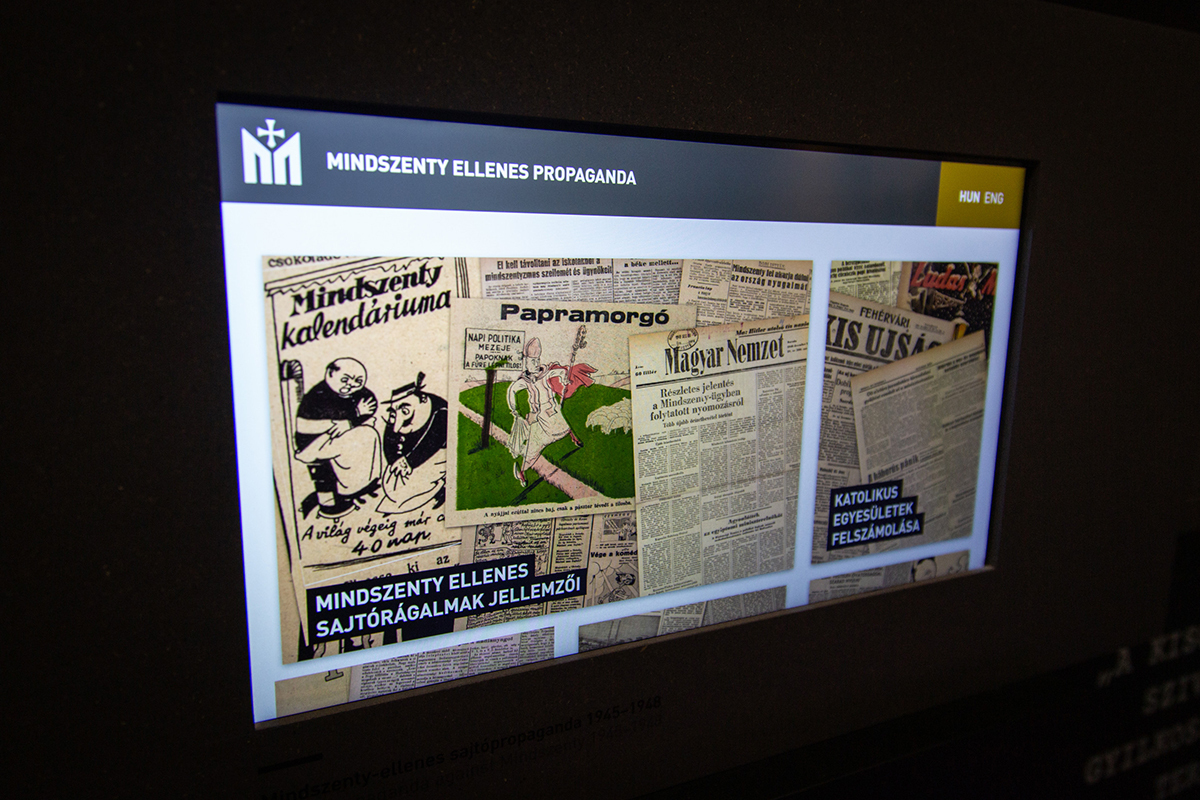
The “Wall of Hatred” installation, composed of cube-like structures and featuring characteristic lines taken from newspaper articles, emphasizes the oppressive, increasingly pervasive central propaganda efforts that appeared across all public forums.
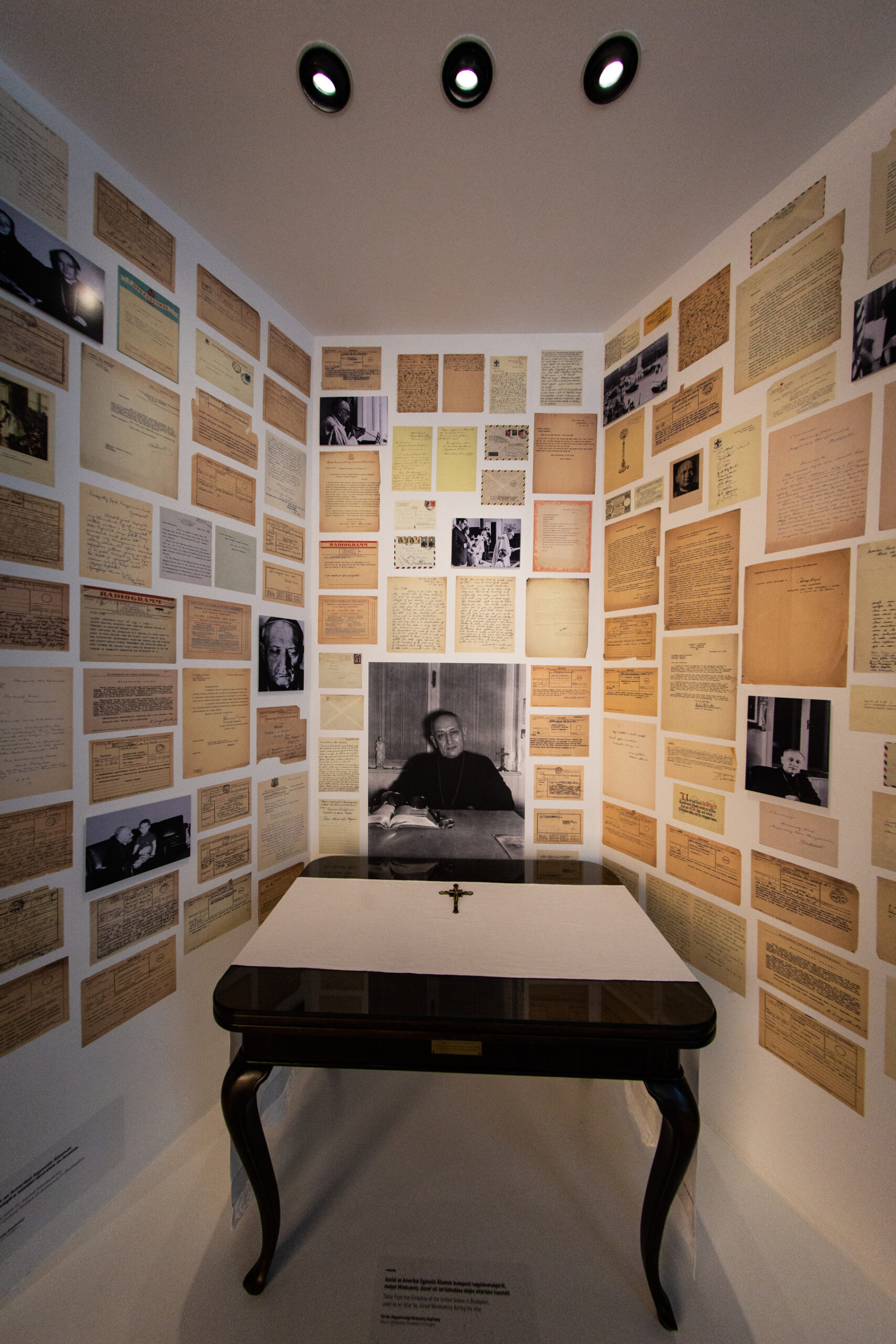
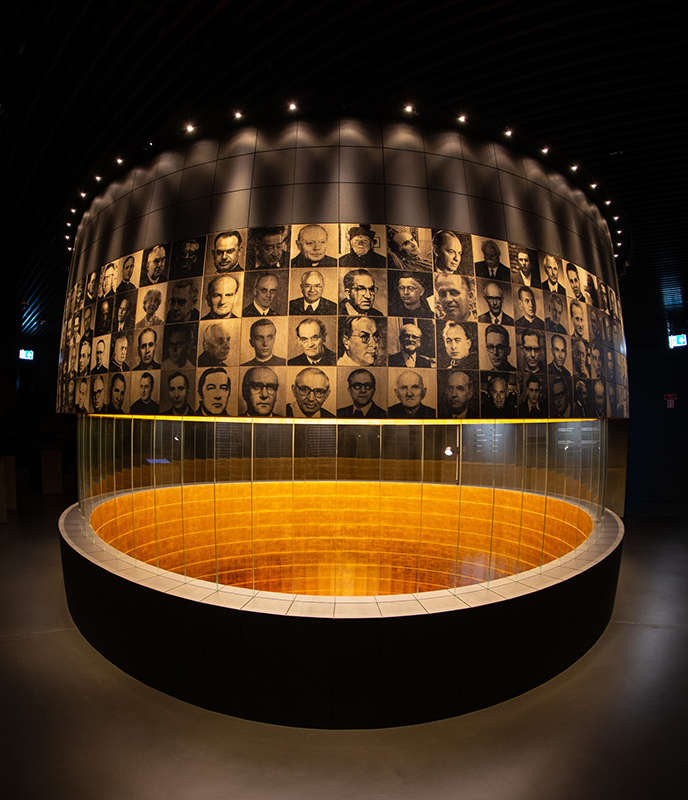
In contrast, the opposite wall, the “Wall of Blessing”, commemorates Mindszenty’s wide-ranging and self-sacrificing pastoral work despite the hardships he faced.
Mindszenty Coats of Arms
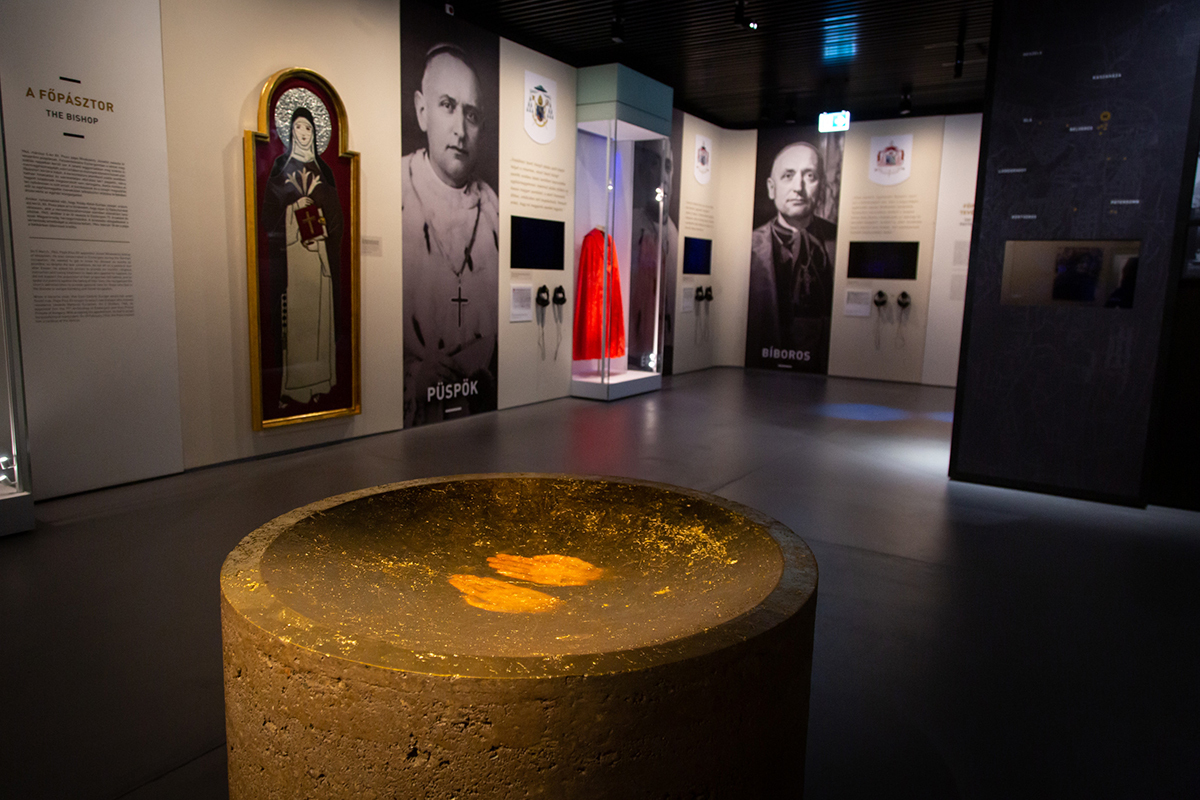
The official episcopal coat of arms was designed by Antal Megyer-Meyer, while the previously unused family coat of arms of the Pehm family was also painted by him in 1945. The series of Mindszenty coats of arms is completed by the monochrome cardinal’s coat of arms used in exile (1972). The Mindszenty coats of arms can only be seen together in this exhibition.
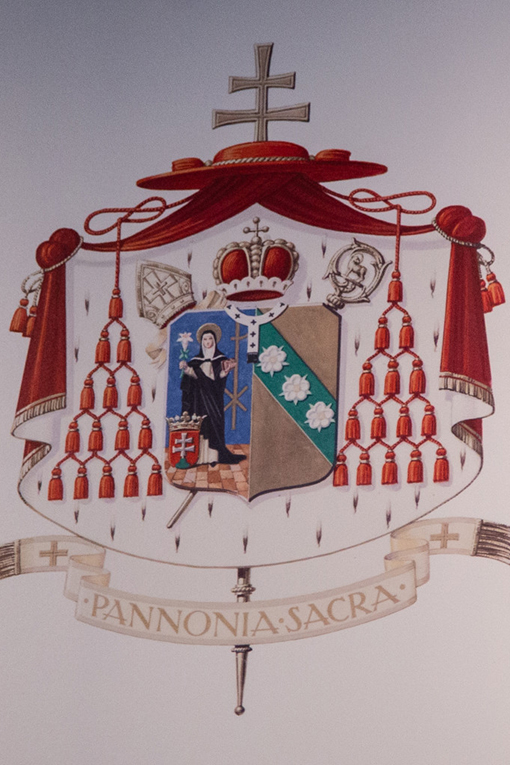
Saint Margaret in the episcopal coat of arms
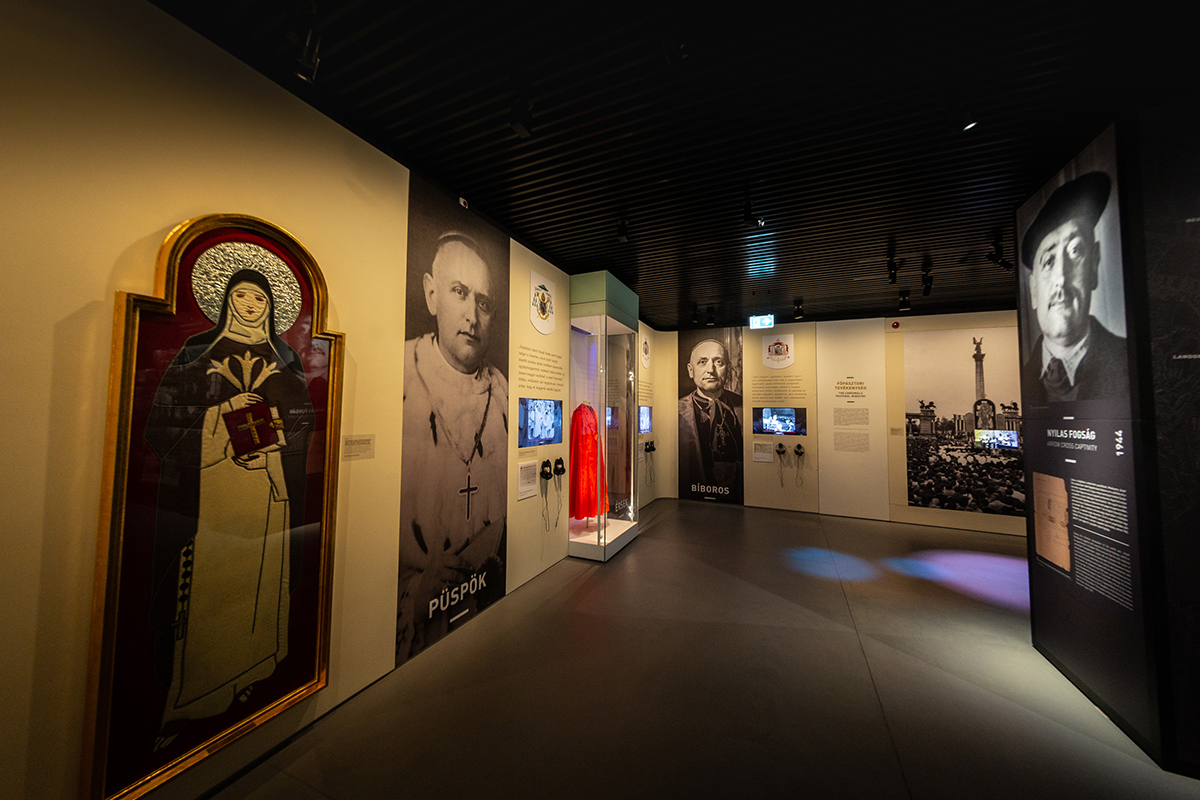
Always sensitive to historical parallels, the bishop chose Saint Margaret of Hungary – canonized in 1943 – as his principal heraldic figure, drawing inspiration from the era of the Mongol invasion.
Saint Margaret of the Árpád Dynasty Textile Artwork
The large textile artwork displayed in the exhibition originally decorated the monumental altar erected on Heroes’ Square in Budapest for the 1938 International Eucharistic Congress.
An additional detail of interest is that, beneath the monitor presenting the episcopal consecration, visitors can also view the Latin papal document of his appointment as Bishop of Veszprém.
Narrowing Space
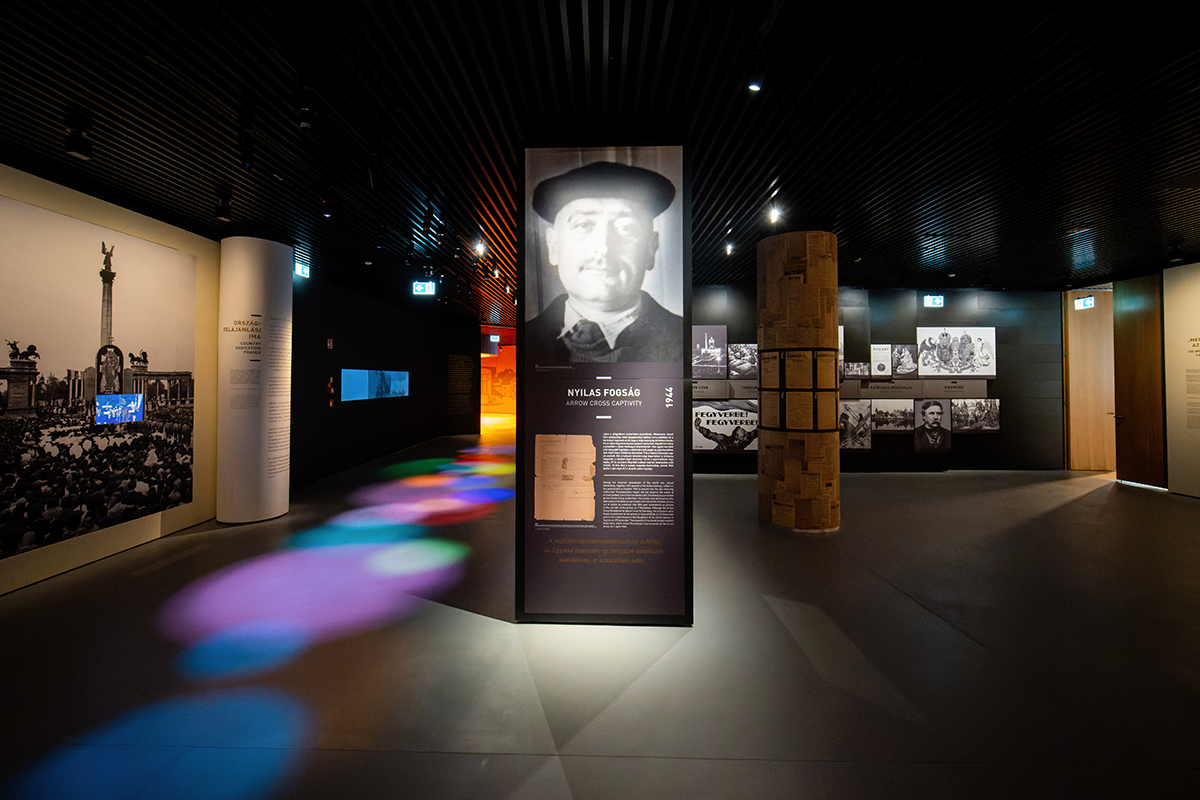
The light installation radiating from the ceiling refers to Cardinal Mindszenty’s communal spiritual life: it evokes the stained-glass windows of churches and the colors and lighting effects of floral carpets used in religious processions.
As visitors approach the date of Cardinal Mindszenty’s arrest on 26 December 1948, the corridor gradually narrows, symbolizing the shrinking space of action. On the right-hand side of the room, newspaper defamation campaigns further reinforce this sense of confinement.
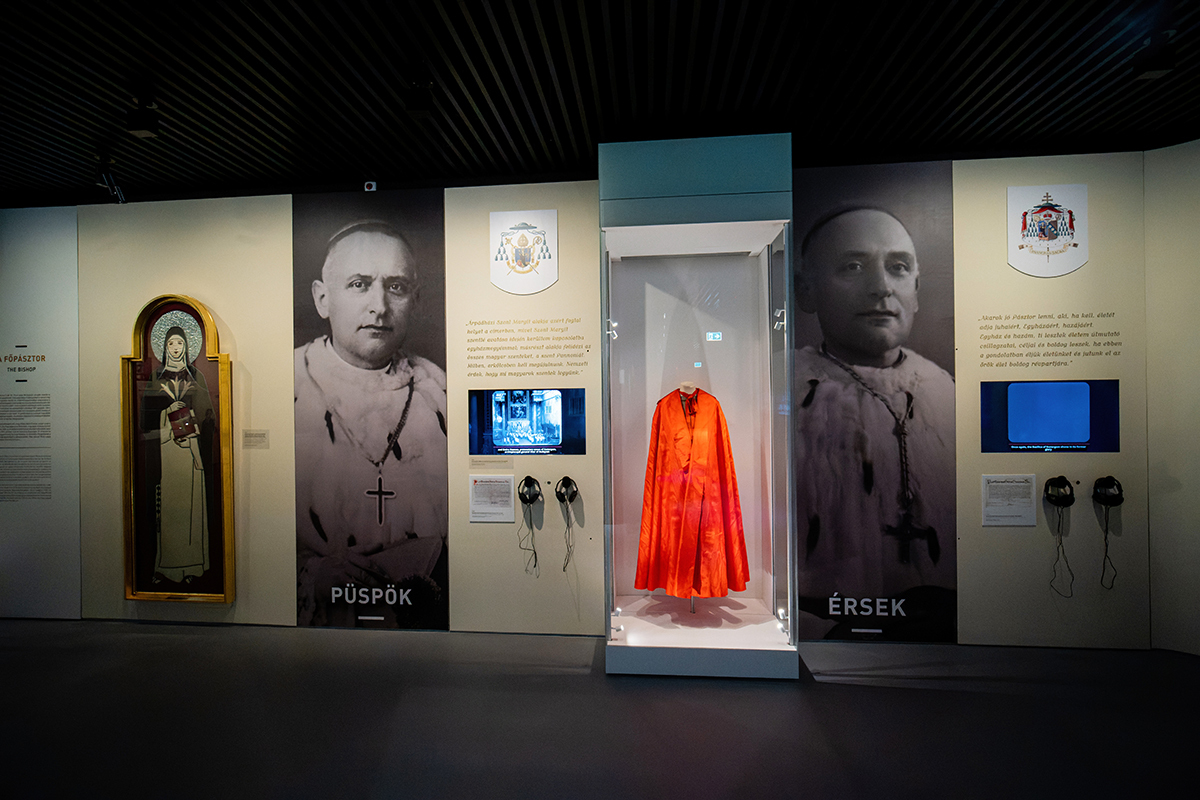
Our Favourite: Cardinal’s Mantle
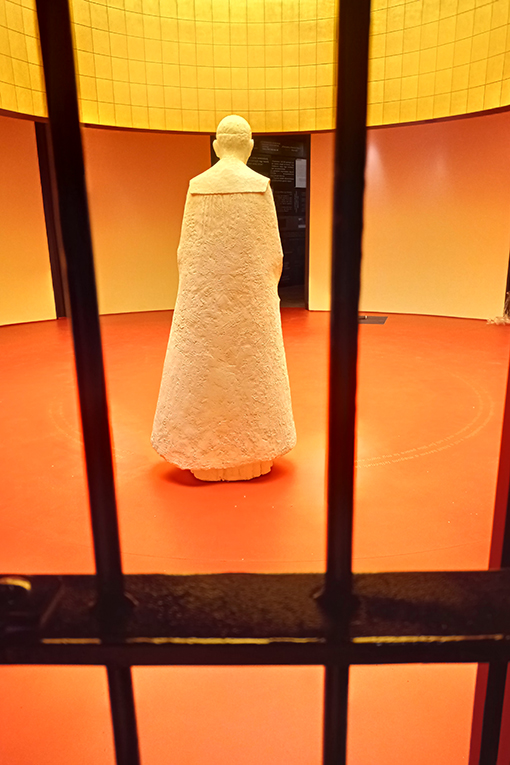
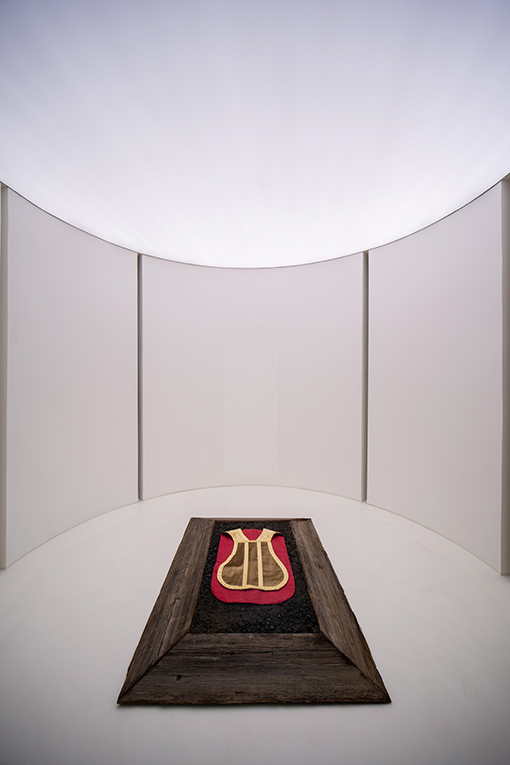
In February 1946, Pope Pius XII appointed József Mindszenty as cardinal, one of the highest dignities in the Catholic Church. The ornate silk garment was made in Rome, but not during the cardinal’s lifetime – it was created specifically for the exhibition. Mindszenty himself did not have a new vestment made for his high rank, but instead continued to wear his earlier episcopal mantle between 1945 and 1948. This cardinal’s mantle, like the entire exhibition, is a tribute from posterity to József Mindszenty.
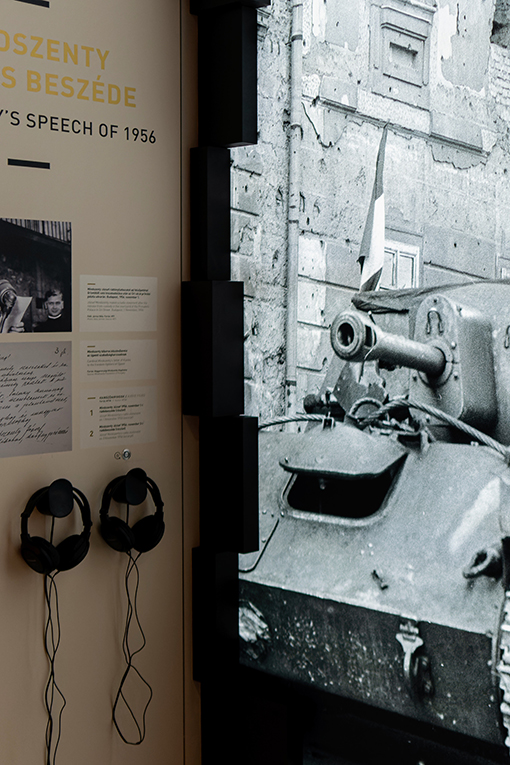
On the monitor, visitors can view the key moments of the 1946 “cardinal creation”. The footage even shows the Hungarian cardinal arriving at one of the venues!
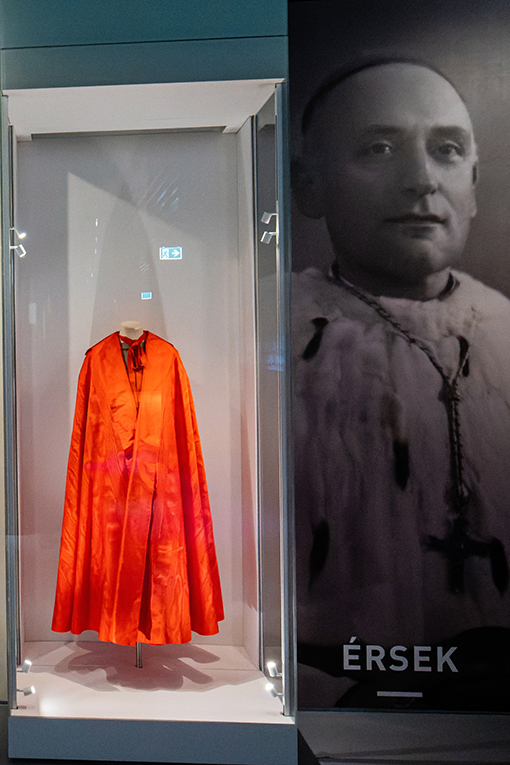
Cardinal’s Mantle
The material and color of now rarely used ecclesiastical vestments are characteristic: they were made of silk moiré fabric, and the colors – black, purple, or red – indicated whether the wearer was a priest, bishop, or cardinal.
The shimmering effect of the silk fabric of the cardinal’s mantle inspired the façade design and several architectural solutions of the Mindszentyneum building.