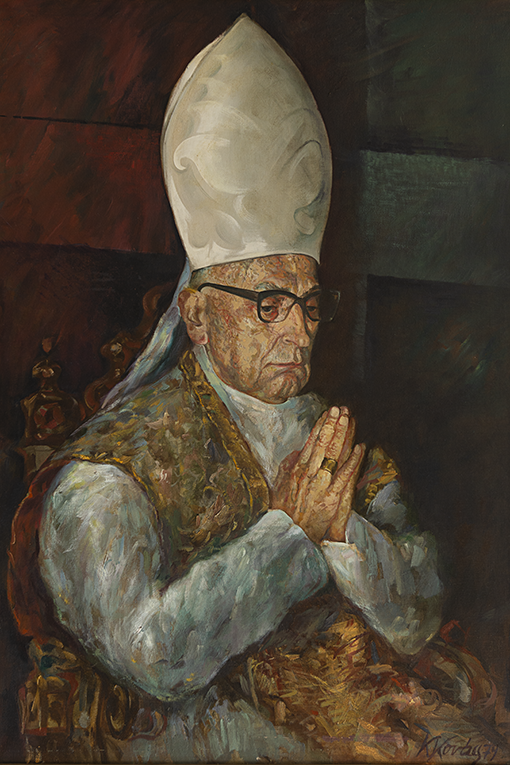
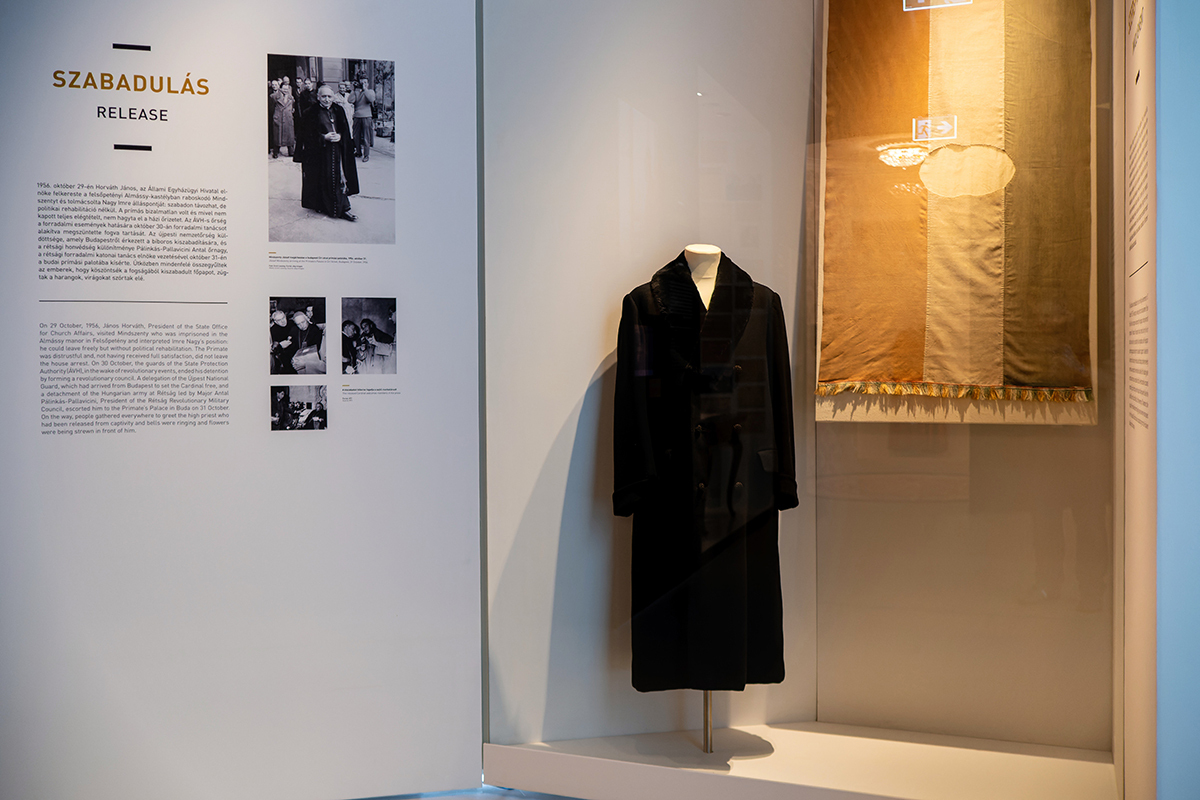
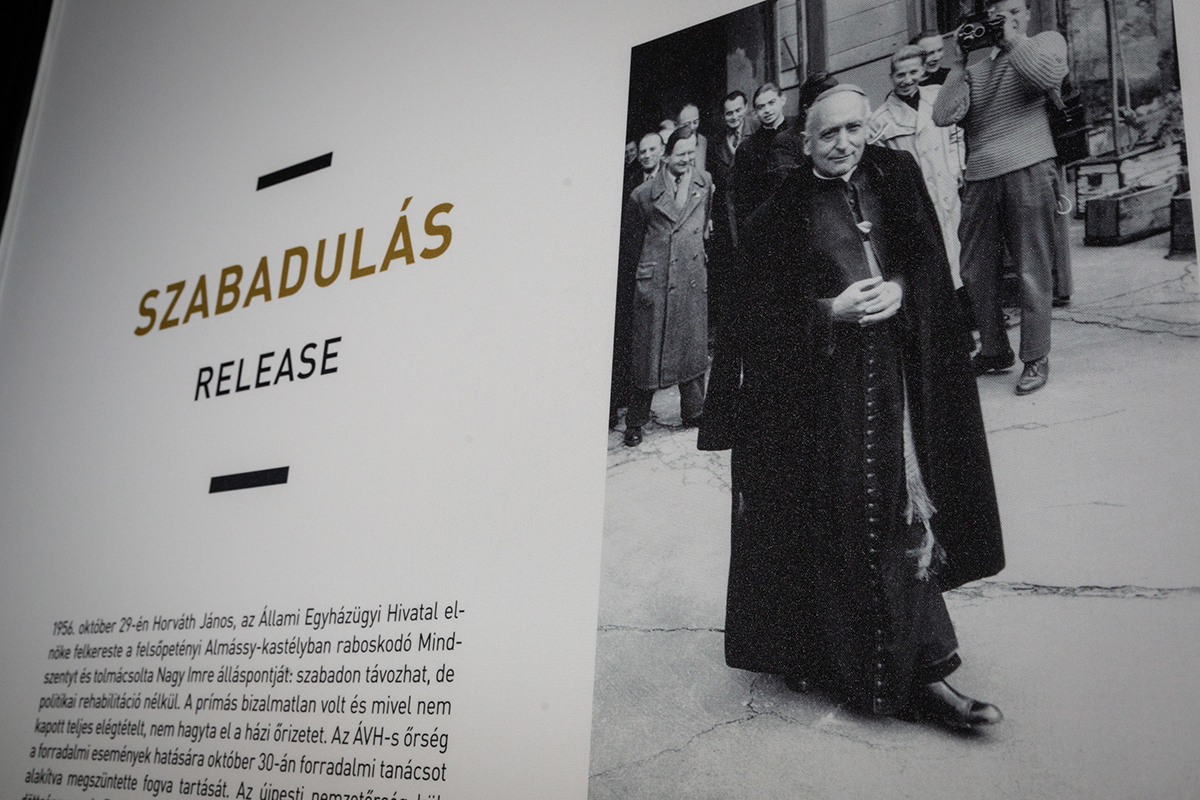
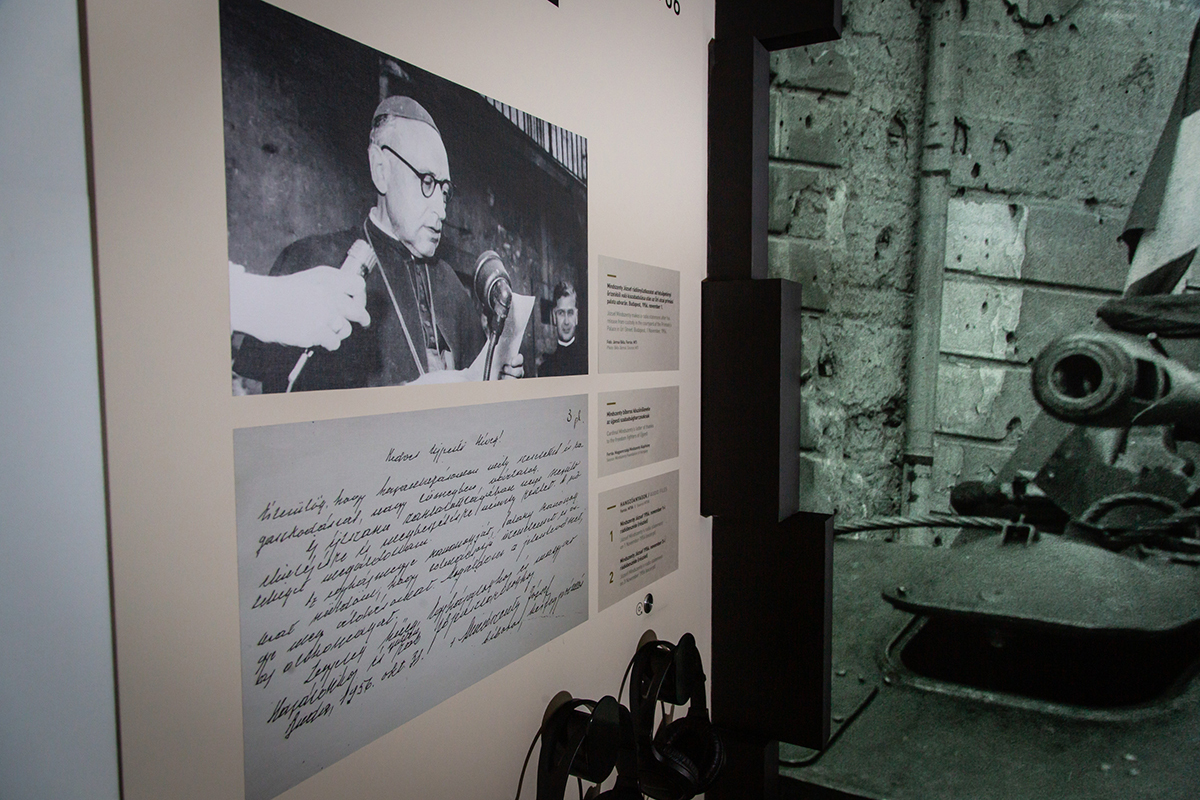
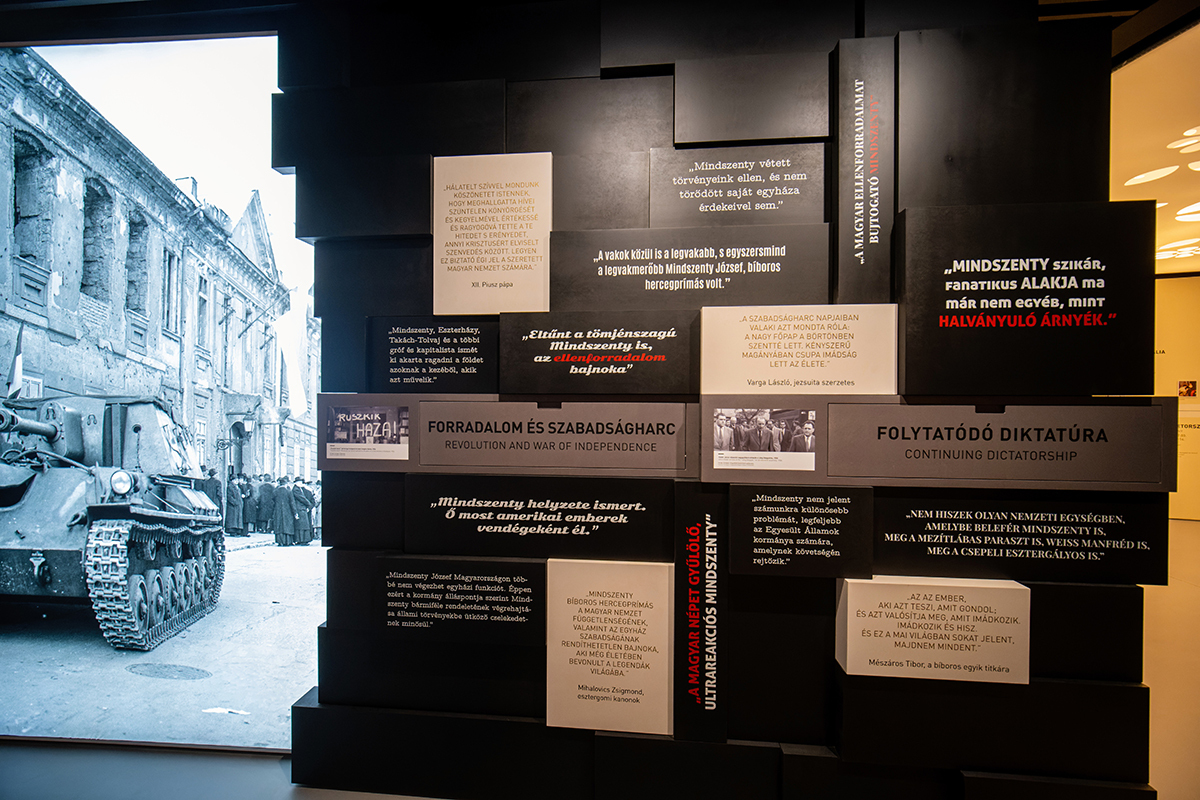
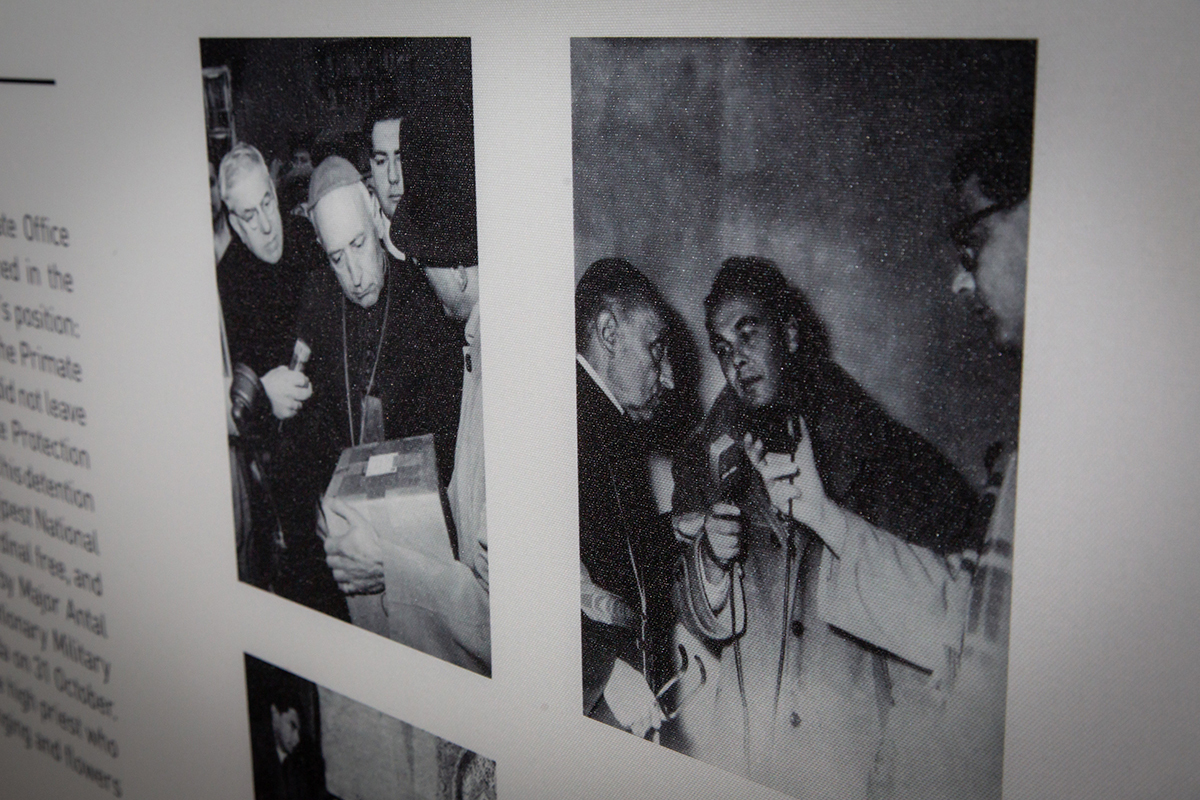
In 1956, for a brief period, the hope of freedom briefly emerged in the life of Cardinal Mindszenty and in the life of the country as well. The prelate regained his freedom on 30 October; the revolutionary events are presented through his personal belongings, as well as his speeches delivered on Hungarian Radio on 1 November and 3 November.
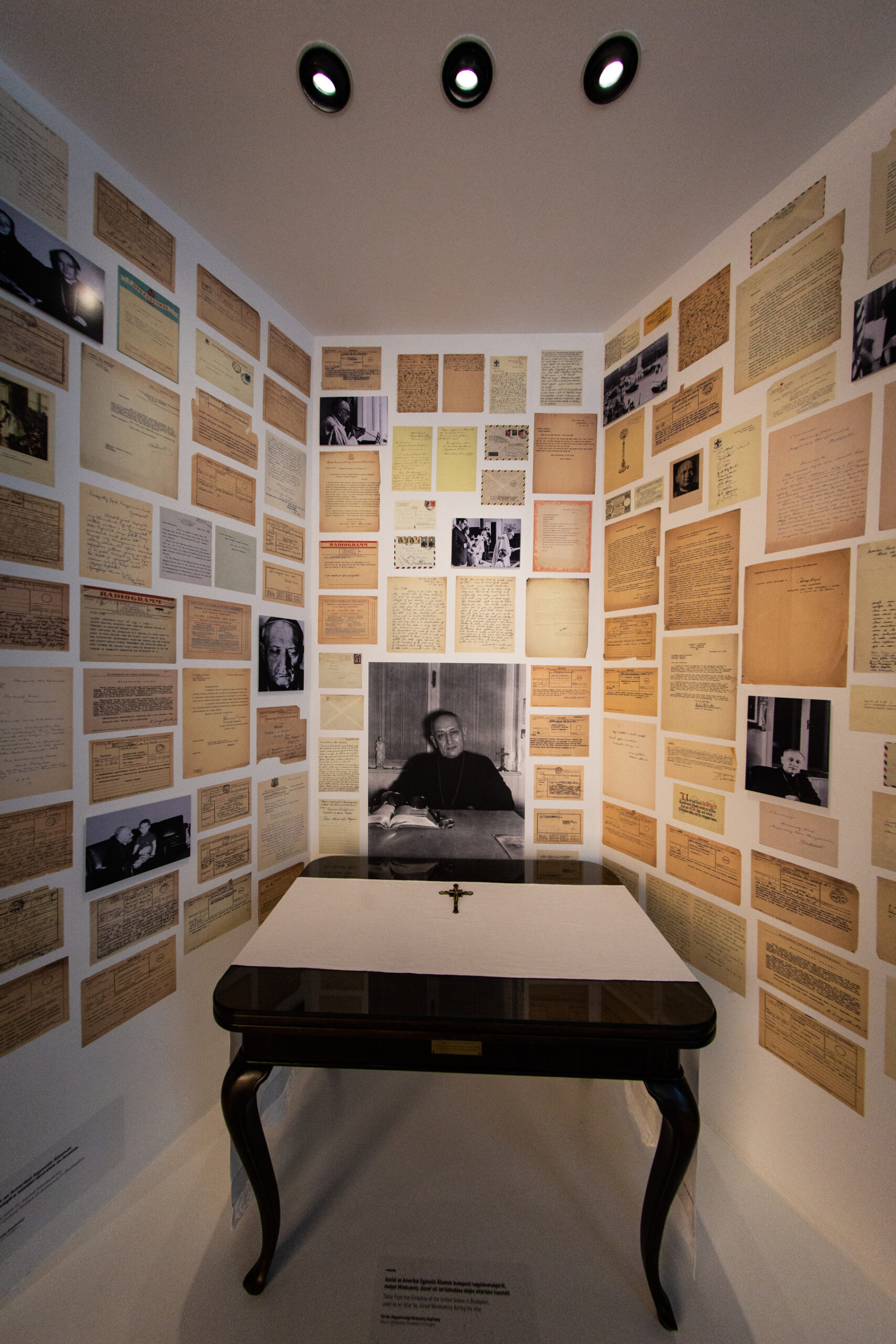
These few days of freedom were followed by renewed confinement: due to the Soviet threat, Mindszenty went to the American Embassy on 4 November; President Eisenhower granted him asylum within half an hour.
Mindszenty’s release – 30 October 1956
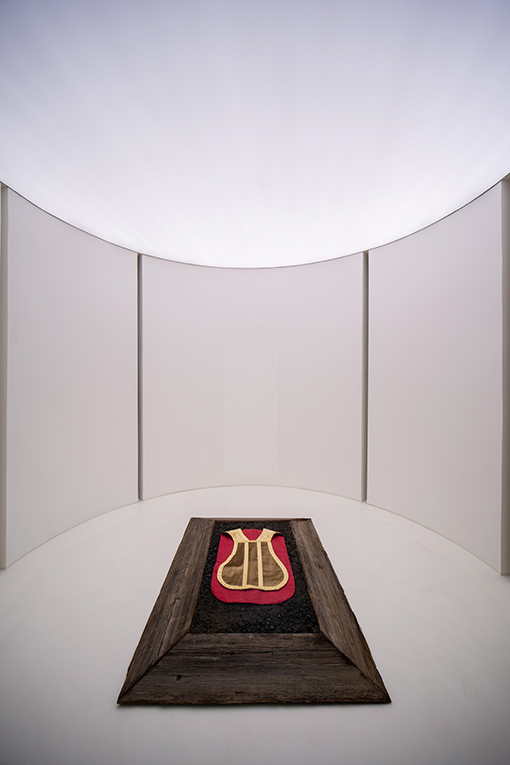
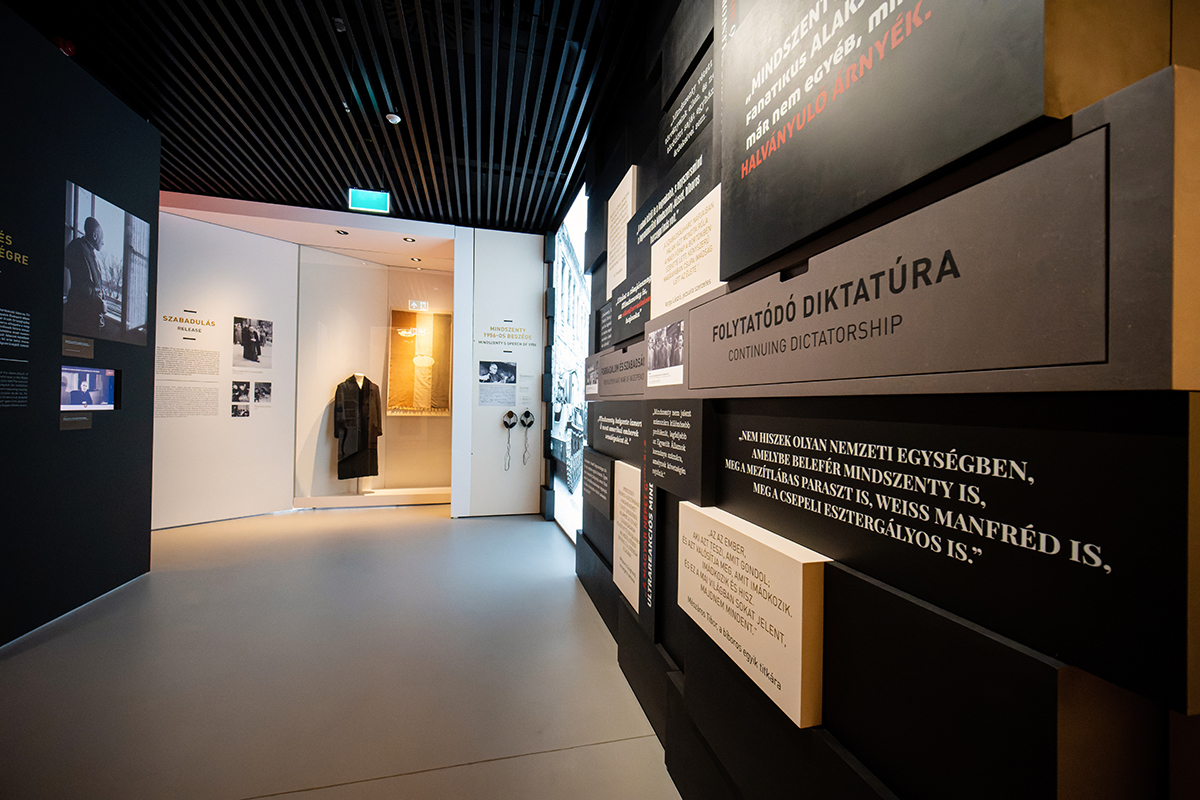
The natural light entering this section of the Mindszenty exhibition symbolizes liberation. This is perhaps one of the best-known episodes of the cardinal’s eventful life.

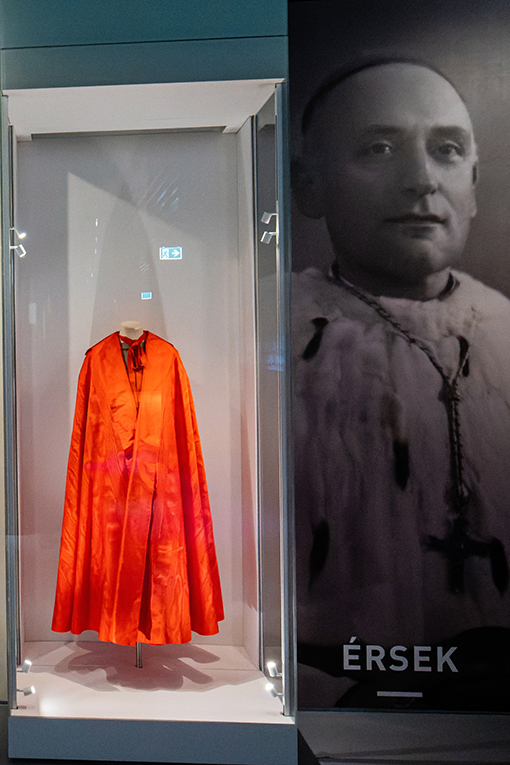
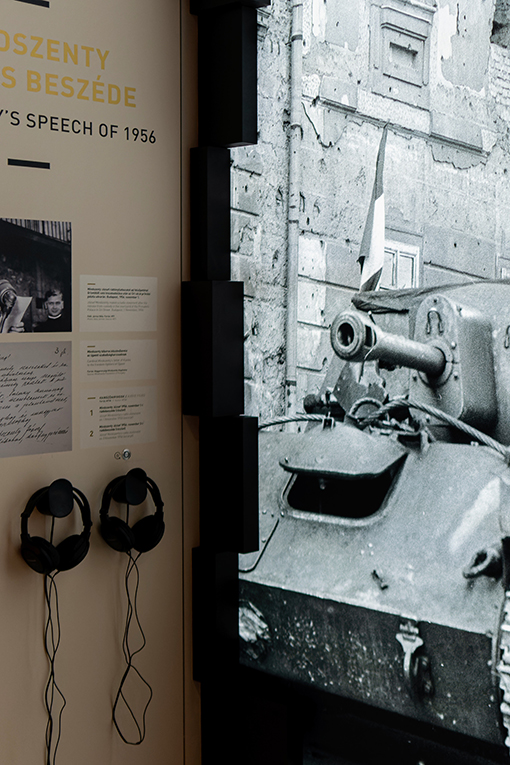
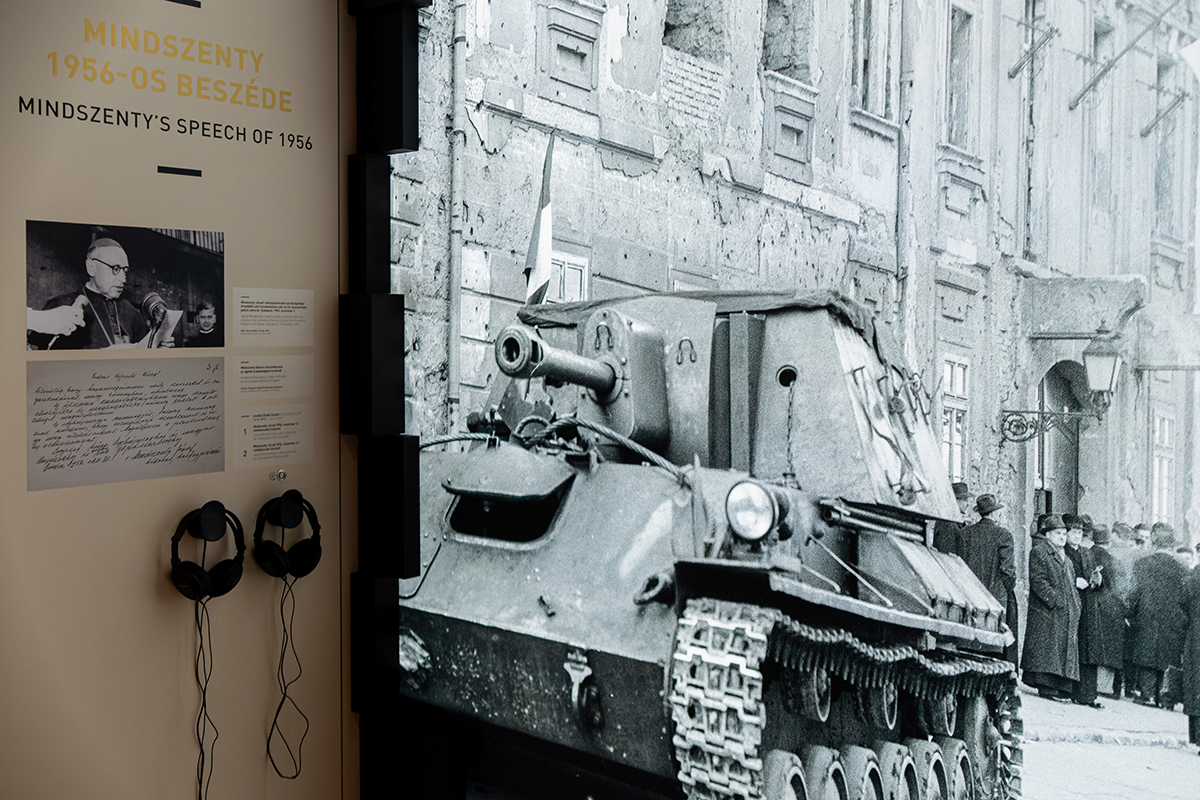
His release on 30 October 1956 is evoked through his most personal objects: the winter coat he wore at the time, the 1956 flag preserved in his estate, and his two famous, historically significant radio speeches.
The “address to the nation” faithfully reflects his faith in divine providence and love for his country. The closing part of his 3 November speech has been preserved in written accounts and his memoirs; however, in the archival radio recording the final sentence is missing or cut off: “We, who are attentive and seek to promote the good of the entire nation, trust in Providence – and not in vain.”
Cardinal Mindszenty wrote a letter of thanks to the national guards of Újpest for his release; this letter can be read on the wall above the headphones.
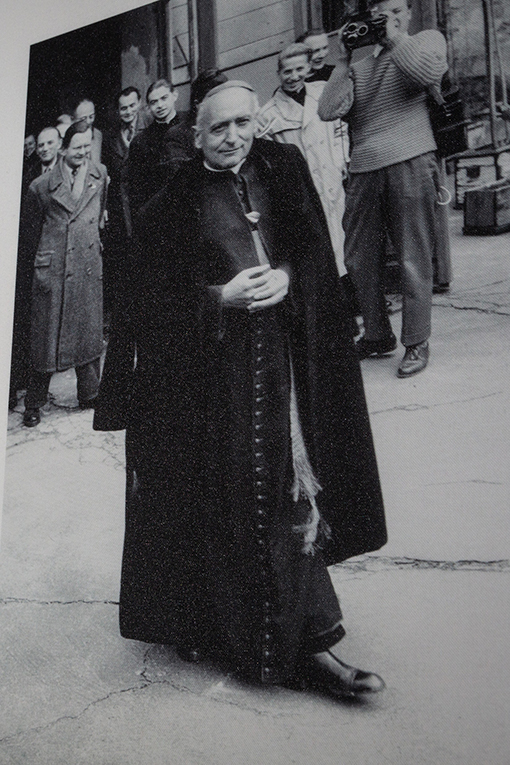
In the image, Mindszenty is seen in his black winter coat. A notable detail is that his pectoral cross is missing, and a cockade pinned to his cassock symbolizes his full identification with the revolution.
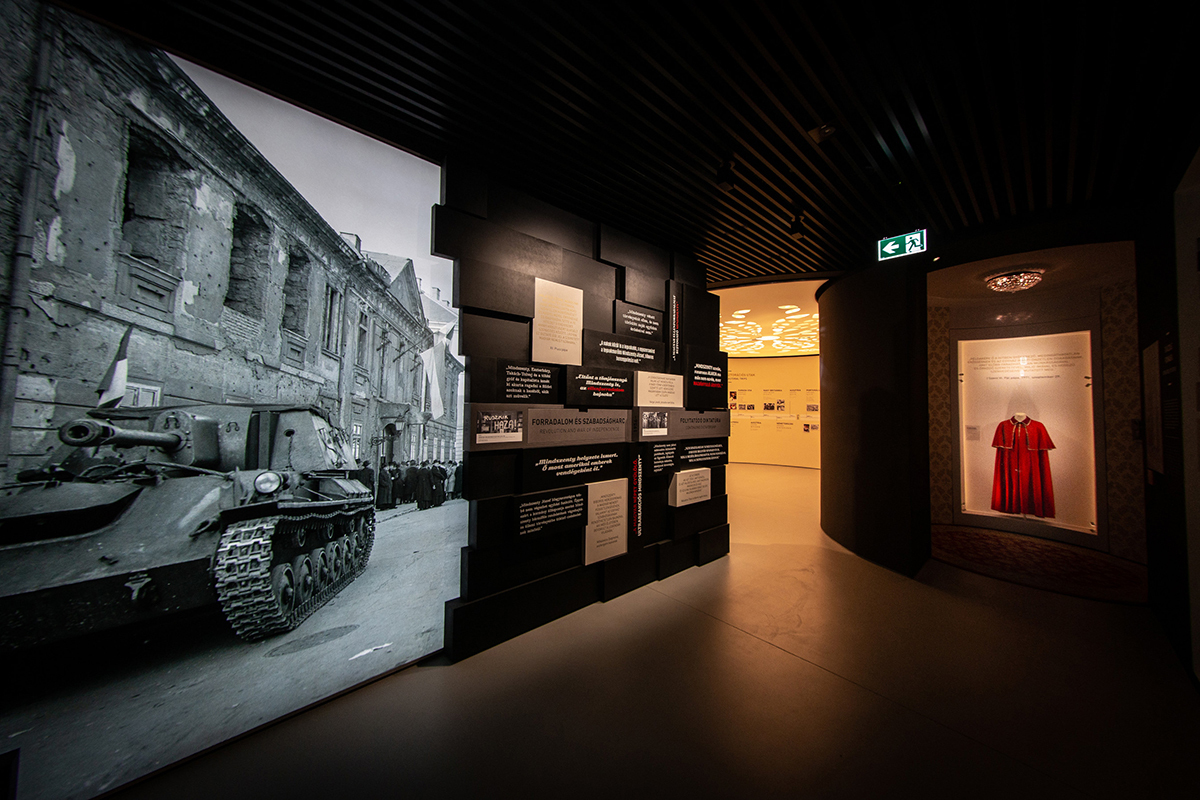
“The land of ruins, the house of ruins”
Cardinal Mindszenty had previously often referred to this illuminated archival image of a building at Úri Street 62 in Buda, known as the “Little Primate’s Palace” in comparison to the grand residence in Esztergom. During his four days of freedom in 1956, he also lived here. In his memoirs he mentions that:
“there were a few habitable rooms among the wartime ruins.”
When Mihály Marczell, rector of the Central Seminary, invited him to stay in the more comfortable seminary building instead, he replied:
“It is only right that the Primate of the land of ruins should live in a house of ruins.”
In 1956, the course of historical events made it impossible for him to return to Esztergom as originally planned.