Whenever possible, the ruling Communist Party operated an anti-church propaganda machine behind the scenes. It first launched conspiracy theories, smear campaigns, and fabricated press reports against the churches in an effort to undermine public trust in them as quickly as possible.
At the same time, the religious press came under increasingly strict censorship to prevent the so-called “clerical reaction” from gaining influence.
Anti-Church Party Propaganda – “Clerical Reaction”
The story begins in the aftermath of the Second World War. The campaign against the so-called “clerical reaction” started in the media of the time, employing the regime’s most effective tools of mass influence: conspiracy theories, smear campaigns, and fabricated news reports. Most of these attacks were directed against members of the clergy, religious communities, and the alleged “clerical reaction”.
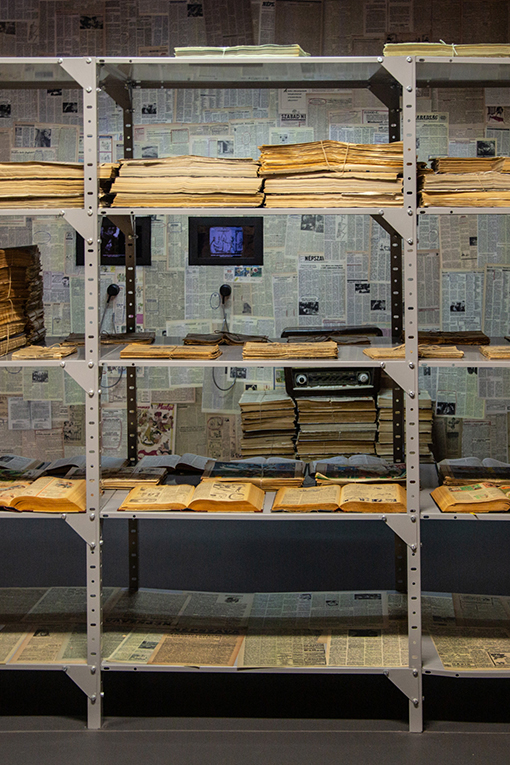
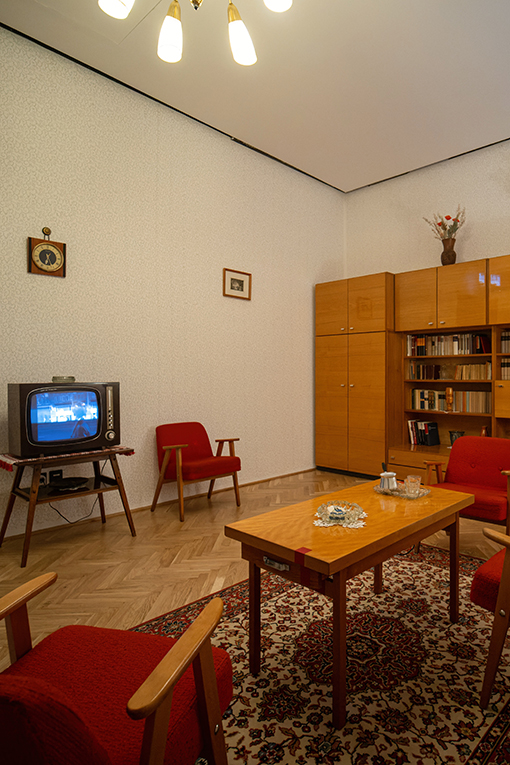
For this reason, the exhibition’s second room places visitors in an archive-like newspaper storage area. Here, walls covered with manipulative propaganda, satirical magazine cartoons, towering piles of newspapers, aggressive speeches broadcast from radios, and accusations and hate-filled films playing on television recreate the atmosphere of the communist-socialist era.
In addition to hundreds of newspaper articles, caricatures, and leaflets, visitors can watch ten archival newsreels. You can browse historical newspaper articles while excerpts from one of Mátyás Rákosi’s speeches play over the radio.
Censorship
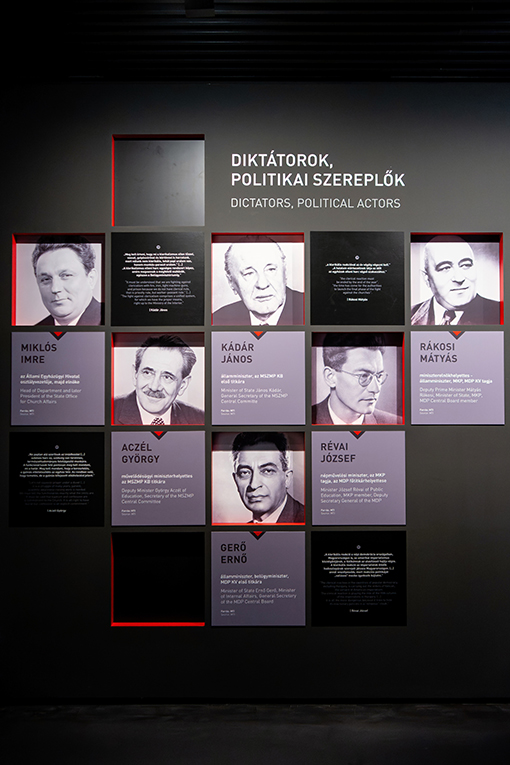
The architects of the Rákosi dictatorship could not allow information channels to operate independently of state control. Strict censorship was therefore imposed on religious publications as well. Later, the Kádár regime also maintained close supervision over officially permitted church publications, monitoring them continuously. They were prohibited from publishing any political content expressing criticism of, or hostility toward, the one-party state.
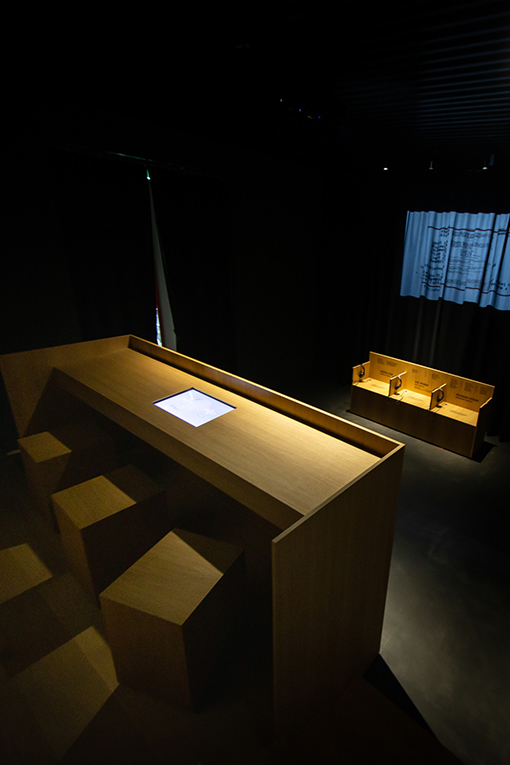
The severity of this censorship is illustrated by the analyses of church publications, statistical reports, and official records available on the interactive touchscreen installed in the exhibition room.