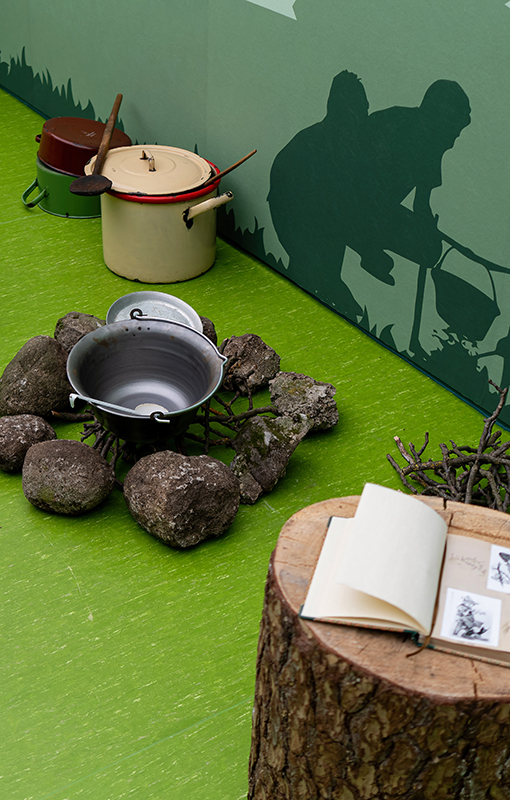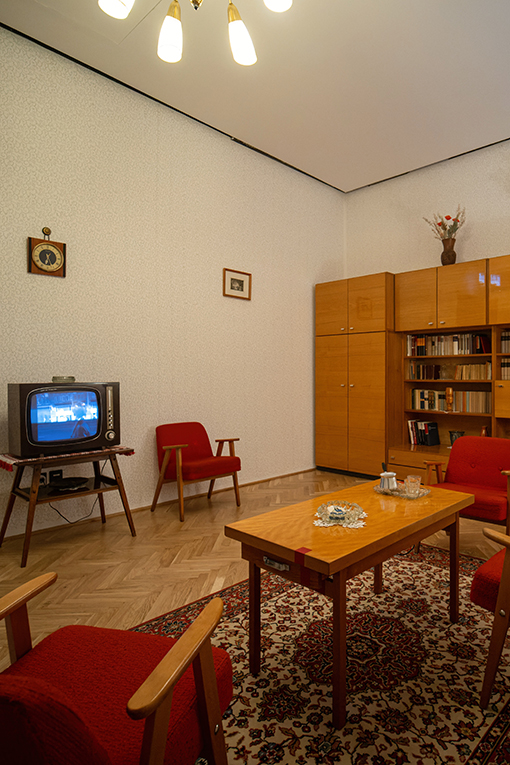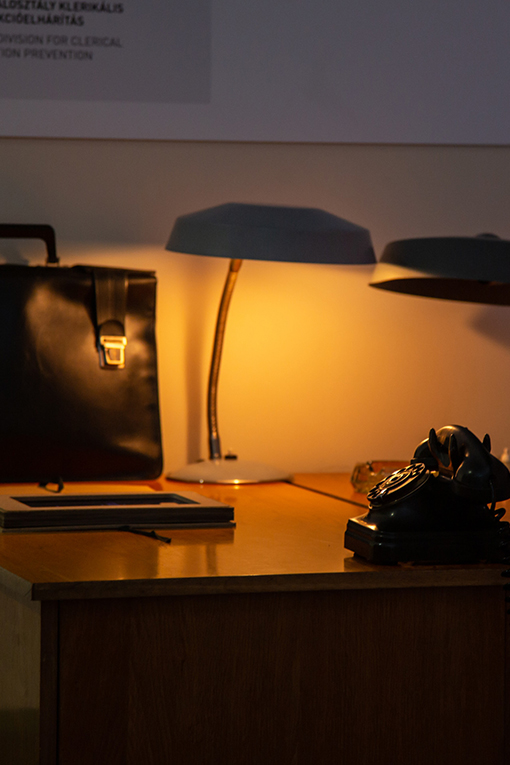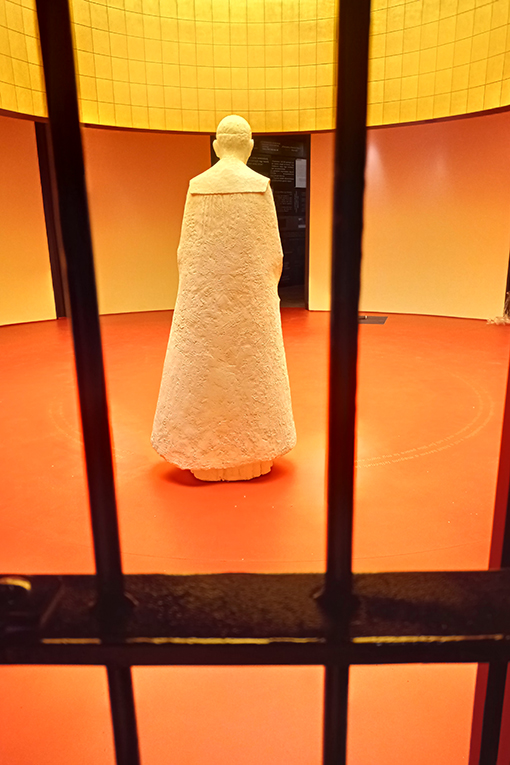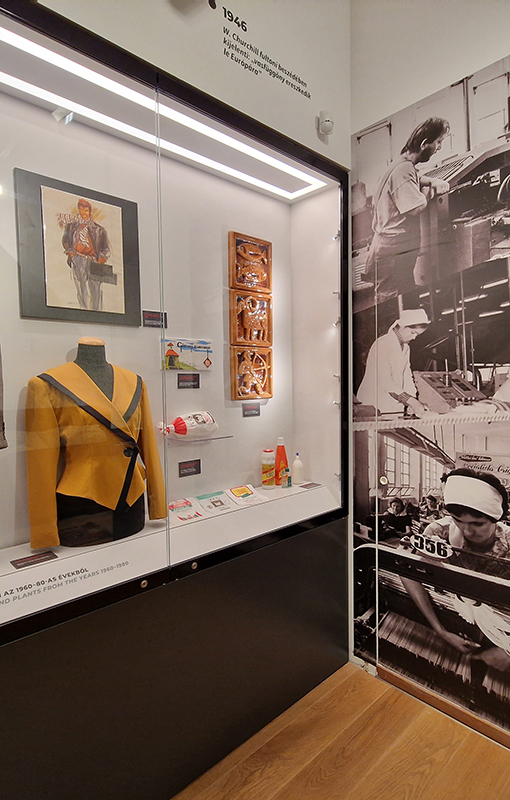
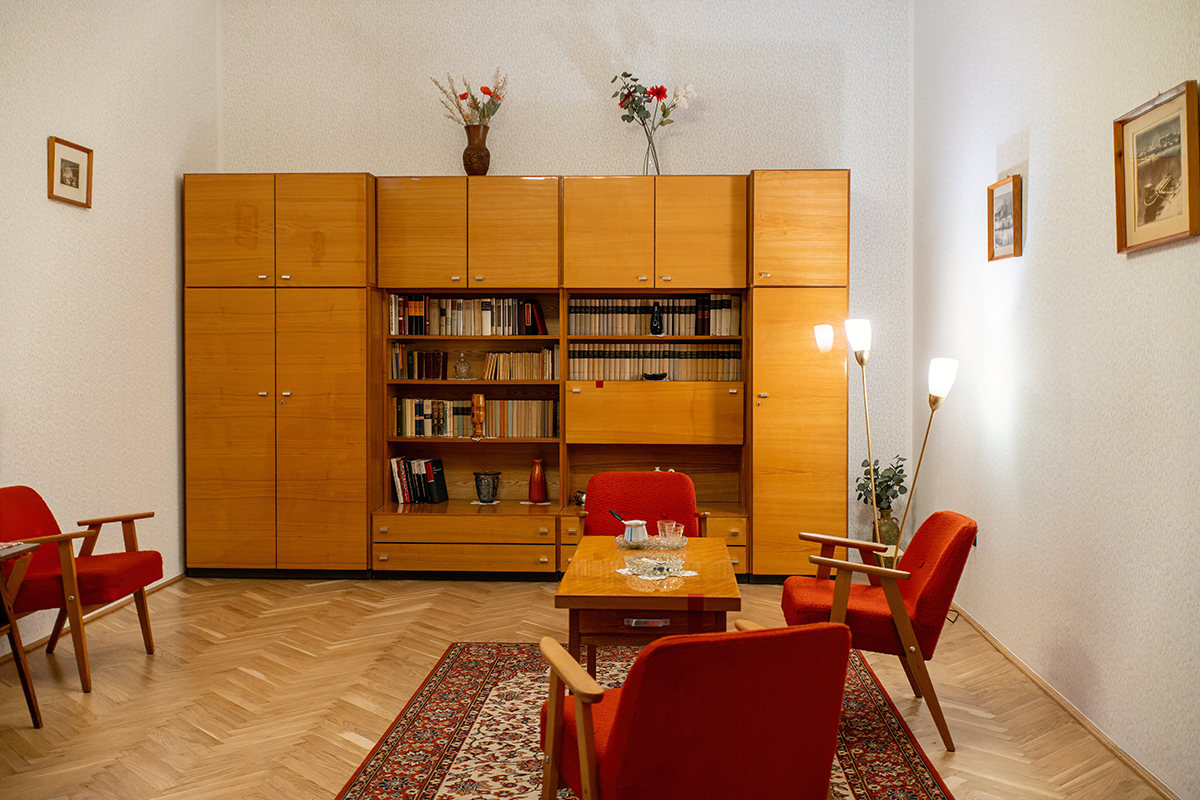
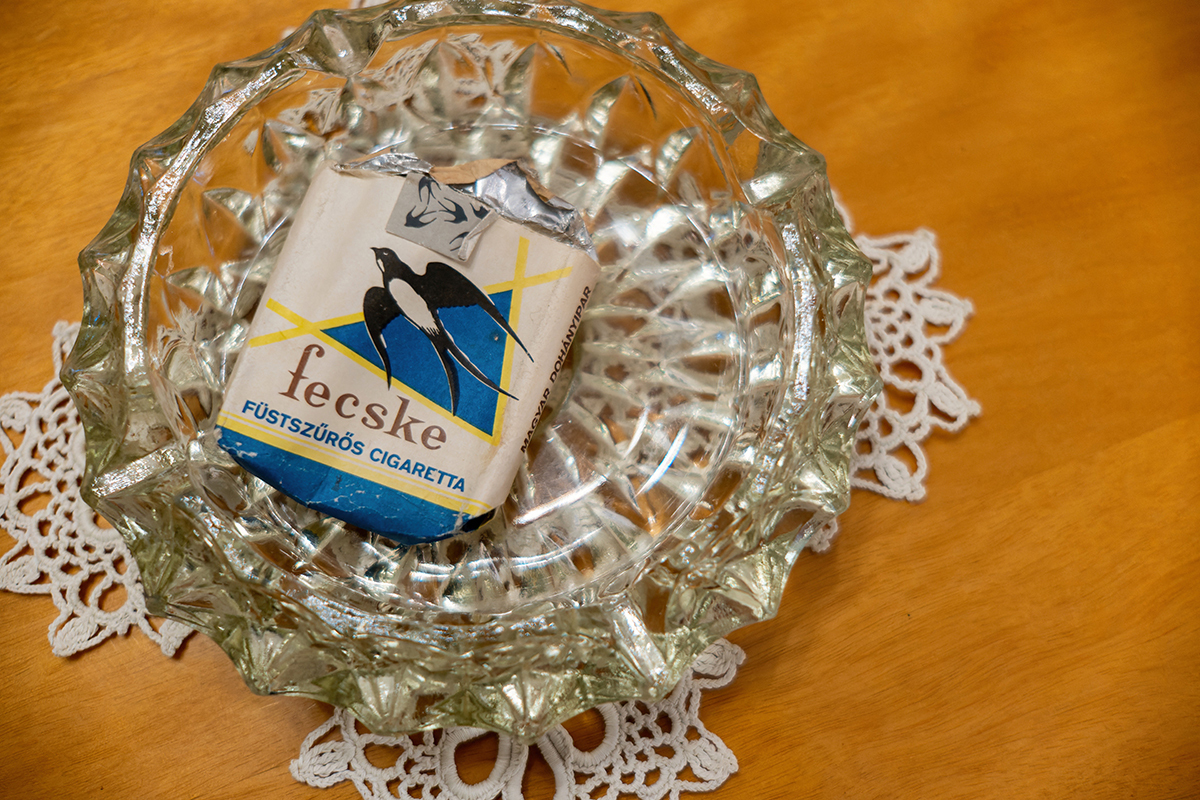
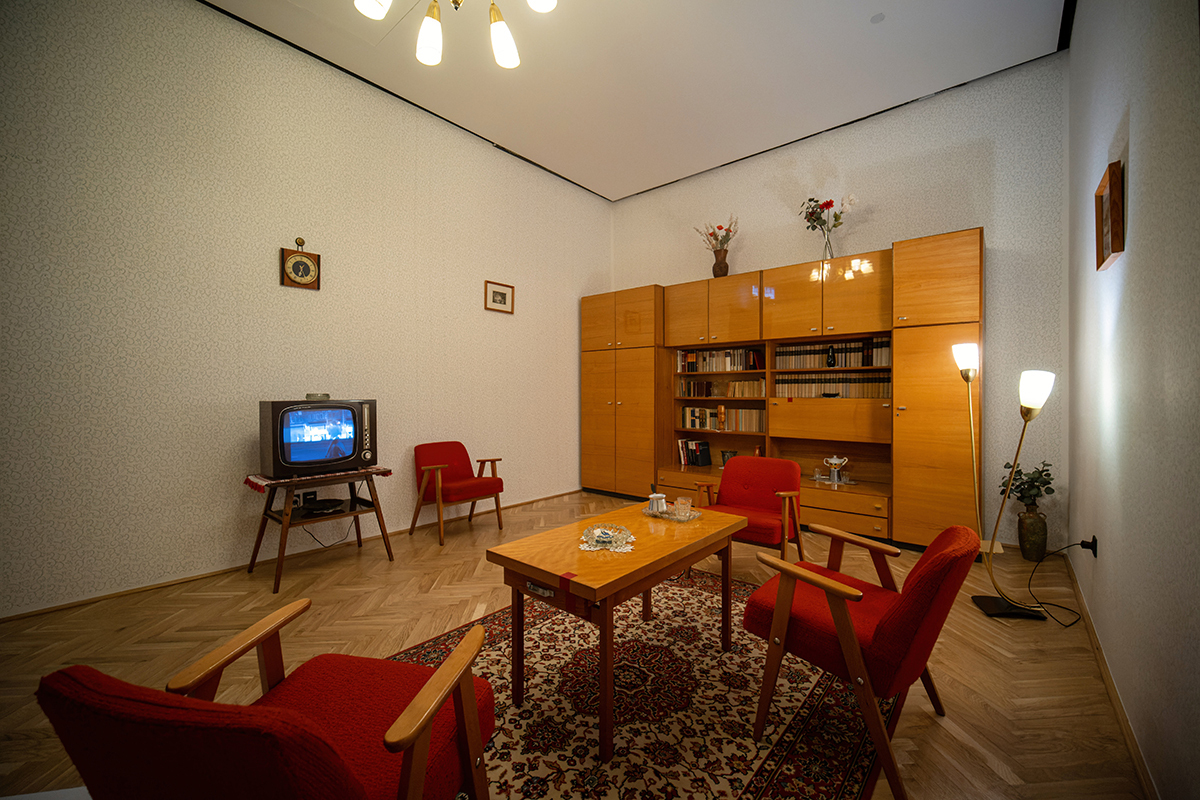
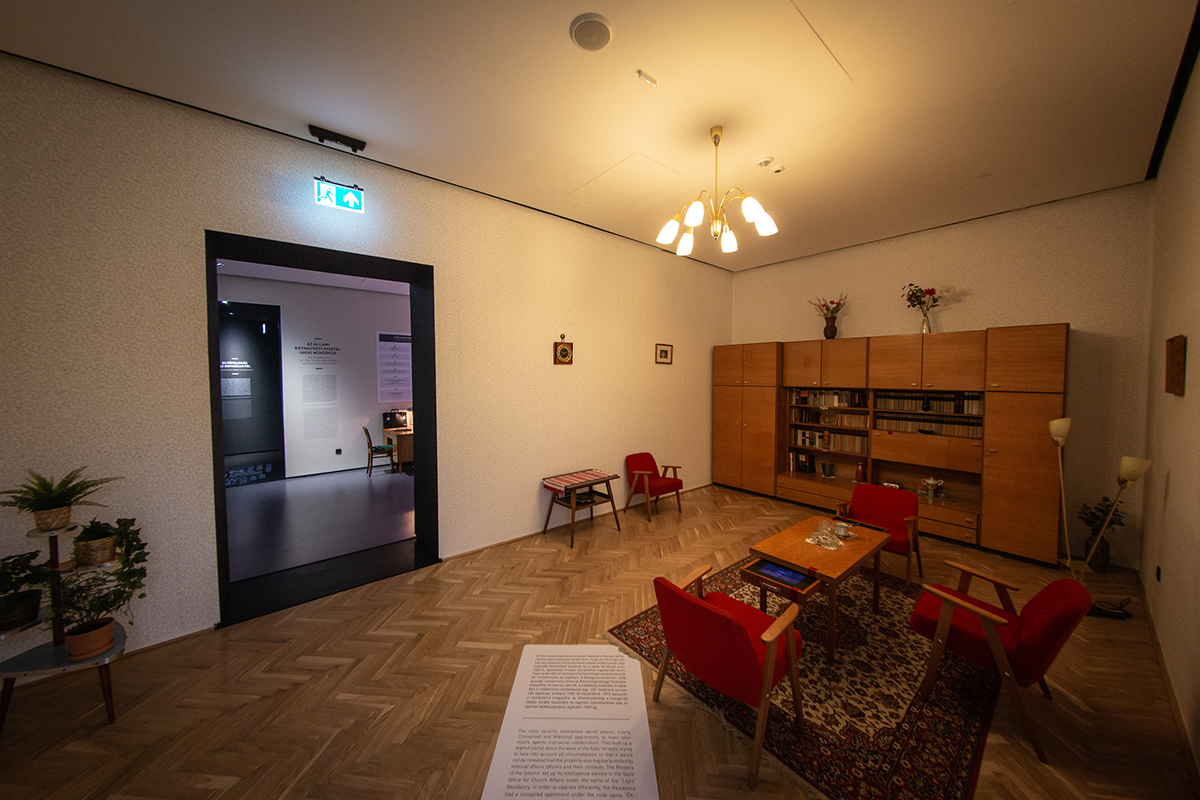
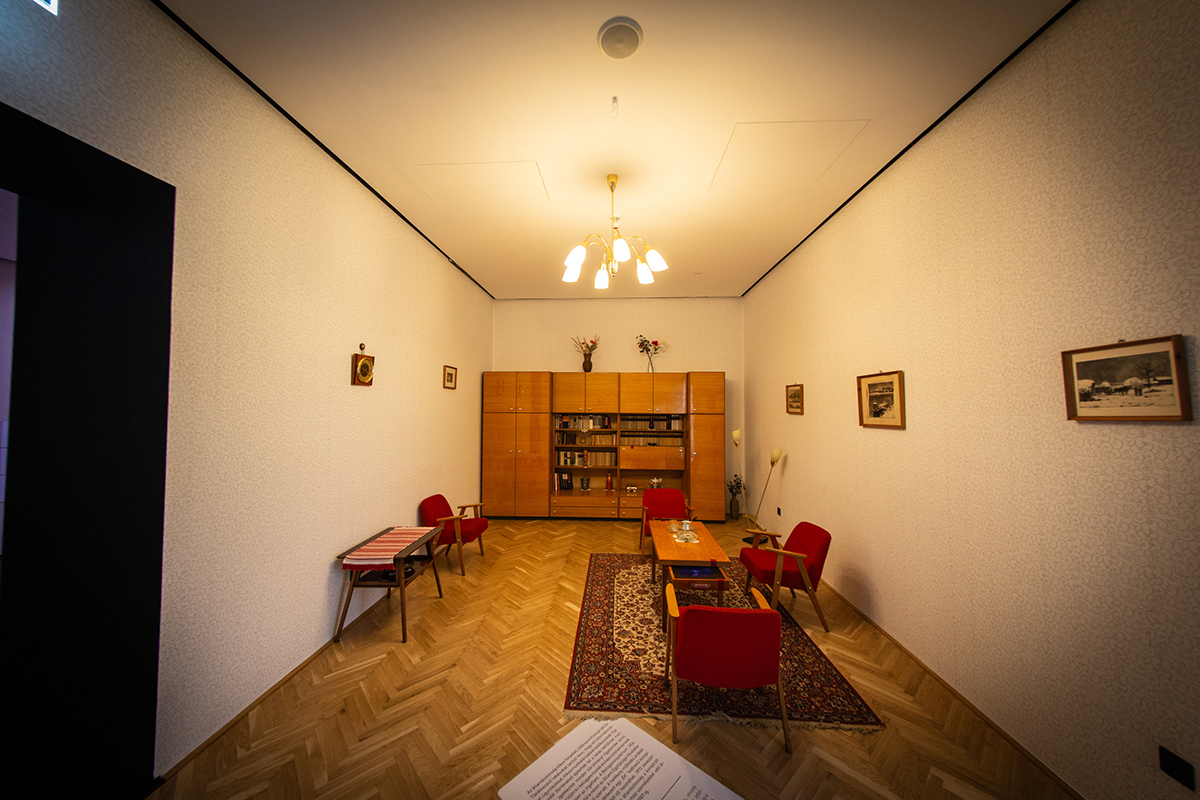
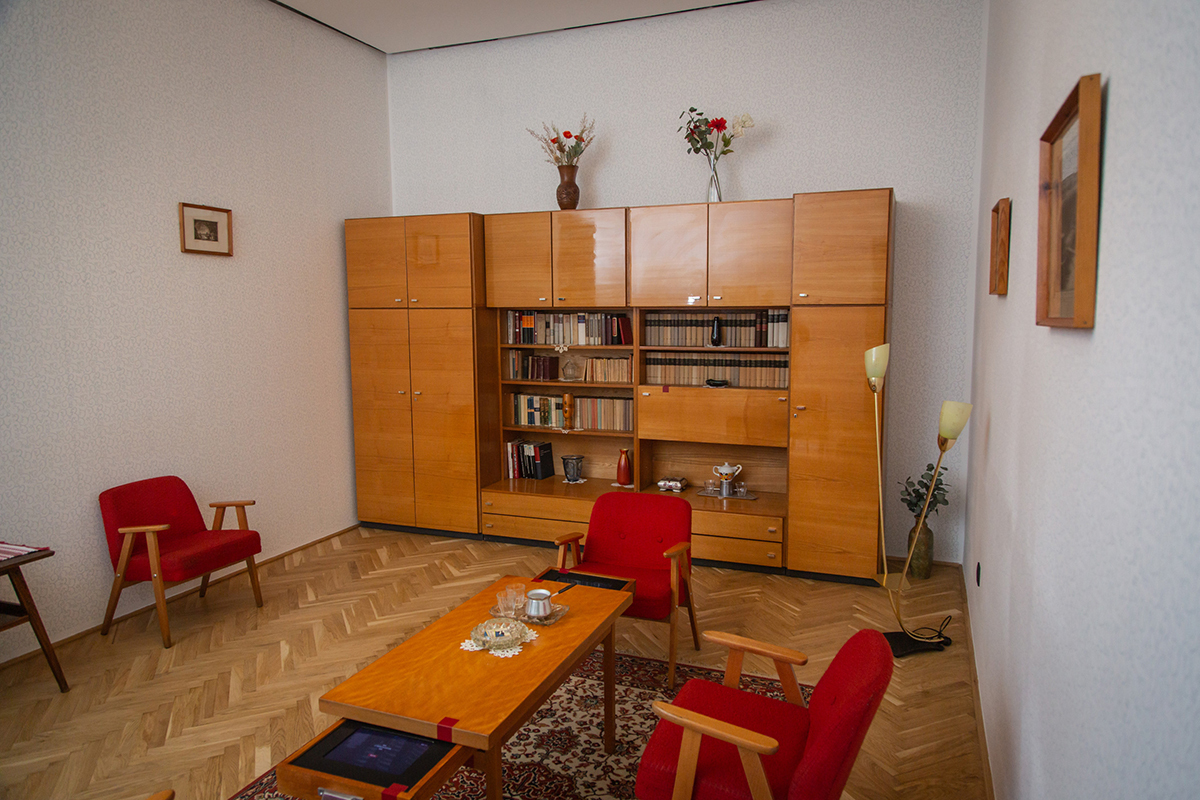
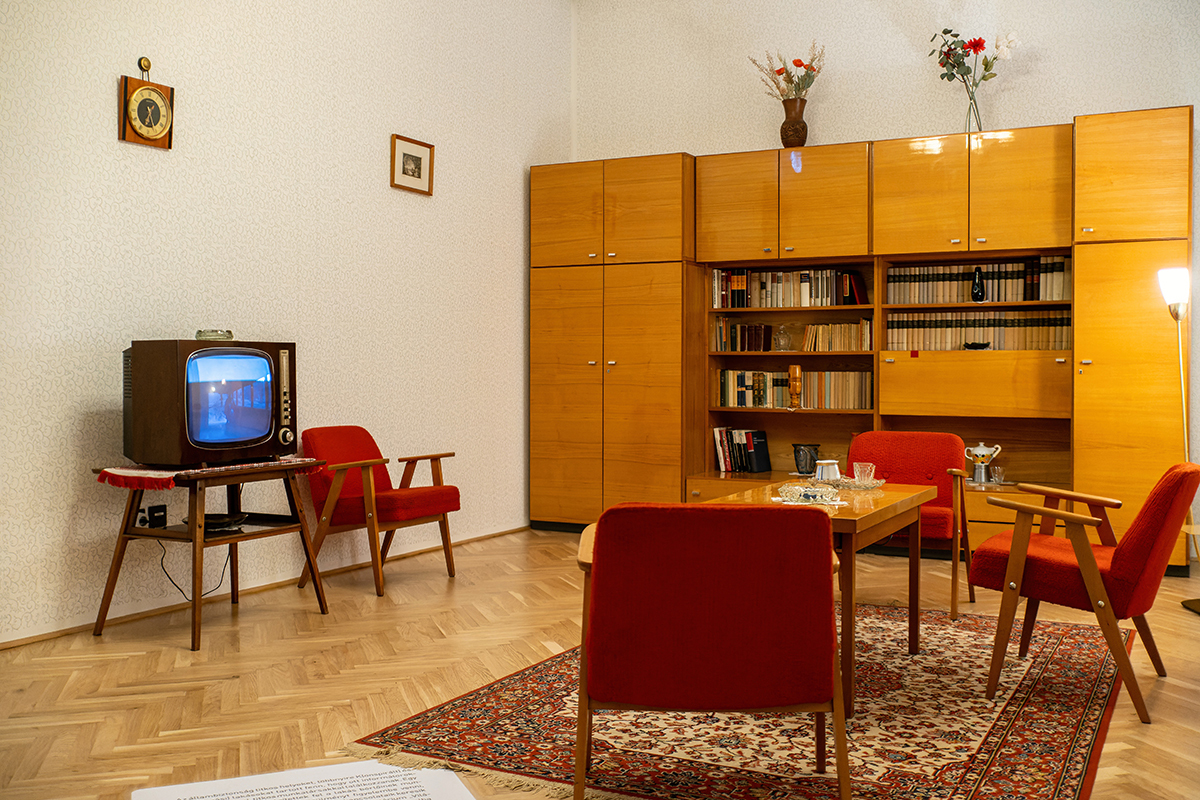
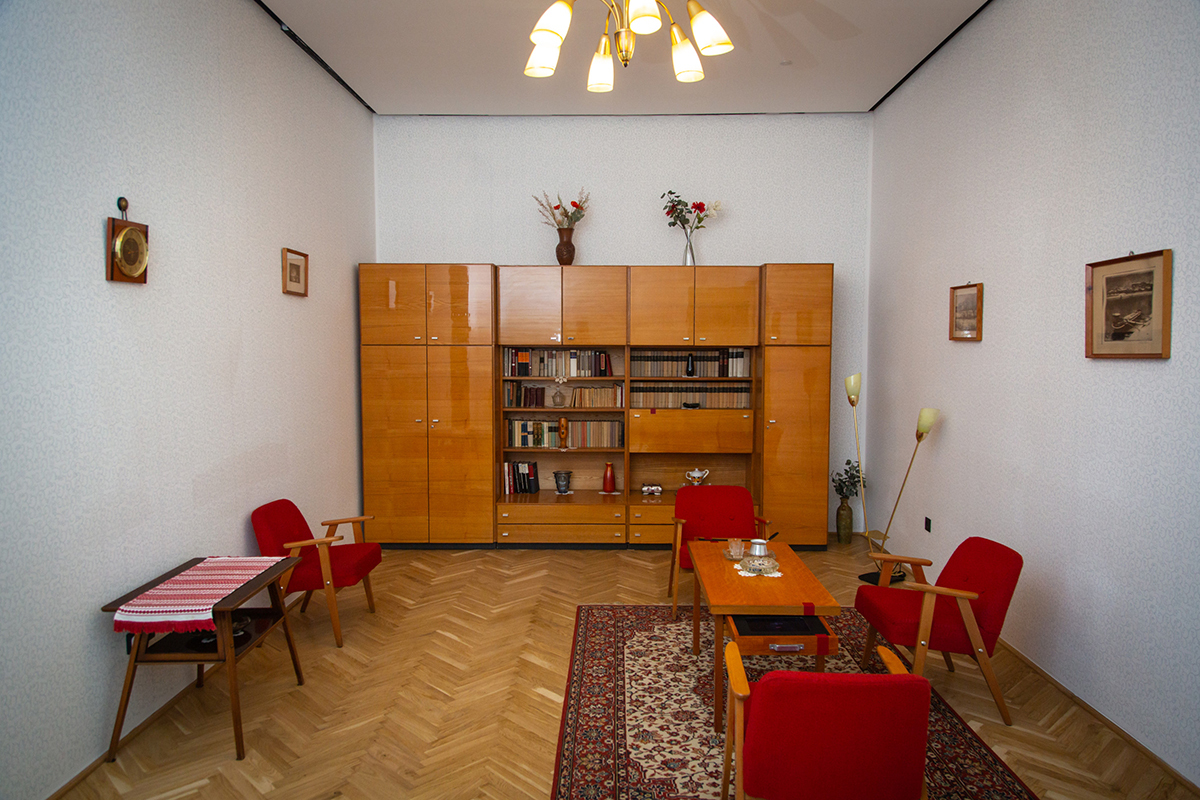
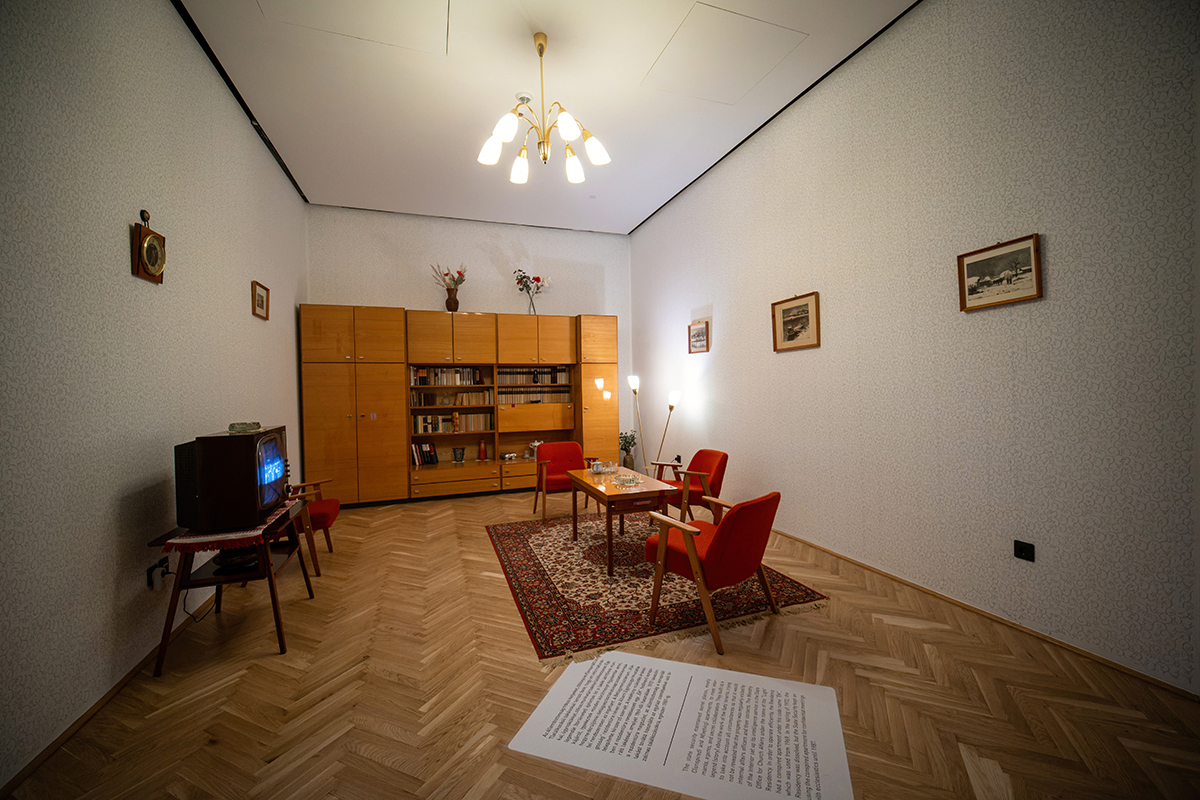
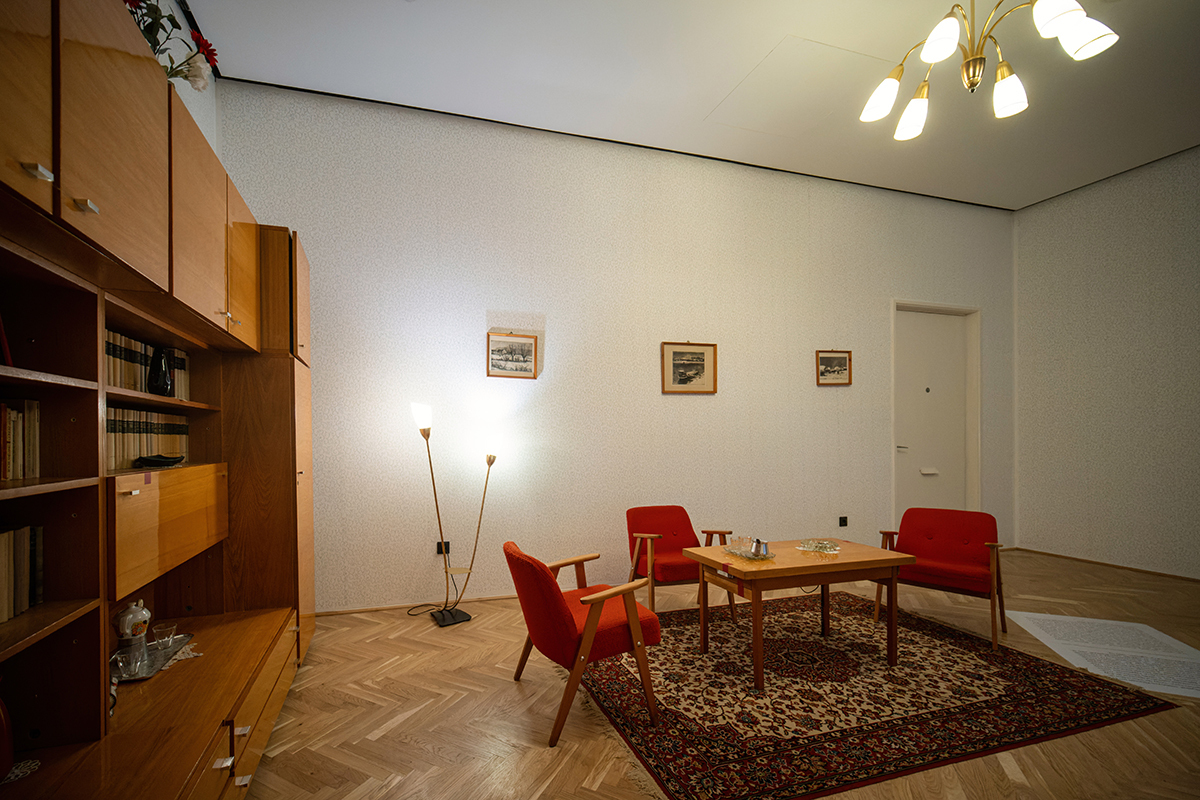
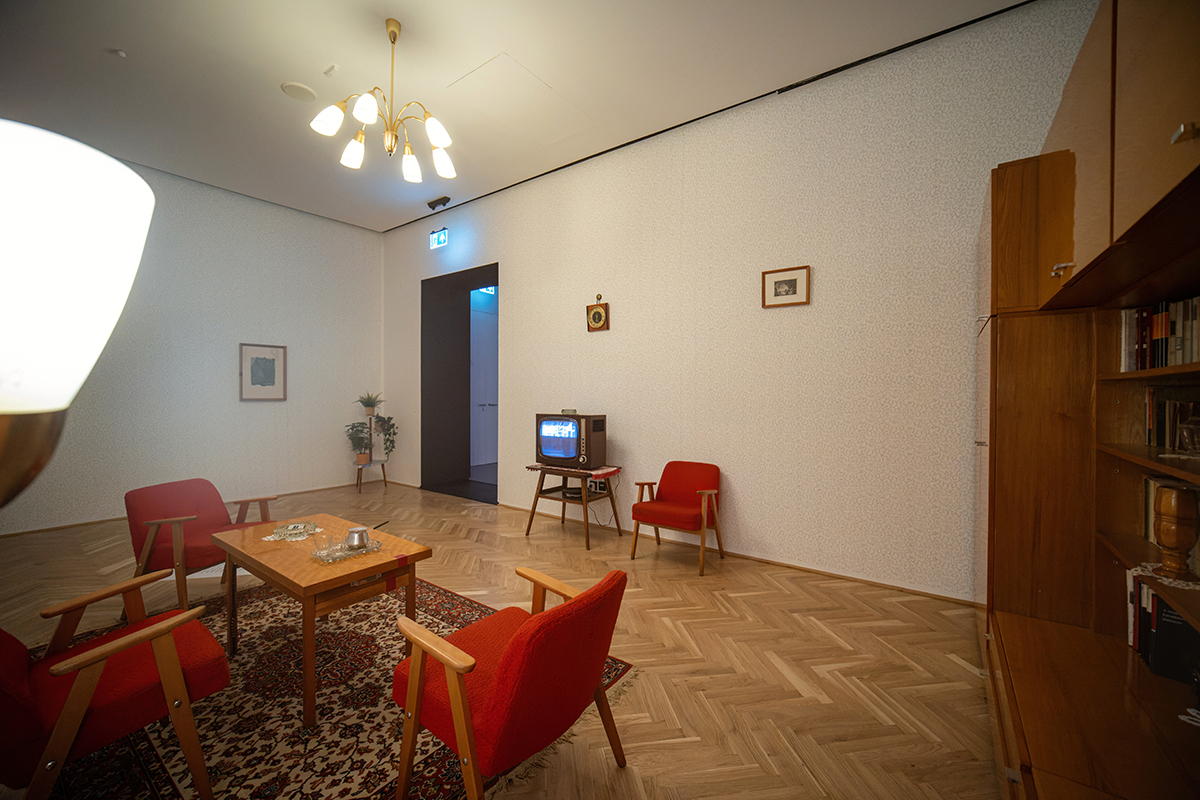
From the idyllic atmosphere of birdsong, visitors suddenly step into a period interior resembling the secret apartments once used by surveillance officers. This abrupt change of perspective can be disorienting, as visitors move from the viewpoint of the surveilled to that of the surveillors.
At first glance, there is nothing remarkable about the apartment. Precisely because of its ordinary appearance, visitors are encouraged to conduct their own “house search” and piece together small fragments of information to discover the true purpose of the room.
Safe House (K-Apartment)
Interactive red ribbons are hidden throughout the room, providing the clues needed to solve the mystery. As visitors uncover them, they discover that this apartment is one of the era’s so-called K (konspirált, or covert) apartments, where every seemingly ordinary furnishing formed part of a carefully planned disguise.
These concealed apartments served not only as meeting places for members of the secret agent network but also as locations where officials of the Ministry of the Interior and the State Office for Church Affairs met. They functioned as covert intelligence bases.
Discover the Work of the Surveillance Officers!
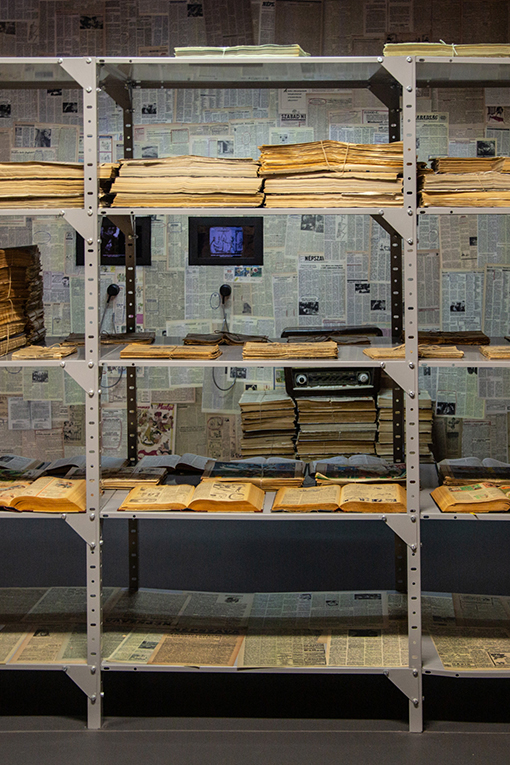
This section of the exhibition resembles an investigative game in which visitors can discover for themselves what the work of the surveillance officers involved. By carefully exploring the room, they may find the operational, so-called “O” files, which the State Security Service opened on monitored individuals, groups, and institutions. These files contained every document and piece of “evidence” related to a particular case, including photographs, agent reports, intercepted correspondence, and transcripts of room and telephone surveillance.
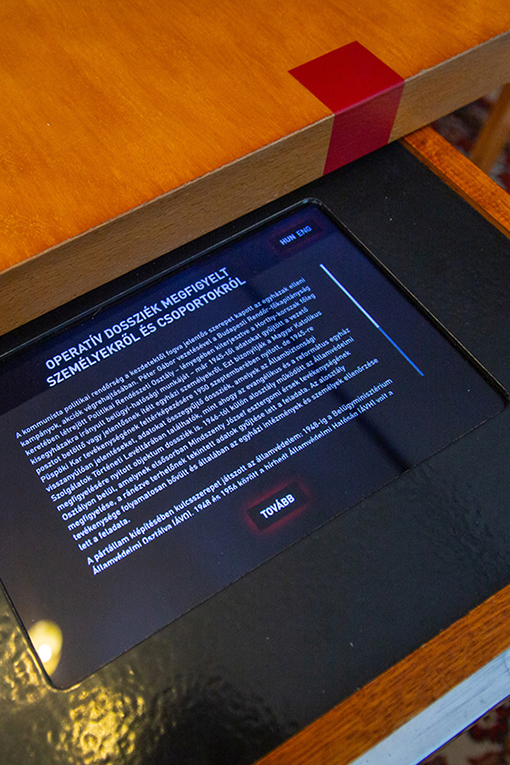
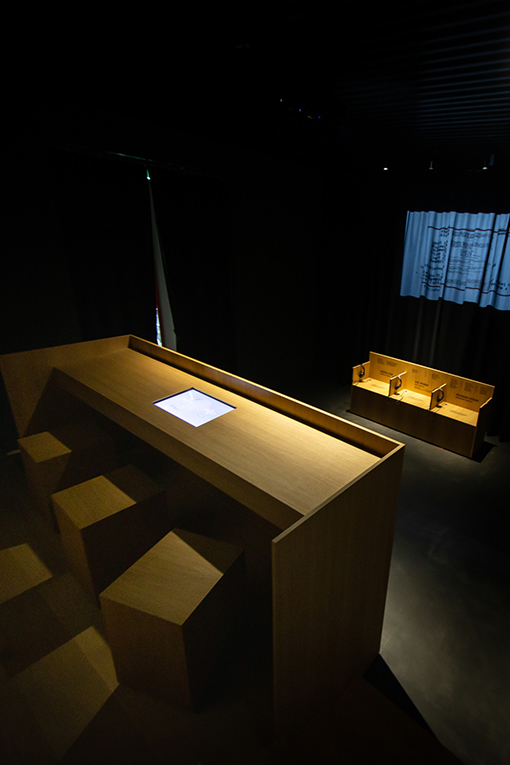
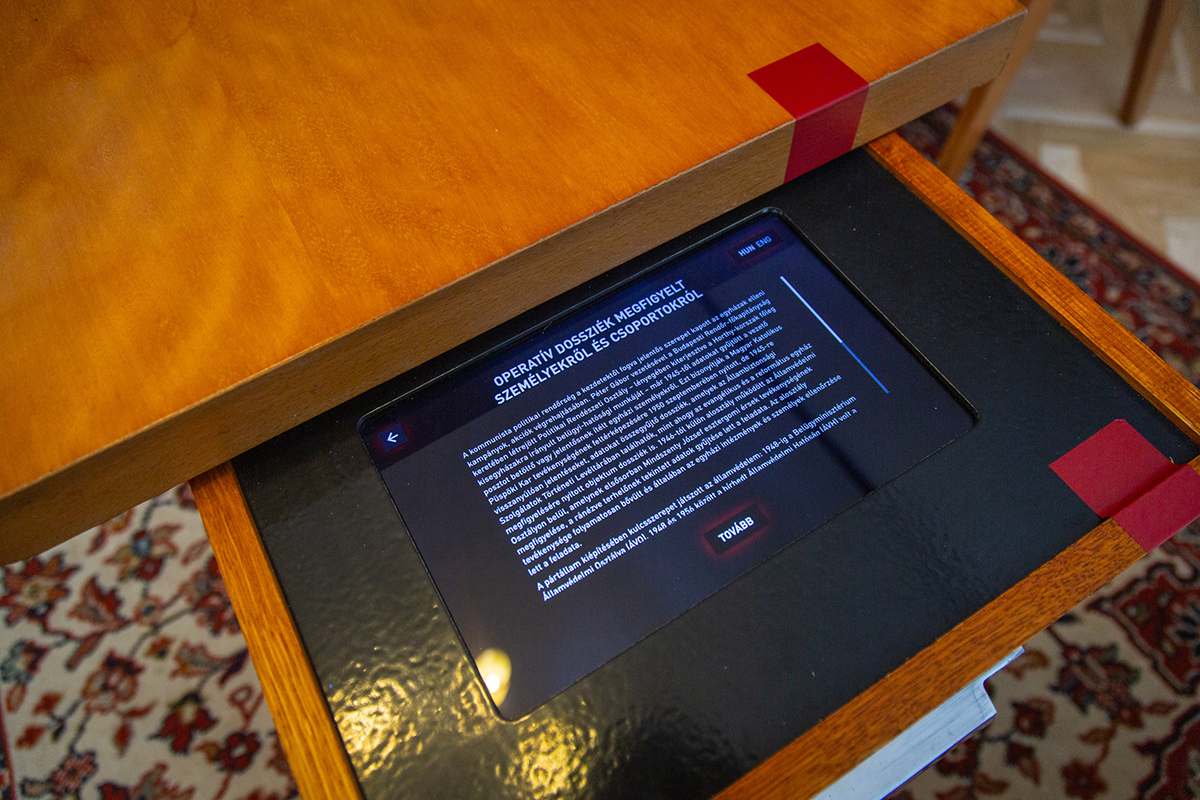
Here you can conduct your own house search. Hidden tablets and a secret safe contain information about the work of the former surveillance officers, allowing you to step into the role of an intelligence operative.
Recruited Informants
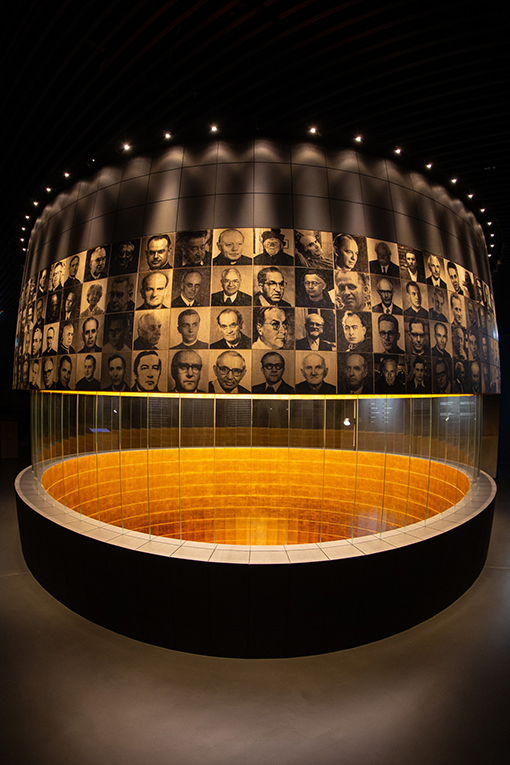
For operational surveillance to function effectively and systematically, the authorities had to recruit selected individuals as informants, including members of the churches themselves. Naturally, these recruitment activities were also documented. The resulting records were kept in the so-called “B” files.
The Ministry of the Interior (BM) also determined how an agent was expected to carry out assignments – whether conducting a covert house search or using these secret apartments as an operational officer. Training films and professional manuals were produced to instruct and support those working within the intelligence network.