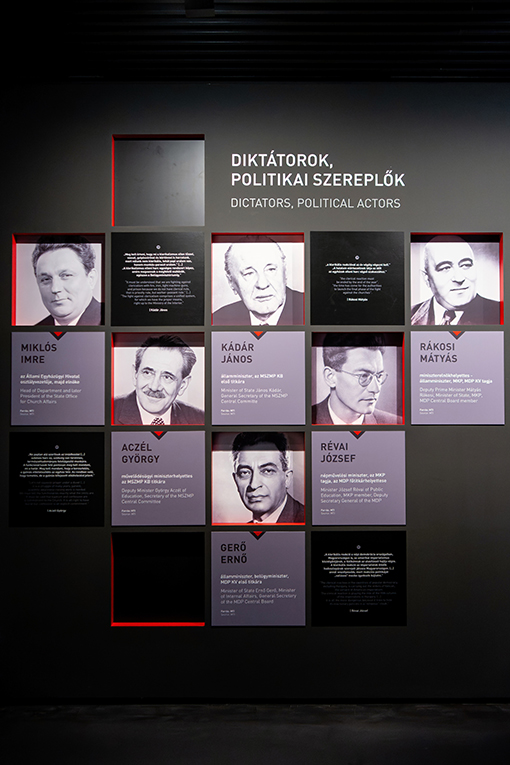


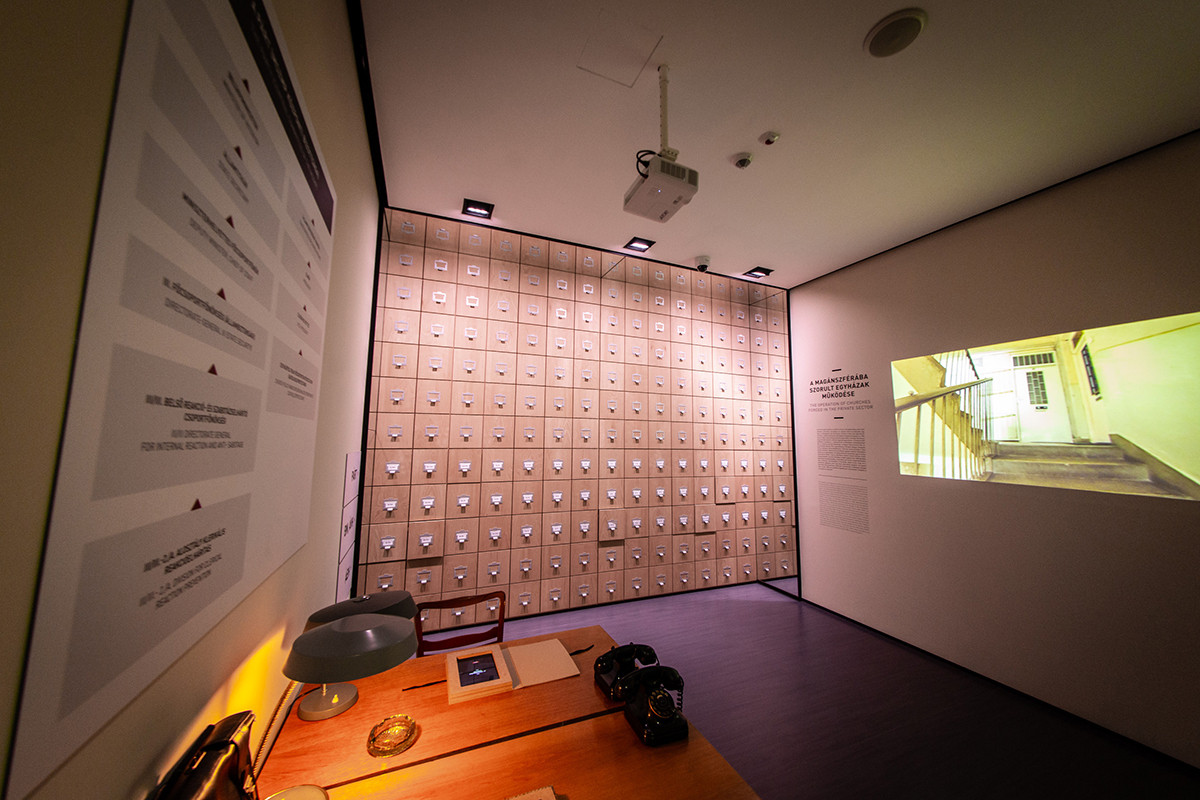


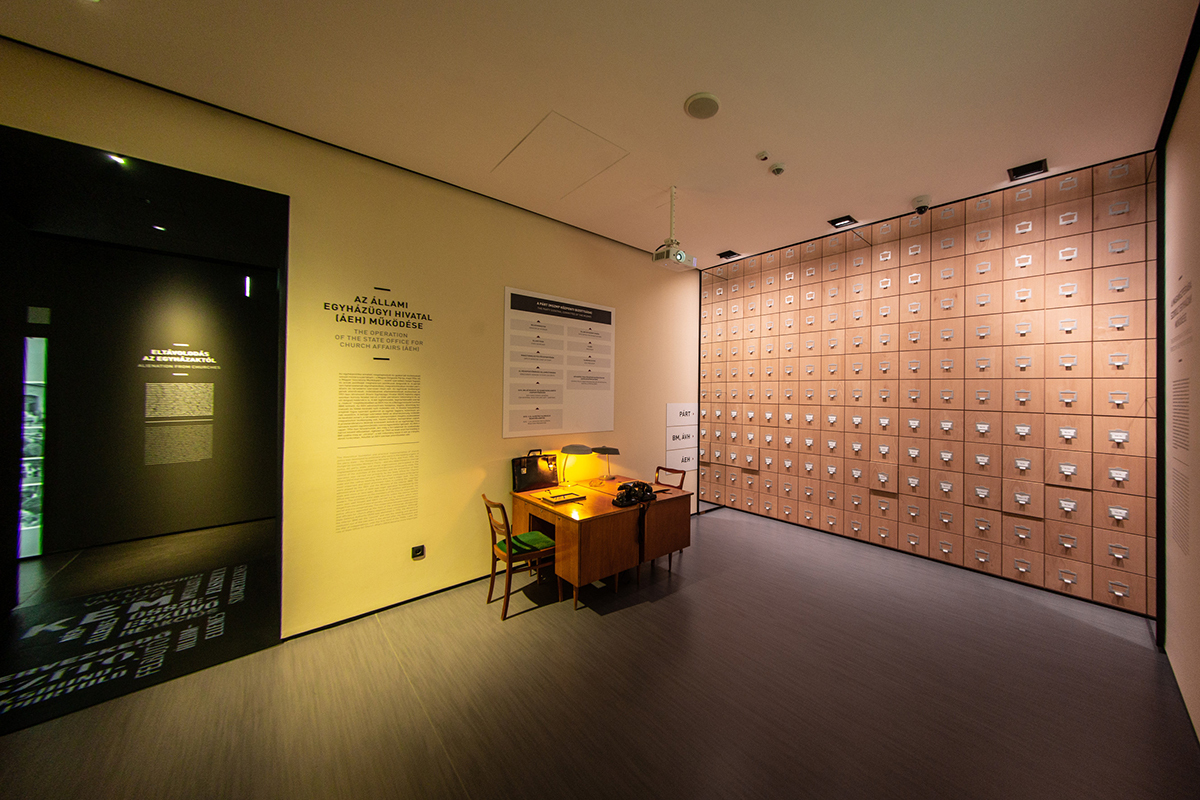
From the safe house, visitors enter an office representing the State Office for Church Affairs (ÁEH). The officials who worked here directed events from behind the scenes, maintaining control over activities that the regime regarded as hostile to the state.
Although policy toward the so-called “reactionary clergy” was formulated by the Communist Party – first the Hungarian Working People’s Party and, from 1956 onward, the Hungarian Socialist Workers’ Party – the implementation of these policies depended not only on the Ministry of the Interior (BM) but also on the State Office for Church Affairs (ÁEH), established in 1951.
The Responsibilities of the State Office for Church Affairs
Who worked in this office? Ordinary people whose daily task was to exert pressure on church leaders, force them into agreements with the state, and report any perceived “anti-democratic” activities to the Party leadership. The Party decided on the appropriate punishment, while its implementation was entrusted to the Ministry of the Interior in cooperation with the ÁEH.
Communication, Reports, and Information Exchange
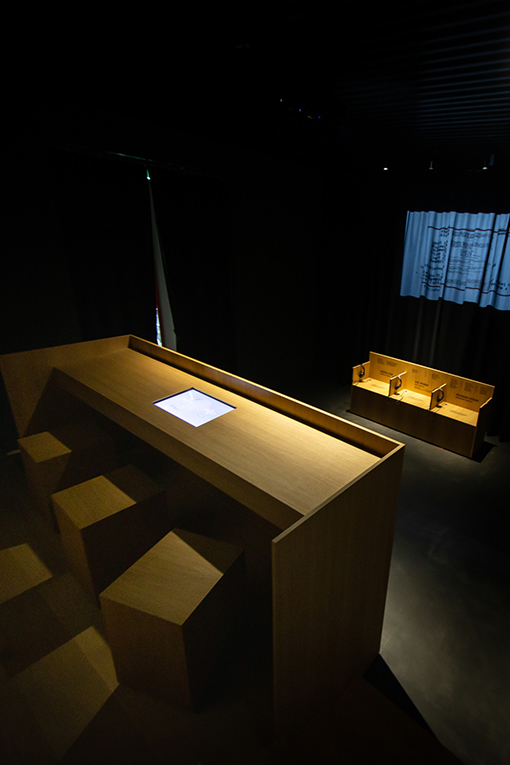
The interactive telephones and other objects displayed on the desk evoke the constant communication, reporting, and exchange of information that formed part of the office’s daily operations.
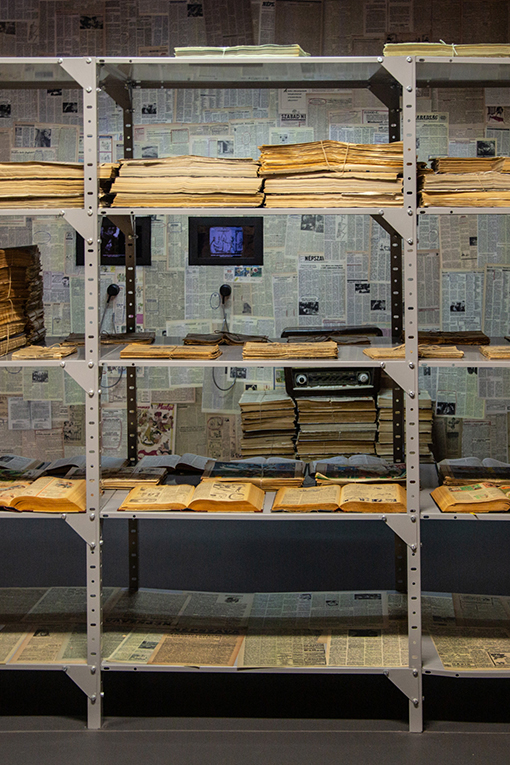
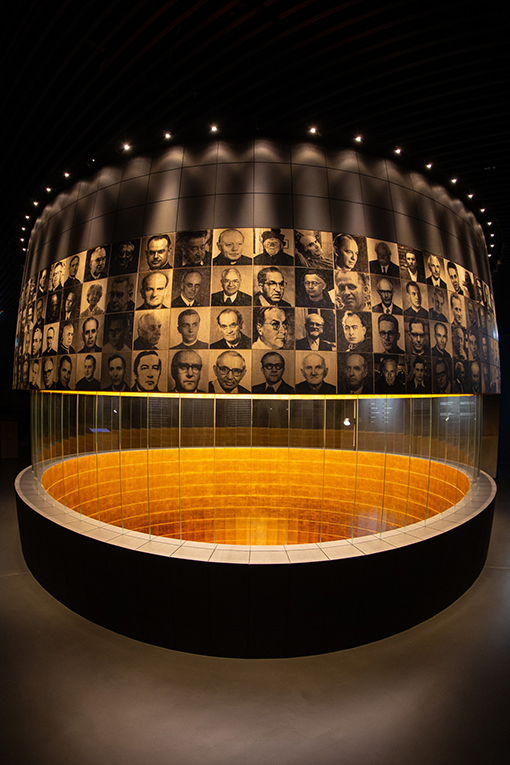
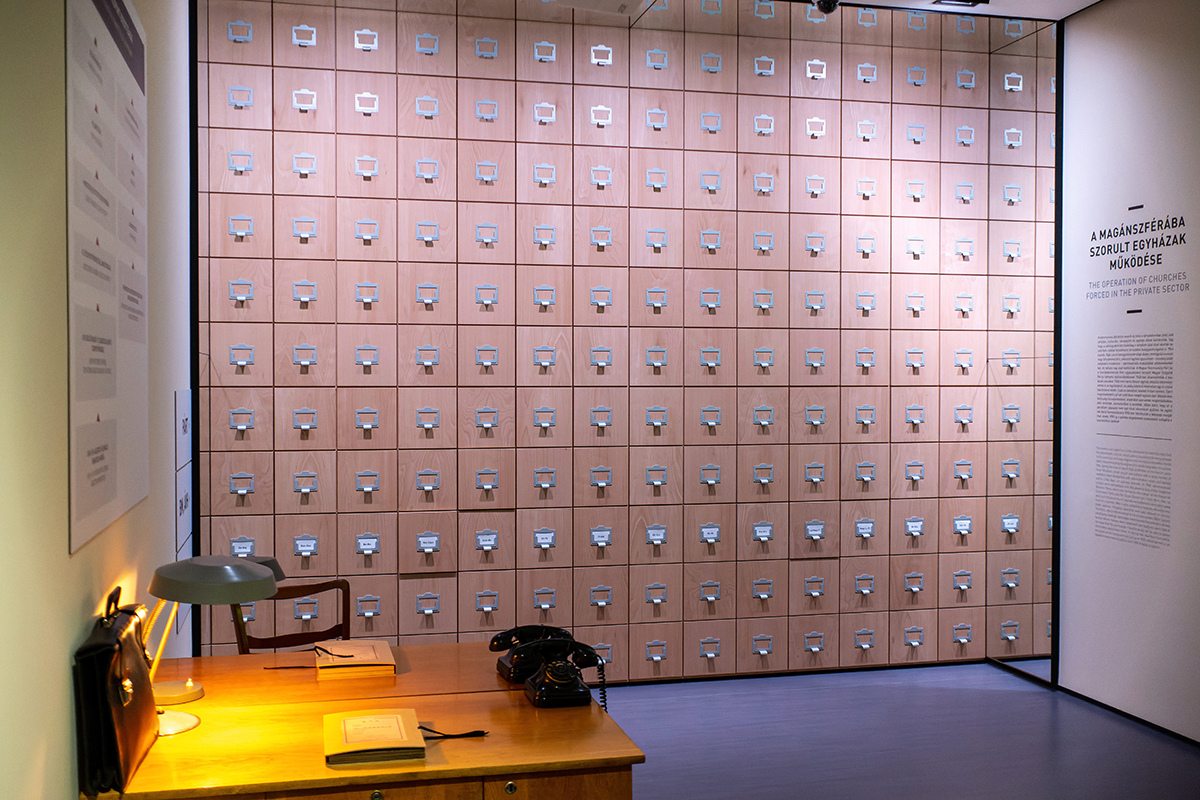
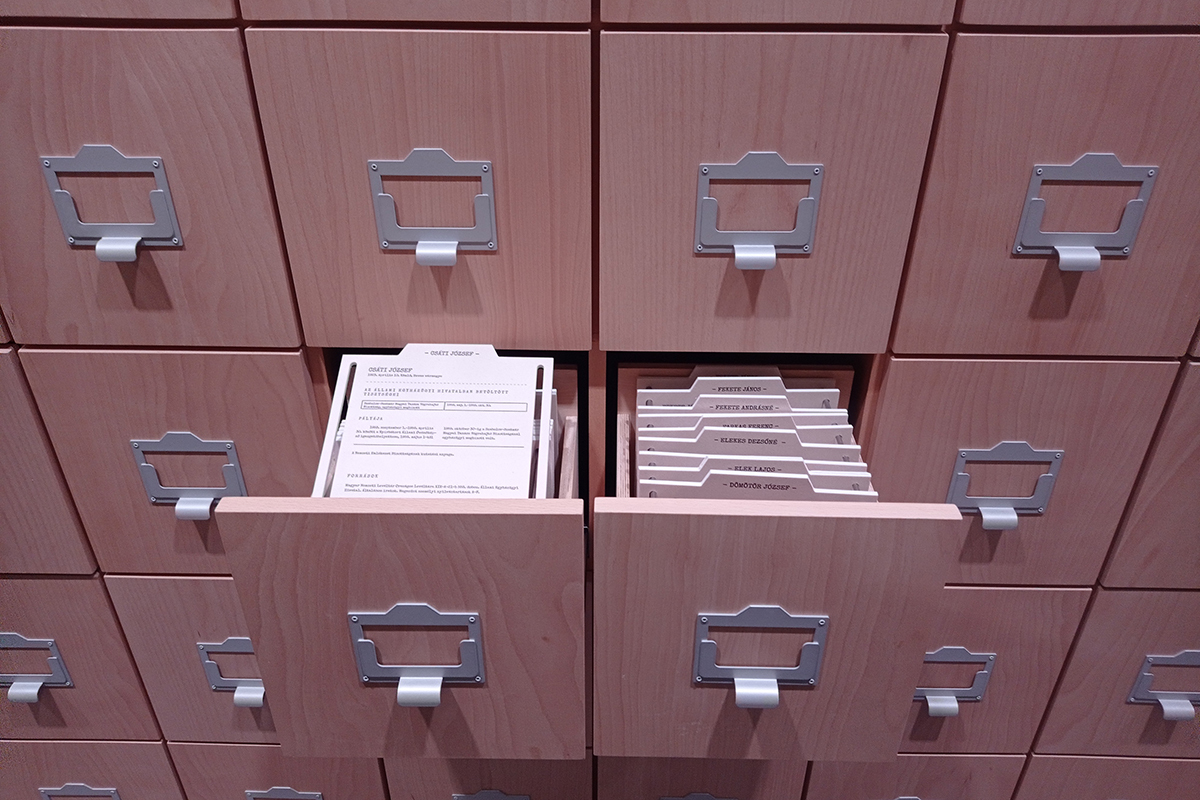
A floor-to-ceiling card catalogue wall contains personnel files of former senior officials of the State Office for Church Affairs, including biographies and personal records of office employees, documenting them much as the authorities documented those they kept under surveillance.
Visitors can also watch an excerpt from Confessors and Agents (2009), a documentary by Katalin Petényi and Barna Kabay. The film reconstructs a secret priestly ordination that is discovered and exposed by the authorities, serving as compelling historical evidence of the surveillance system.

A wall-to-wall archive comprising 684 pages of personnel records. Browse biographies and personal files of officials, including that of Imre Nagy.
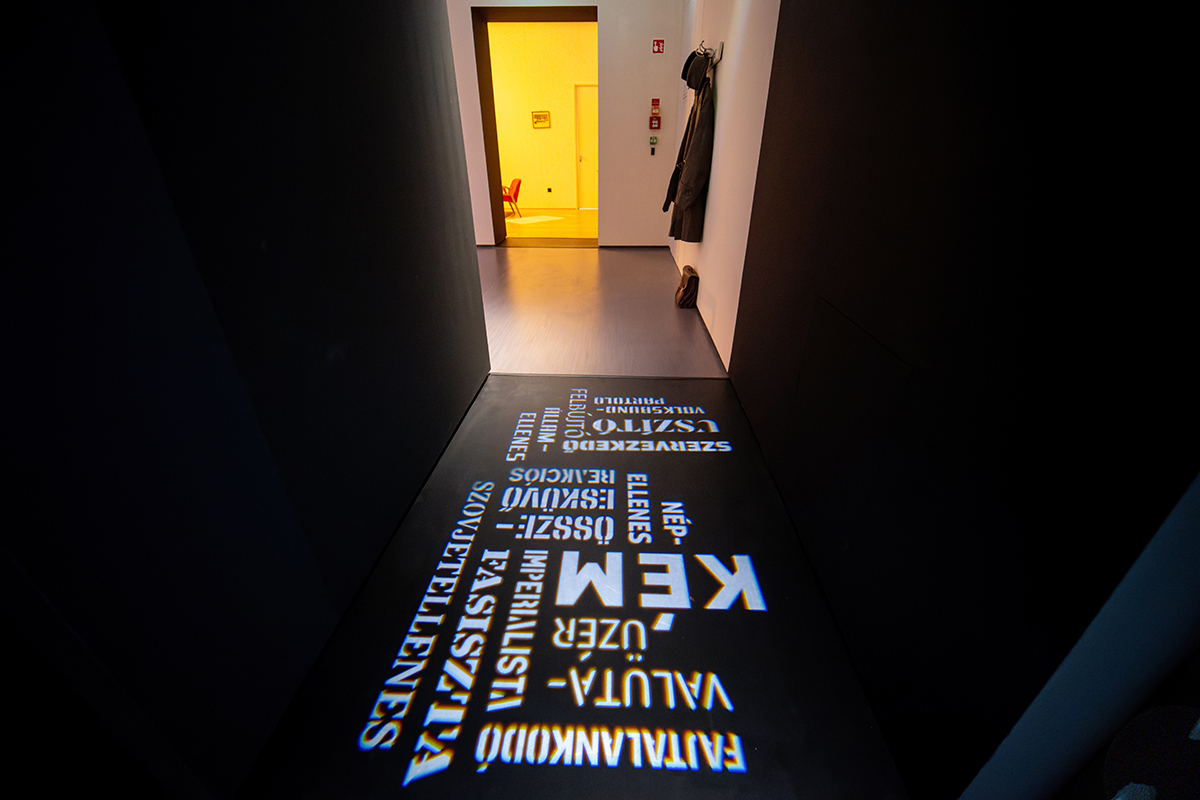
Corridor: Words That Weigh Heavy
Endless accusations, stigmatizing labels, and words carrying enormous weight seem almost to crush visitors as they walk through the narrow corridor ahead. They cannot be avoided; only conviction and faith offer the strength to question their truth and challenge their meaning.
- “Conspirator against the state”
- “Corrupter of minors”
- “Subverter of the democratic state order”
- “Illegal trader”
- “Leader of an unlawful organization”
- “Vatican spy”
- “Organizer of a banned association”
- “Fascist”
- “Imperialist”
- “Anti-Soviet”
These and similar labels were attached to representatives of various Christian denominations, priests, pastors, and religious instructors. Increasing numbers of church figures found themselves placed on the state’s blacklist. Their dignity was attacked, they were pressured into cooperation, and they faced fabricated charges that ultimately led to politically motivated trials.